
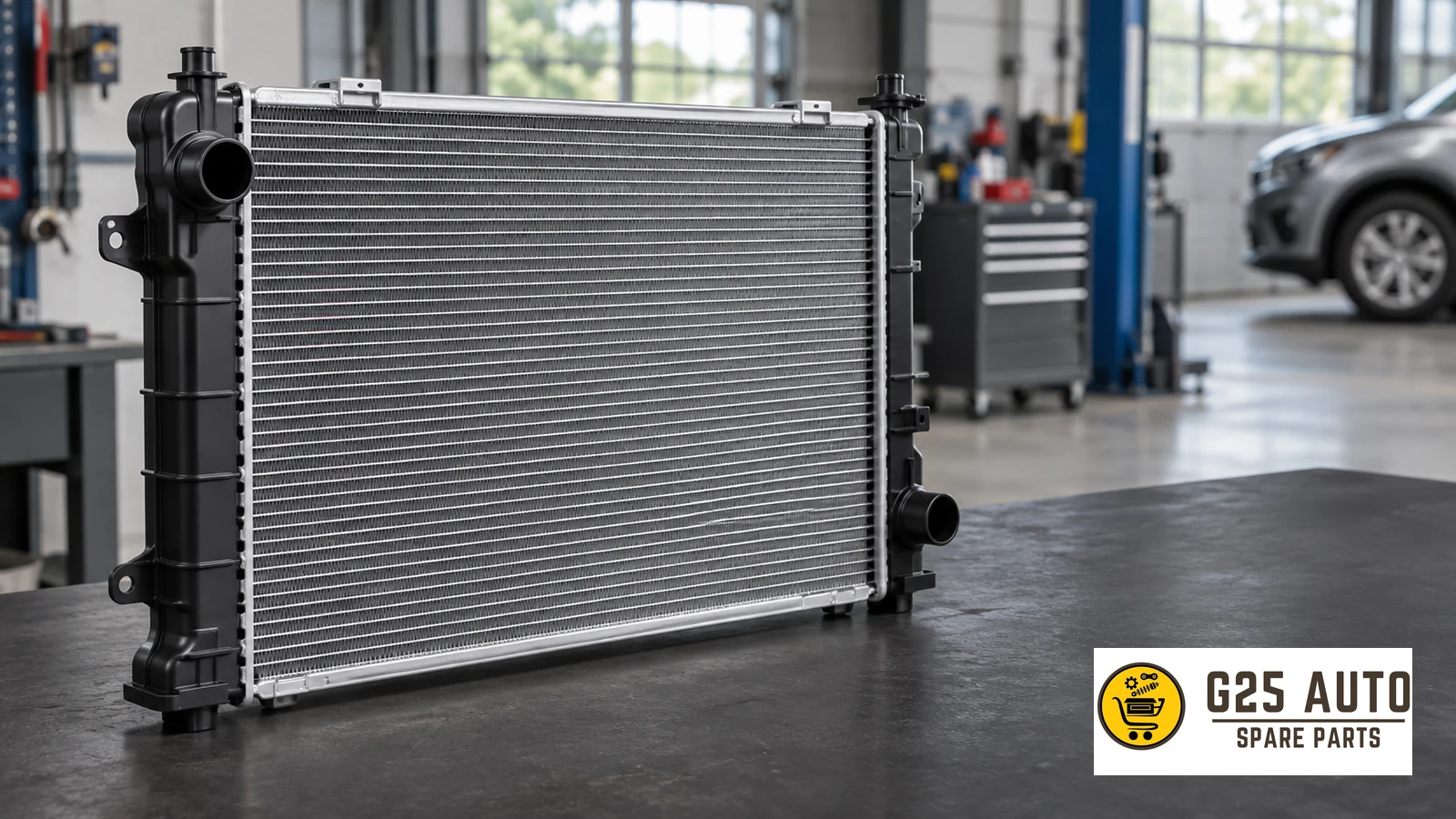
The radiator is a central part of an engine’s cooling system. It releases heat from the coolant so the engine can operate within its intended temperature range. This guide covers how the radiator works, the signs to look for when cooling problems develop, and what to check when considering a replacement.
What Is a Radiator and How Does It Work?
Hot coolant from the engine flows through narrow tubes in the radiator. Air passes through the radiator core as the vehicle moves, and the cooling fan provides airflow when needed. Heat passes from the coolant into the air, and the cooled liquid returns to the engine to complete the cycle.
The Radiator’s Role in Protecting the Engine
Core Functions
- Temperature control: Helps keep the engine within its operating temperature range.
- Heat dissipation: Transfers excess heat from the coolant to the surrounding air.
- Engine protection: Helps prevent damage caused by overheating.
Why Cooling Matters
If the radiator can no longer shed enough heat, the engine may overheat. Severe overheating can damage the head gasket, distort the cylinder head or damage the engine block.
Signs of a Radiator or Cooling System Problem
Temperature Warnings
- The temperature gauge reads higher than usual.
- The gauge rises suddenly or a high-temperature warning appears, even in cold weather.
Visible Signs and Odours
- The coolant level in the expansion tank keeps falling.
- A puddle of coolant appears beneath the parked vehicle.
- The coolant looks cloudy.
- There is a sweet smell of coolant.
Changes in Fan or Heater Operation
The cooling fan may run more often than usual, or the cabin heater may provide less heat. These symptoms warrant a cooling system inspection to identify the source of the problem.
When Should the Radiator Be Replaced?
Damage and Persistent Faults
- Physical damage: A puncture or severe deformation from an impact.
- Internal blockage: A restriction that persists after cleaning.
- Corrosion: Advanced deterioration of the radiator.
- Leaks: A radiator leak that cannot be repaired.
When to Have the Radiator Inspected
Frequent coolant top-ups or a history of neglected coolant changes are reasons to have the system checked. Confirm whether the radiator is the source of the fault before replacing it.
Original Equipment and Aftermarket Radiators
Original Equipment Radiators
Original equipment radiators are made to the vehicle manufacturer’s specifications. Check the dimensions and connections for the specific vehicle before ordering.
Aftermarket Radiators
Aftermarket replacements are available from several manufacturers. Compare the specifications, construction and fitment information for each option.
What to Check Before Buying
- Fitment for the specific vehicle and the position of the connections.
- Quality of the materials and workmanship.
- The supplier’s warranty terms and availability of technical support.
Radiator Maintenance
Regular Checks
- Follow the vehicle manufacturer’s coolant replacement schedule.
- Check the coolant level regularly.
- Keep the face of the radiator clear of debris.
- Have cooling fan operation checked as part of cooling system maintenance.
- Ask a workshop to pressure-test the system when investigating coolant loss.
Conclusion
Investigating temperature changes and coolant loss early can help prevent overheating damage. If you are unsure whether the radiator needs maintenance or replacement, have a technician inspect the cooling system and confirm the correct fitment for any replacement.