
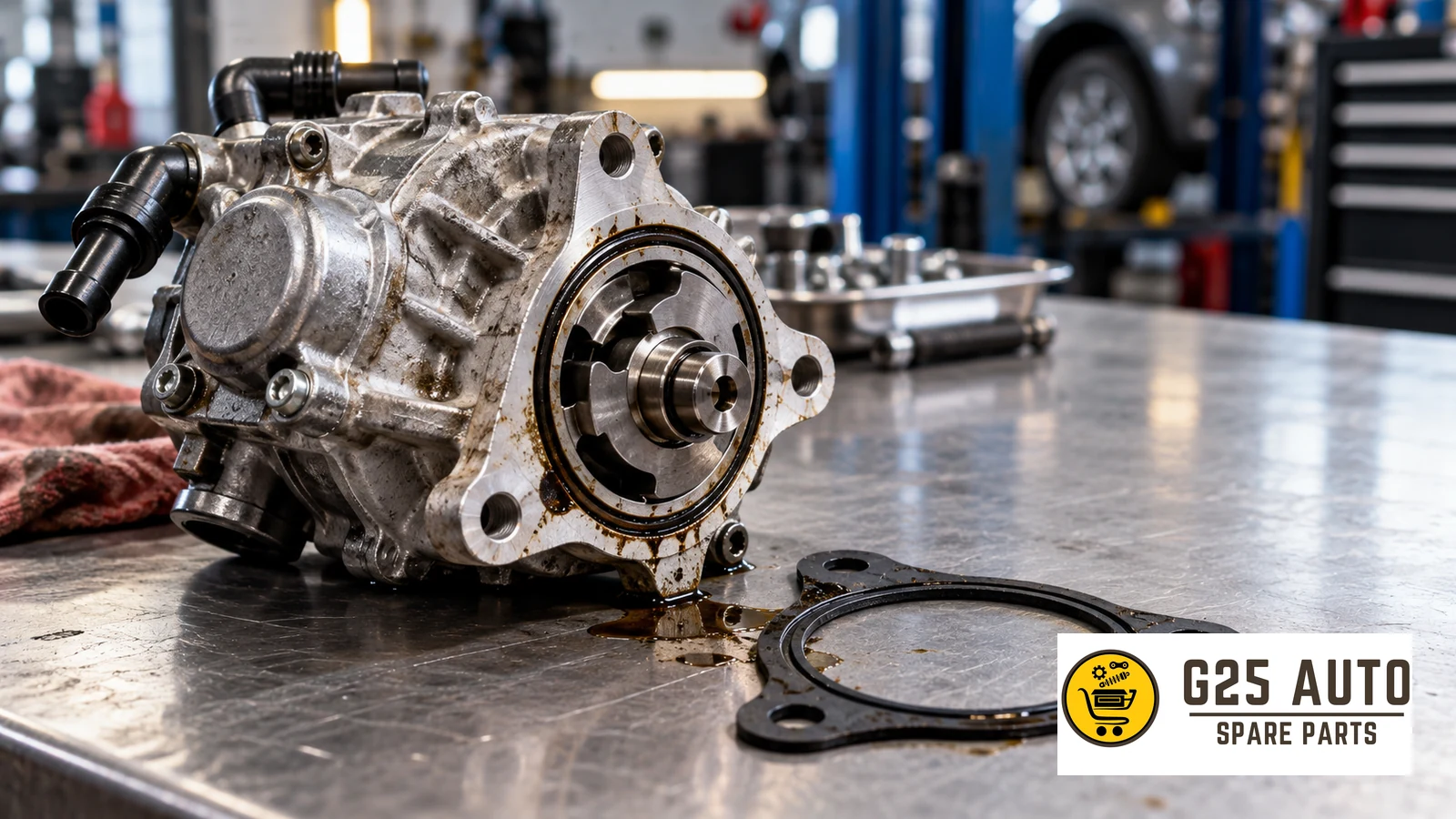
Oil leaking from a brake vacuum pump gasket deserves attention: it may accompany problems affecting brake assistance. Ageing, wear or incorrect installation can cause leaks. Early diagnosis may allow a straightforward repair; neglect can lead to further engine or braking problems.
What Is a Brake Vacuum Pump and How Does It Work?
The pump supplies vacuum for brake assistance, particularly on diesel engines. Many petrol engines obtain vacuum from the intake manifold, although arrangements vary.
On mechanically driven systems, the engine drives the pump, which supplies the brake booster and reduces pedal effort.
Symptoms of a Leaking Vacuum Pump Gasket
Look for the following signs. They require investigation and do not individually confirm a gasket fault:
Visible Signs
- Oil around the vacuum pump
- Wet or oily pump housing
- Oil accumulating on the engine undertray
- Oil residue in booster hoses
- Unexplained falling oil level
Sounds and Pedal Feel
- A hard or heavy brake pedal
- Hissing or whistling near the pump
- Unusual noises while the engine runs
- Increased pedal effort
- Inconsistent pedal feel
Performance and Operating Symptoms
- Reduced braking assistance
- Increased engine oil consumption
- A brake warning light, depending on the system
- More noticeable problems when cold
Possible Causes of Oil Leakage
Several factors can affect the gasket:
Wear and Ageing
Gaskets can lose elasticity over time. Rubber may harden, crack and lose its seal, particularly on older or heavily used vehicles.
Incorrect Oil
Oil outside the manufacturer’s specified type or viscosity may affect seal materials and contribute to deterioration.
Excessive Pressure and Temperature
Overheating or excessive crankcase pressure can increase leakage risk. A blocked ventilation system may contribute.
Installation Errors
An unsuitable gasket, incorrect tightening or dirty sealing surfaces can cause repeat leaks after repairs.
How Is the Fault Diagnosed?
A professional inspection establishes the source. Diagnosis may include:
Visual Inspection
The workshop cleans and inspects the area to trace the oil, since nearby components can produce similar signs.
Vacuum Testing
Suitable equipment checks vacuum generation and leakage, helping establish whether the pump contributes to reduced assistance.
Pressure Testing
Where specified for the system, approved pressure or leak-detection procedures help assess sealing. The method must suit the component.
Removal and Inspection
If needed, the pump is removed to inspect the gasket for cracks, hardening, deformation and wear.
Selecting the Correct Replacement
Check these points before ordering:
OEM References and VIN
Pumps can differ within one vehicle model by production date, engine and VIN. Before ordering:
- Obtain the VIN
- Identify the engine code
- Record the production year and month
- Check the existing pump’s OEM reference
- Verify compatibility using these details
Incorrect orders waste time and add costs. Seek professional assistance with identification when needed.
Engine Type and Variant
Different engine versions, including different power outputs within one engine family, may use different pumps. Verify the engine code.
Original and Aftermarket Parts Compared
Assess both options against the actual application:
| Factor | Original Equipment | Aftermarket |
|---|---|---|
| Compatibility | Verify the exact reference | Verify the exact application |
| Material quality | Check manufacturer specifications | Check supplier specifications |
| Warranty | Check applicable terms | Check applicable terms |
| Availability | Confirm with supplier | Confirm with supplier |
| Cost | Compare current quotations | Compare current quotations |
| Service life | Depends on application and conditions | Depends on application and conditions |
Which Option Suits the Situation?
Reasons to consider original equipment include:
- Applicable vehicle warranty requirements
- A new or low-mileage vehicle
- Long-term ownership plans
- Safety-critical applications requiring careful specification checks
Aftermarket options may be considered when:
- Maintaining a high-mileage vehicle
- Working within a budget
- Documented quality options are available
- Comparing confirmed availability
Either option requires verified compatibility and appropriate quality; these circumstances alone do not establish suitability.
Points to Check During Repair
Review the following during gasket replacement:
Before Replacement
- ☐ Correct reference and compatibility confirmed?
- ☐ Pump area cleaned?
- ☐ Old gasket residue removed?
- ☐ Sealing faces inspected for damage?
- ☐ Mounting surface sound and smooth?
- ☐ Required tools available?
- ☐ Manufacturer tightening specifications available?
- ☐ Oil and filter available if required by the procedure?
After Replacement
- ☐ All connections correctly tightened?
- ☐ Engine oil level checked?
- ☐ Vacuum hoses checked for damage?
- ☐ Operational checks completed?
- ☐ Leakage checks completed?
- ☐ Correct brake pedal feel confirmed?
- ☐ Abnormal noise or vibration checked?
- ☐ Service records updated?
Follow-Up and Maintenance
Monitor the repair during initial use:
Early Checks
Inspect for fresh oil traces after replacement. Leakage may differ between cold and warm conditions; arrange checks accordingly.
Long-Term Maintenance
- Follow scheduled oil changes
- Use the specified engine oil
- Have crankcase ventilation checked periodically
- Avoid overloading and aggressive driving
- Follow the vehicle’s service schedule
Frequently Asked Questions
At what mileage should the gasket be replaced?
No universal mileage applies. Replace according to diagnosed condition and manufacturer guidance.
Should a workshop replace it?
Incorrect work can compromise brake assistance. A suitably equipped, qualified workshop is recommended.
Does the gasket or the complete pump need replacing?
A gasket may suffice if the pump is sound and repairable. Internal wear or damage may require pump replacement.
When should normal pedal feel return?
Correct assistance must be confirmed after repair. Persistent abnormal pedal feel requires further diagnosis.
Can an aftermarket gasket affect the vehicle warranty?
Check the applicable vehicle warranty terms and repair requirements before choosing parts.
Can the leak be stopped temporarily?
Sealing additives do not replace diagnosis and a proper repair; they may conceal an unresolved fault.
Choosing a Parts Supplier
Reliable identification matters when sourcing vacuum pump gaskets. For G25Auto’s European and Balkan B2B context, prioritise application checks.
Compare references and brand options with the VIN, engine code and production date available. Confirm the proposed part before ordering.
Conclusion
Prompt diagnosis and appropriate repair can address a leaking vacuum pump gasket before further problems develop.
Verify the OEM reference, VIN and engine type. Consider vehicle age, use and budget when comparing suitable parts.
Brake assistance deserves careful attention. Appropriate parts, correct installation and maintenance help reduce repeat problems.
Seek professional advice before repair and complete the necessary checks and follow-up afterwards.