
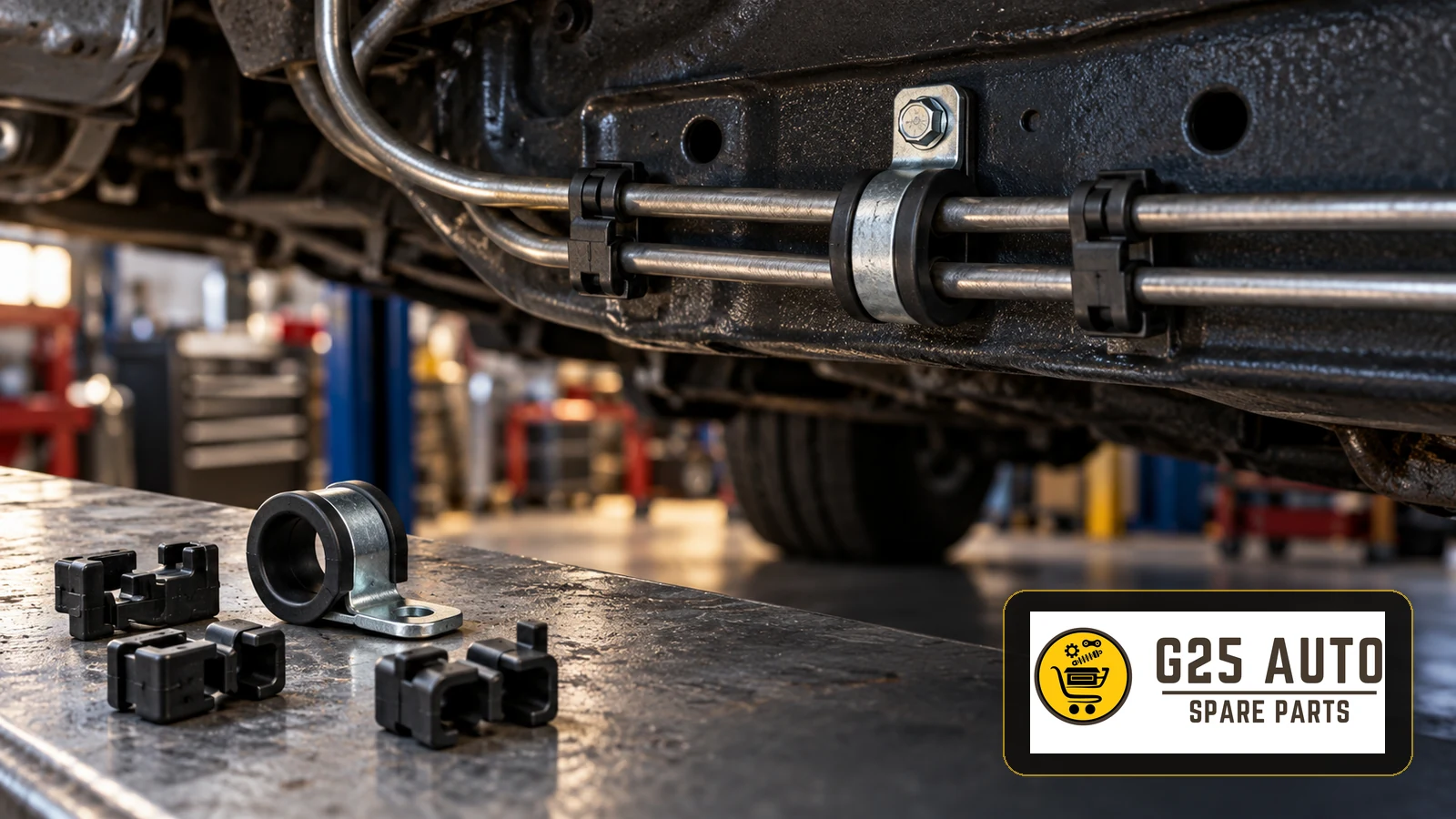
Brake pipe retaining clips and brackets are small but important parts of the braking system. They secure pipes to the chassis and body, helping limit vibration, chafing and damage. Correct selection and installation support reliable operation.
What Are Brake Pipe Retainers and Why Do They Matter?
Metal brake pipes carry hydraulic fluid between braking components. Clips and brackets secure them to the chassis, subframe, body and other designated points while the vehicle moves.
These retainers help:
- Limit vibration
- Prevent rubbing against neighbouring components
- Reduce exposure to road-related damage
- Reduce stress and leakage risks at connections
- Maintain routing through designated mounting points
Types of Clips and Brackets
Plastic Clips
Plastic clips commonly press into dedicated body holes. Designs suit different pipe diameters. Some are single-use and may be damaged during removal; follow the specified replacement instructions.
Metal Brackets
Metal brackets usually attach with screws or bolts. They may be specified where heat or mechanical loads require them. Reuse depends on condition and manufacturer instructions.
Rubber-Lined Clips
A rubber cushion separates the pipe from the metal retainer, helping damp vibration and reduce chafing.
Combined Systems
Some vehicles combine plastic clips and metal brackets to meet their pipe-routing and support requirements.
Fault Symptoms and Inspection
Visual and Audible Signs
Possible signs requiring inspection include:
- Rattling over bumps or during braking
- Visible pipe movement
- Chafing marks from contact with other parts
- Broken or missing clips and brackets
- Unsupported or sagging pipes
- Oily deposits, rust or corrosion on pipes
Professional Diagnosis
A professional inspection should include:
- Safely raising the vehicle and inspecting all brake lines
- Examining each mounting point
- Carefully checking pipe support without stressing the pipe
- Checking retainers for breaks, cracks and deformation
- Examining rubber for hardening, cracking and deterioration
- Checking mounting points for corrosion and damage
What to Check When Selecting Parts
Verification by OEM Part Reference
Retainers vary by model, chassis and production year. Use the applicable original equipment manufacturer reference and vehicle data. Relevant information may be:
- Included in vehicle documentation, where available
- Obtained through an authorised service centre
- Marked on the existing part
- Checked in a parts catalogue using the vehicle identification number
Chassis and Engine Identification
Even one model can have different chassis and engine configurations, including:
- Petrol and diesel versions
- Standard and sport packages
- Different equipment levels
- Export and domestic-market versions
These differences can affect retainer types and mounting positions.
Production Date
Manufacturers may change suppliers or designs during production. Confirm the actual build date rather than assuming every vehicle of one model uses identical clips.
Original Equipment and Aftermarket Parts Compared
| Factor | Original Equipment | Aftermarket |
|---|---|---|
| Compatibility | Verify reference and application | Verify cross-reference and application |
| Installation | Check specified mounting design | Check dimensions and mounting design |
| Durability | Check product specification | Depends on design and manufacturer |
| Availability | Confirm with supplier | Confirm with supplier |
| Warranty | Check applicable terms | Check applicable terms |
A Balanced Assessment
Original equipment parts follow vehicle-specific specifications, but fitment still requires verification. Suitable aftermarket alternatives may also be considered after checking their application and specifications.
Choose traceable manufacturers, review relevant product documentation and assess supplier reliability.
Pre-Installation Checklist
Before replacing brake pipe retainers:
- Verify the part reference against the vehicle
- Count all required clips and brackets
- Remove old parts carefully without damaging pipes
- Clean mounting points and inspect for corrosion
- Check pipes for cracks, crushing and corrosion
- Confirm replacement parts are complete and undamaged
- Check rubber inserts are present and intact
- Prepare the required installation tools
- Plan appropriate post-installation checks before any road test
Installation Tips
Correct Installation Techniques
Pay attention to the following:
- Confirm plastic clips engage as their design requires
- Avoid excessive force that could damage clips or mounting points
- Use the specified tightening torque for bracket fasteners
- Seat pipes without forcing them
- Orient rubber cushions correctly
- Check that pipes remain securely supported after installation
Common Mistakes
Avoid:
- Using clips for the wrong pipe diameter
- Omitting or reversing rubber cushions
- Reusing damaged or single-use clips
- Installing onto unclean mounting points
- Overtightening screws
- Bending or forcing pipes into clips
Maintenance and Inspection
Include retainers in routine inspections:
- Check during scheduled vehicle servicing
- Consider winter exposure when planning inspections
- Clean mounting areas appropriately during underbody cleaning
- Look for plastic discolouration and breakage
- Check rubber for hardening and cracks
- Investigate unusual noises promptly
Where and How to Source Parts
For European and Balkan B2B purchasing through G25Auto, identify the required application and compare documented specifications with the supplier.
Assess:
- Clearly stated part references
- Detailed application information
- Clear return and warranty terms
- Accurate, detailed product photographs
- Accessible customer support
- Suitable secure payment arrangements
Frequently Asked Questions
How Often Should Brake Pipe Clips Be Replaced?
Replace single-use clips after removal where specified, and replace damaged retainers. Inspect them during scheduled maintenance.
Does a Broken Clip Affect Driving Safety?
Lost support can increase vibration and chafing. Arrange prompt inspection; driving suitability depends on the pipe’s condition and remaining support.
Can a Metal Bracket Replace a Plastic Clip?
Use the specified retainer for each mounting point. An unapproved substitution may not secure the pipe correctly.
Why Are Rubber Cushions Important?
They separate metal surfaces and help reduce vibration and chafing. Corrosion protection also depends on overall condition.
Can I Install Them Myself?
Brake systems are safety-critical. Installation requires suitable competence and equipment; seek professional assistance if uncertain.
Are Aftermarket Clips as Durable as Originals?
Durability depends on materials, design and manufacturing quality. Verify specifications and application rather than assuming equivalence.
Conclusions and Recommendations
Small retainers play an important role in brake pipe support. Correct selection, installation and inspection help maintain reliable operation.
Check the OEM reference, vehicle identification, engine code and build date. Verify compatibility for both original equipment and aftermarket choices.
Complete installation checks before any road test and follow the maintenance schedule. Seek professional advice whenever braking-system condition is uncertain.
Informed selection and sound maintenance help support the braking system over its service life.