
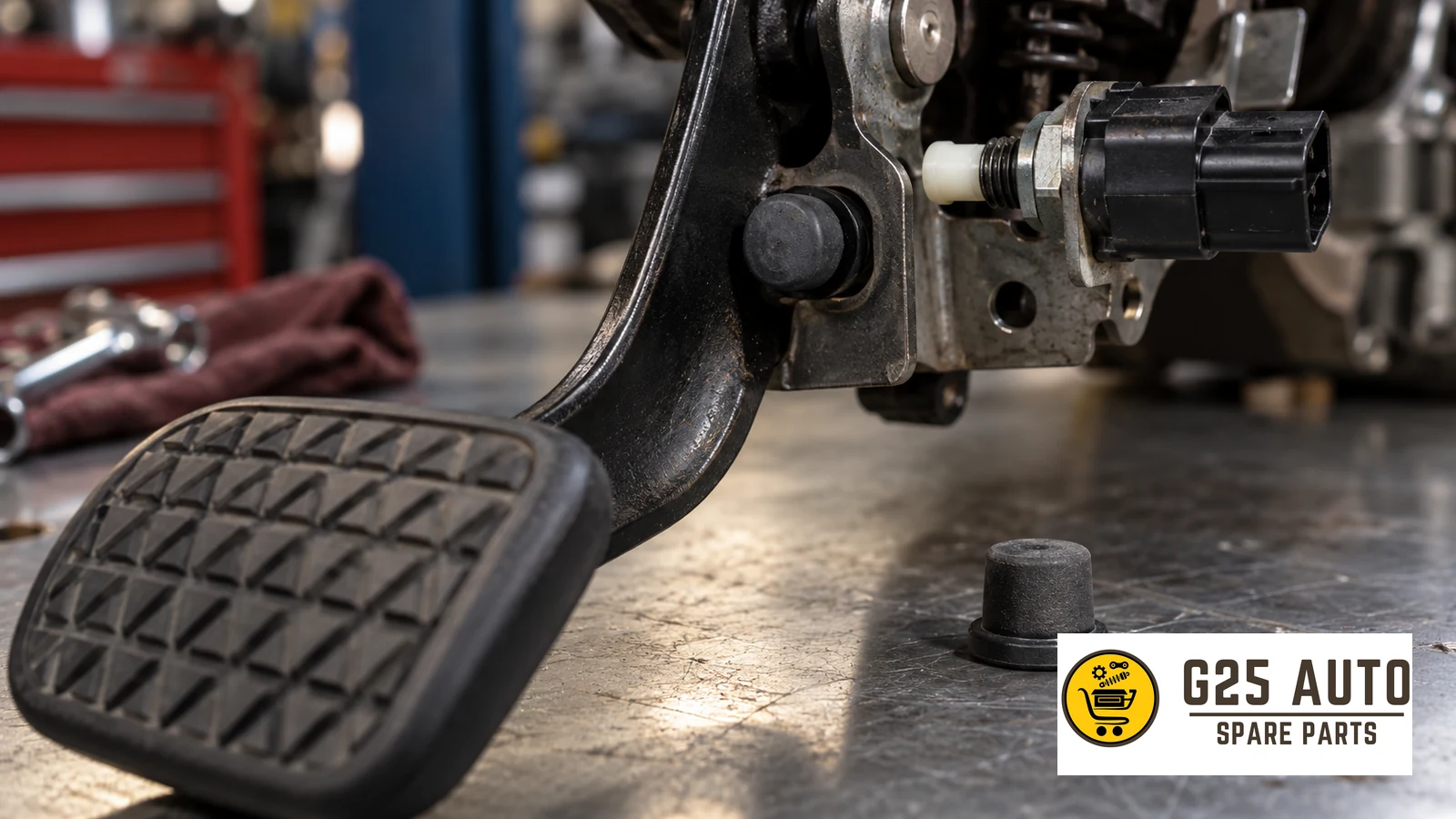
Brake pedal components and pedal stoppers matter for braking and brake light operation. The pedal linkage connects pedal movement to the braking system; a rubber or plastic stopper provides a contact surface or return stop, depending on design. These parts can wear. This guide covers their functions, symptoms and checks.
Brake Pedal Components: Function and Operation
Mechanical linkage connects the pedal to the braking system. Its construction and connection to the master cylinder depend on the vehicle.
Repeated movement can wear linkage contact surfaces. Excessive play can affect pedal feel and requires inspection.
Construction Features
Check the relevant component’s specifications:
- Internal diameter: matched to the shaft.
- External diameter: suited to the mounting point.
- Length: matched to the pedal assembly.
- Material: specified for the application.
- Thread: verify type where fitted.
Pedal Stopper: Function and Importance
This small rubber or plastic part sits around the pedal assembly. Its functions depend on design:
Relationship with Brake Lights
In designs using a stopper against the brake light switch, contact keeps the lights off at rest. Pressing the pedal releases contact and activates them. Damage can disrupt operation.
Pedal Return Position
A stopper can also define the pedal’s resting position and limit return movement.
Fault Symptoms: When to Investigate
These symptoms can indicate pedal-component or stopper problems, but require diagnosis:
Pedal Linkage Symptoms
- Excessive pedal play or looseness.
- Metallic noises when pressing.
- Sideways pedal movement.
- Failure to return to rest.
- Inconsistent pedal feel.
- Reduced braking performance requiring broader inspection.
Pedal Stopper Symptoms
- Brake lights staying on.
- Brake lights failing to illuminate.
- Unusual pedal return travel.
- Unusual odours around the pedal area.
- Clicking around the pedal.
- Cruise control issues, where fitted.
How Is the Fault Diagnosed?
Symptoms alone do not identify the faulty part. Check systematically:
Visual Inspection
Inspect accessible pedal linkage and the stopper in the footwell. Look for cracks, breakage and wear; access varies by vehicle.
Movement Check
With the engine off, gently press and release the pedal. Observe sideways play, noises and return movement. Investigate excessive looseness.
Brake Light Check
Have an assistant observe the lights with the vehicle safely stationary. Check at rest and when pressing. Abnormal operation can involve the stopper or switch.
Professional Assessment
A qualified workshop should confirm the diagnosis through measurements and inspection of the complete braking system.
Original and Aftermarket Parts Compared
| Feature | Original Part | Aftermarket Part |
|---|---|---|
| Compatibility | Verify the application | Verify application and cross-reference |
| Cost | Compare current quotations | Compare current quotations |
| Availability | Confirm per order | Confirm per order |
| Quality control | Check specifications | Varies by manufacturer |
| Warranty | Confirm applicable terms | Confirm applicable terms |
| Range | Application-specific design | Alternative designs may exist |
Selecting the Correct Part: Compatibility Checks
Prepare the following information before ordering:
Key Verification Details
OEM/Part Reference: Record the existing reference and check its application with the supplier.
VIN: Use vehicle identification details for catalogue checks. Parts can change within a model year.
Engine Code: Specify the engine where pedal components differ between versions.
Production Date: Provide month and year; production updates can affect selection.
Where to Find These Details
- VIN: vehicle identification locations or registration documents.
- Engine code: engine markings or service documentation.
- OEM reference: old component or supplier catalogue enquiry.
- Production date: vehicle labels or manufacturer records.
Replacement and Checklists
Replacement requires appropriate mechanical knowledge. Seek professional assistance if uncertain.
Before Replacement
- ☐ Check the replacement application using VIN details.
- ☐ Prepare suitable spanners, pliers and screwdrivers.
- ☐ Park on firm, level ground.
- ☐ Secure the vehicle according to its instructions.
- ☐ Provide adequate lighting.
- ☐ Follow vehicle procedures if hydraulic work is involved.
- ☐ Plan pedal adjustment checks.
- ☐ Plan brake light testing.
After Replacement
- ☐ Check secure component seating.
- ☐ Check smooth pedal movement.
- ☐ Check pedal play.
- ☐ Test brake light operation.
- ☐ Check normal pedal return.
- ☐ Inspect for hydraulic leaks.
- ☐ Confirm braking through appropriate workshop testing.
- ☐ Check dashboard warnings.
Choosing Aftermarket Parts
Compare quality and suitability alongside the purchasing budget:
Quality Standards
Check relevant manufacturer quality documentation and available product test information.
Warranty Terms
Review the actual warranty offered for each product rather than assuming equivalence.
User Experience
Consider product feedback cautiously: vehicle use and operating conditions differ.
Supplier Reliability
Check supplier reliability, returns, support and product identification. For G25Auto B2B sourcing across Europe and the Balkans, prepare accurate vehicle details before ordering.
Frequently Asked Questions
How often should pedal components be replaced?
Replacement depends on condition and wear. Use vehicle maintenance guidance rather than a universal mileage interval.
Can a vehicle be driven with a broken stopper?
Incorrect brake light operation creates a safety risk. Restore correct operation before use.
How can linkage wear affect braking?
Play in the connection can affect pedal response. A workshop should assess its effect on braking.
Does every vehicle use the same stopper?
No. Shape, size and material vary. Verify the particular application.
Can an aftermarket part last longer?
Materials and designs vary. Assess each product individually; durability cannot be generalised.
Do continuously illuminated brake lights always mean stopper replacement?
No. Inspect both the stopper and brake light switch before deciding.
Maintenance and Preventive Measures
Regular observation can help identify deterioration:
- Avoid unnecessary force on the pedal.
- Keep footwear from slipping on the pedal.
- Include the assembly in regular brake inspections.
- Keep the pedal area free of dust and moisture.
- Investigate abnormal noises promptly.
- Check brake lights regularly.
Conclusion
Small pedal components have important safety functions. Recognise symptoms early, obtain professional diagnosis and verify VIN, part reference and vehicle details when selecting replacements.
Compare original and aftermarket options on their merits. Reliable sourcing and application checks support correct selection and maintenance.
Do not overlook braking components. Seek expert advice whenever their condition or operation is uncertain.