
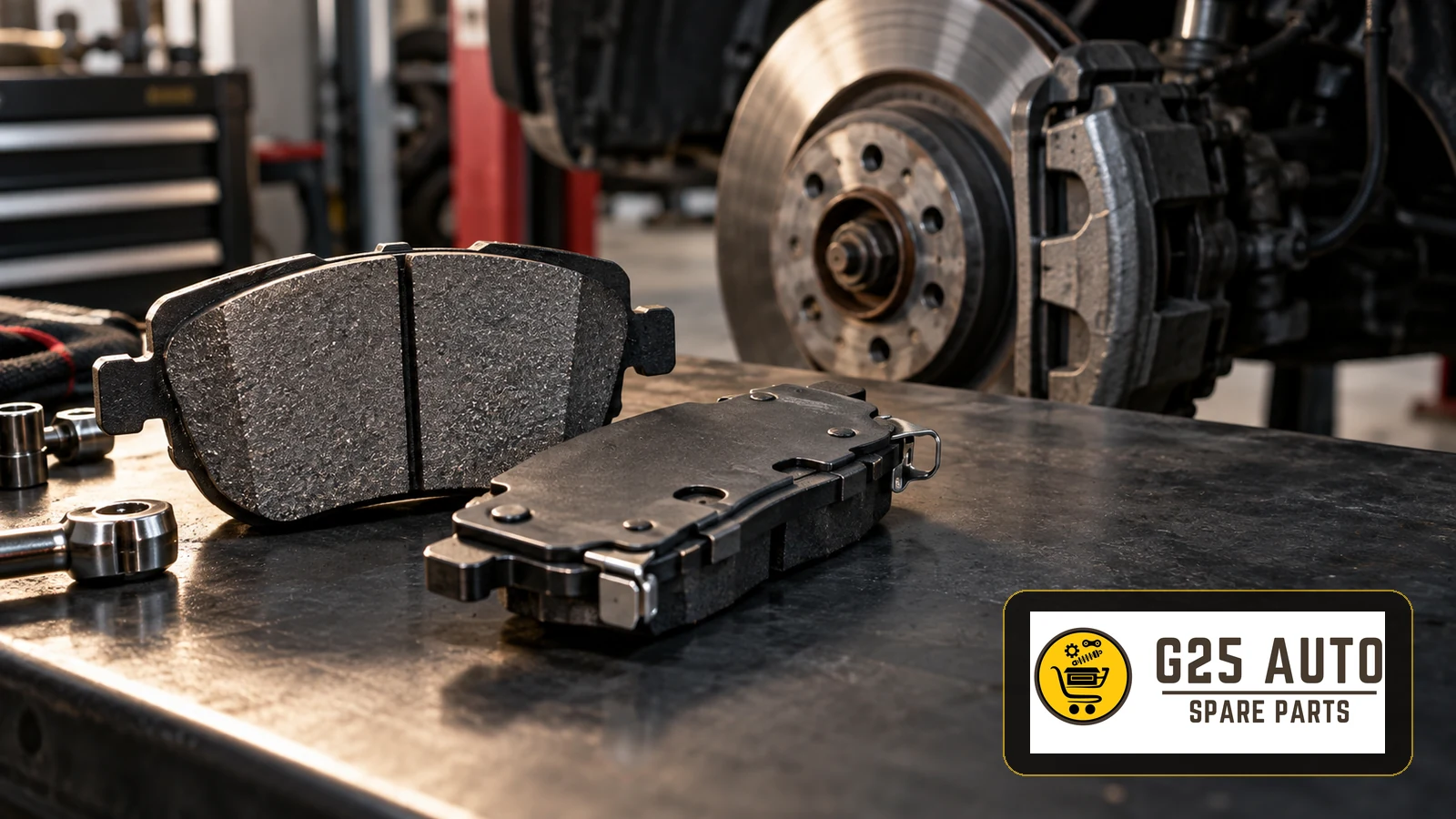
What Are Brake Pads and How Do They Work?
Brake pads are essential components in bringing a vehicle to a stop. When the brake pedal is pressed, pistons in the brake caliper press the pads against the brake disc. The resulting friction slows or stops the vehicle. Common pad materials include ceramic, semi-metallic and organic compounds, formulated to withstand the heat generated during braking.
The braking system uses hydraulic pressure. Force applied at the pedal is transmitted through the brake fluid to the wheel brakes. Within this system, the pads help convert the vehicle’s kinetic energy into heat.
The Role and Importance of Brake Pads
The main purpose of brake pads is to help stop a moving vehicle. Several important functions lie behind this basic description:
Importance for Safety
Brake pads are critical to driver and passenger safety. Unsuitable or worn pads can increase stopping distances and seriously impair braking performance. Their condition therefore deserves regular attention.
Effects on Vehicle Performance
Suitable pads in good condition support driving comfort as well as braking performance. Noise, vibration and consistency during braking are relevant considerations. Correct pad selection and maintenance can also help limit unnecessary disc wear and associated repair costs.
Signs of Brake Pad Wear or Problems
Pad wear or damage may produce warning signs. Recognising these symptoms early helps identify the need for inspection, although they can also have other causes:
Audible Warning Signs
Squealing or scraping when the brake pedal is pressed is a common warning. Some pads have mechanical wear indicators that make a noise as the wear limit approaches. Arrange a brake inspection promptly if these sounds occur.
Physical Symptoms
Pedal vibration, a spongy feel or greater pedal travel than usual are significant warning signs requiring professional assessment. Pulling to one side during braking may be associated with uneven pad wear or another brake system fault.
Visual Inspection Signs
Depending on the wheel and brake design, the pads may be visible through the wheel openings. Compare the remaining friction material with the manufacturer’s specified wear limit rather than applying a universal thickness threshold. Brake dust can accumulate on wheels during use; it does not by itself establish whether replacement is needed.
When Should Brake Pads Be Replaced?
Several factors determine replacement timing. Assessing them properly matters both for safety and for maintenance costs.
Mileage and Replacement
Pad life varies with driving style, road conditions and the pad material. Dense urban traffic, mountainous routes and aggressive braking can accelerate wear. Mileage alone should therefore not determine replacement: check actual condition against the relevant service limits.
Periodic Inspection Recommendations
Follow the vehicle manufacturer’s brake inspection schedule, taking operating conditions into account. Inspections should cover pad thickness, brake fluid level and disc condition. Checking the braking system before a long journey is also a useful precaution.
Differences Between Aftermarket and Original Equipment Brake Pads
Choosing between aftermarket and original equipment parts is an important purchasing decision. Each option should be assessed for the intended vehicle and brake system.
Original Equipment Brake Pad Characteristics
Original equipment pads are specified for particular vehicle applications. Confirm the correct specification for the vehicle and brake system rather than assuming fitment from the product category. Review the product documentation and any applicable warranty terms.
Cost and availability should be checked for the required part, especially when sourcing components for older vehicles.
Aftermarket Brake Pad Advantages
Aftermarket pads provide alternatives to original equipment parts and may offer different purchasing options. Performance and cost vary by product; equivalent performance should not be assumed without supporting information.
For European and Balkan workshops and B2B buyers, selection should include application checks and a review of relevant product and approval documentation. General claims about a supplier or quality standard do not establish suitability for a specific brake system.
How to Make the Right Choice
Safety should take priority when selecting pads. Consider the product specification, price and documented quality alongside driving conditions, vehicle age and the maintenance budget.
Factors That Determine Brake Pad Quality
Relevant characteristics include appropriate friction behaviour, heat resistance, service life, noise levels and environmental considerations. Assess these together for the intended application rather than relying on a single headline claim.
Brake pads are essential to vehicle safety. Suitable parts, regular inspection and timely replacement help maintain braking performance and manage maintenance costs.