
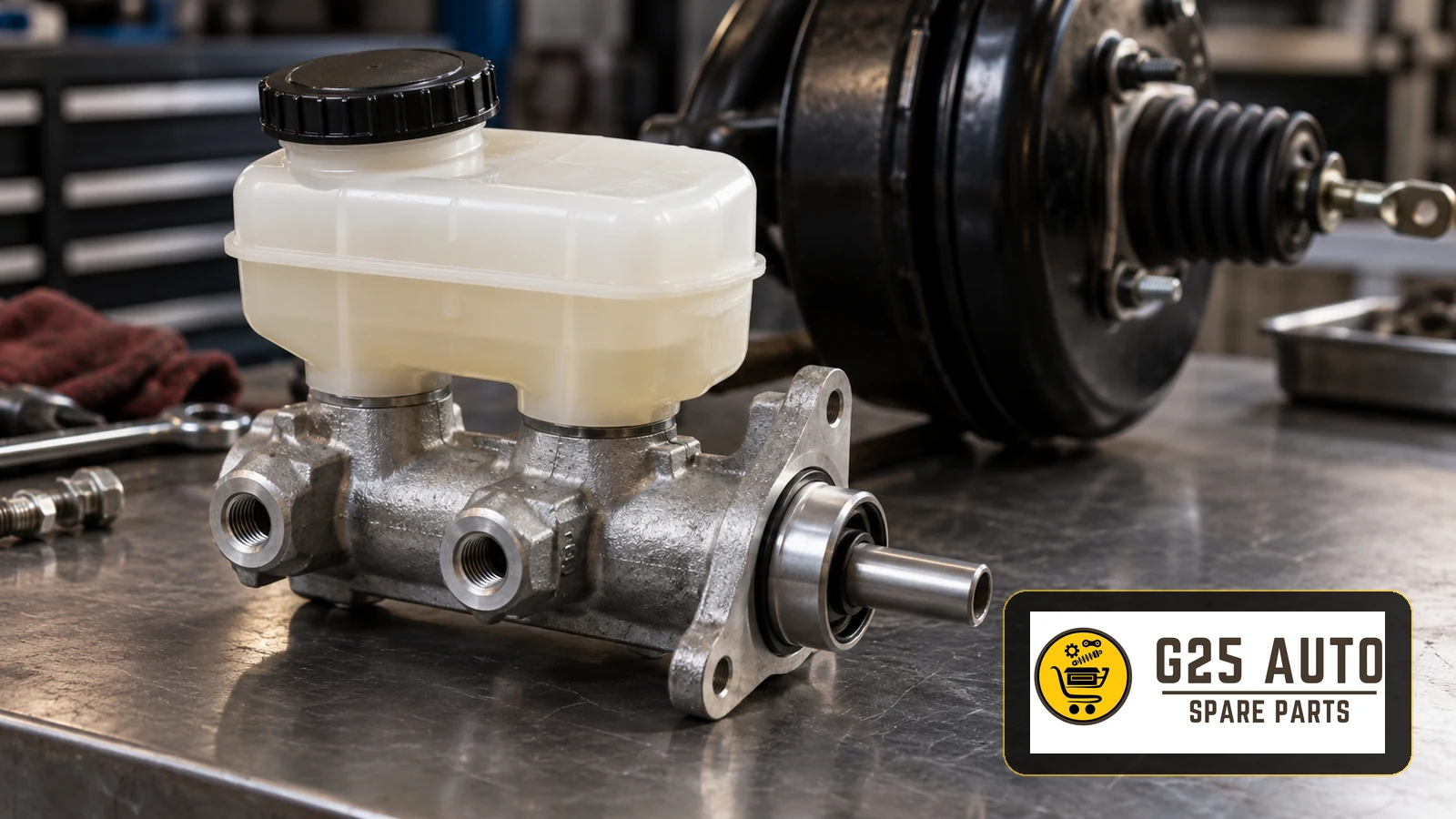
The brake master cylinder is a critical safety component that generates hydraulic pressure when the brake pedal is pressed. Selecting a replacement requires checking the OEM or part reference, VIN, engine code and production date against the vehicle application. This guide explains its function, fault symptoms and selection considerations.
What Is a Brake Master Cylinder and How Does It Work?
The master cylinder converts mechanical pedal force into hydraulic pressure for the brake calipers or drum brake mechanisms. Many vehicles use two hydraulic circuits, allowing some braking capability if one circuit fails, although braking performance is compromised.
The assembly includes pistons, return springs, seals and a connected fluid reservoir. Pedal operation moves the pistons, pressurising brake fluid. Pipes and hoses transmit that pressure to the wheel brakes.
Symptoms of a Brake Master Cylinder Fault
Possible symptoms require professional assessment; none establishes a master cylinder fault on its own:
- A soft pedal or excessive pedal travel
- Different resistance between pedal applications
- Unexplained loss of brake fluid
- Fluid leakage near the pedal area or in the engine compartment
- Reduced braking performance and longer stopping distances
- A brake or ABS warning light
- A pedal that slowly sinks under sustained pressure
- Vibration or unusual braking noises, which may involve other components
These symptoms call for a detailed brake system inspection by a qualified workshop.
How Is the Fault Diagnosed?
Several brake system faults share these symptoms. Professional investigation may include:
- Visual inspection of the master cylinder and connections for leaks
- Hydraulic pressure testing
- Vacuum booster testing where applicable
- Systematic inspection of hoses, pipes, calipers and drum brakes
- Reading ABS and brake system fault codes with diagnostic equipment
- Controlled braking performance testing when safe
A technician evaluates the results to identify the cause and recommend repairs.
How to Identify the Correct Master Cylinder
Different versions can exist even within one vehicle model. Workshops and parts buyers should verify the application before ordering.
OEM and Part Reference Checks
Use the original equipment reference as a starting point. Check markings on the existing component and confirm current replacement references through reliable application data or a service professional. A reference search alone does not guarantee fitment.
Verification Using the VIN
The vehicle identification number helps locate the relevant application in a parts catalogue. Confirm the brake system specification and any catalogue restrictions with the supplier; VIN matching alone may not resolve every variant.
Engine Code and Production Date
Engine options and production changes can affect brake components. Establish the engine code from the vehicle documentation or identification markings and distinguish the production date from the first registration date.
Pre-order Checklist
- Have the VIN available
- Identify the engine code
- Record first registration and production dates
- Check the existing master cylinder’s OEM or part reference
- Identify the brake system specification, including ABS or stability control equipment
- Check whether the reservoir is integrated or separate
- Identify the type of brake assistance
- Review these details with the supplier before ordering
Original Equipment and Aftermarket Comparison
Both original equipment and aftermarket replacements may be available. Evaluate the actual product and application:
| Factor | Original equipment | Aftermarket |
|---|---|---|
| Fitment | Check the correct vehicle-specific reference | Verify the stated application and restrictions |
| Quality standards | Review the product specification | Specifications and supporting documentation vary |
| Warranty | Check the applicable supplier terms | Check manufacturer or supplier terms |
| Cost | Compare the actual quotation | Alternative price levels may be available |
| Availability | Confirm with the supplier | Confirm for the particular reference |
| Brand choice | Vehicle manufacturer’s supply channel | Various manufacturers and product ranges |
Choosing an Aftermarket Part
Consider these checks:
- Choose an established, traceable manufacturer
- Review relevant product specifications and supporting quality documentation
- Confirm application details with the supplier
- Read warranty terms carefully
- Inspect before installation; reject damaged or incomplete parts
- Use professional installation
Brake Master Cylinder Replacement
Replacement involves opening and bleeding the hydraulic system. It requires an experienced technician following the vehicle manufacturer’s procedure.
General Replacement Stages
- Secure the vehicle on level ground
- Handle and remove brake fluid as the procedure requires
- Disconnect brake lines from the master cylinder
- Remove the master cylinder from its mounting or booster
- Install the replacement cylinder
- Reconnect the brake lines
- Fill with the specified fresh brake fluid
- Bleed the system according to the vehicle-specific sequence
- Check for leaks and complete controlled functional testing
The technician should confirm safe operation before any controlled low-speed assessment. This overview does not replace vehicle-specific repair instructions.
Master Cylinder Maintenance
Routine checks help identify developing problems:
- Check fluid level at the recommended intervals
- Replace brake fluid according to the vehicle’s maintenance schedule
- Watch for signs of leakage
- Arrange prompt inspection if pedal feel changes
- Use fluid meeting the vehicle manufacturer’s specification
- Have professionals service the system to limit contamination and air entry
Frequently Asked Questions
When should the master cylinder be replaced?
Replacement generally follows confirmed faults such as leakage, internal seal damage or loss of performance, rather than a universal mileage interval. Follow vehicle-specific guidance.
Can a vehicle be driven with a faulty master cylinder?
No. Suspected master cylinder failure can seriously impair braking. Stop using the vehicle and arrange recovery to a workshop.
Should other components also be replaced?
The technician should assess related components, including the booster, hoses and brake fluid. Replace or service them where inspection and the repair procedure require it.
How often should brake fluid be changed?
Follow the manufacturer’s time or mileage schedule for the specific vehicle. There is no single interval applicable to every model.
Is an aftermarket master cylinder safe?
Assess the specific product’s application, documented specification and traceability. Brand recognition or a generic certification claim alone cannot establish suitability. Professional installation is essential.
Conclusion
The master cylinder is central to safe braking. Check the part reference, VIN, engine code and production date together rather than ordering by appearance or guesswork.
Compare original equipment and aftermarket options using verified application information, product documentation and supplier terms. Professional installation and scheduled maintenance support reliable operation.
Any braking fault requires prompt professional attention. Brake system repairs should be entrusted to qualified technicians.