
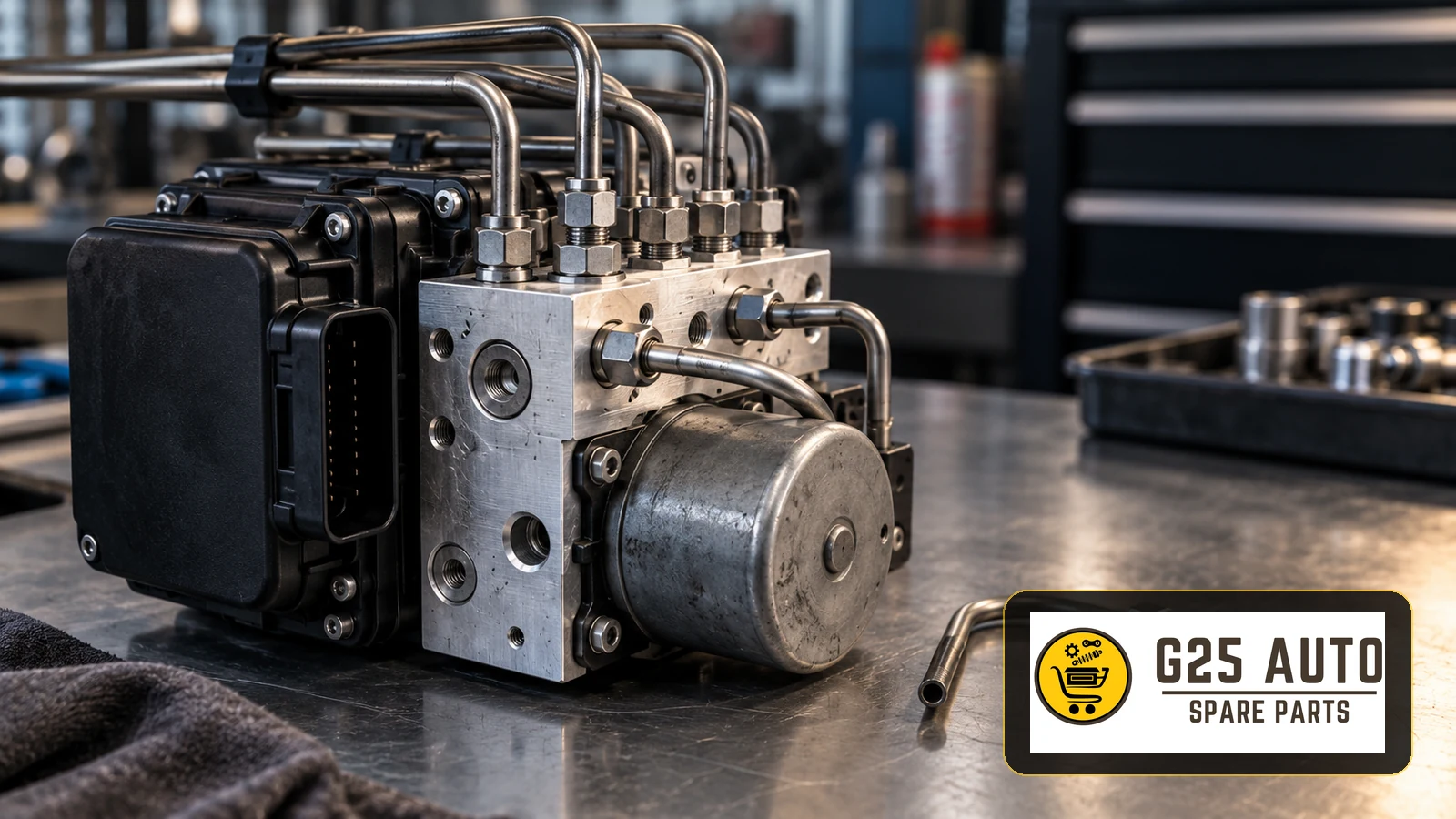
Brake hydraulic distribution blocks and pipe connections carry pressure to calipers and drum brakes. Faults can cause a soft pedal, fluid leaks and reduced braking. Diagnosis requires visual checks, pressure testing and professional assessment. Check part references, VIN and equipment before ordering.
What Is a Brake Hydraulic Distribution Block?
Depending on design, the block distributes pressurised fluid from the master cylinder to the wheel brakes. In ABS/ESP assemblies, electronically controlled hydraulic valves regulate individual wheel pressure to help prevent locking. The precise arrangement depends on the braking system fitted.
Pressure-resistant steel or specified alloy brake pipes connect the assembly to wheel brakes. Pipe construction, unions and sealing arrangements must match the application. Pressure ratings vary; use the relevant technical specification rather than a universal pressure figure.
Distribution Block and Pipe Fault Symptoms
Possible hydraulic system symptoms include:
Early Signs Drivers May Notice
- Soft pedal: unusually soft braking response
- Extra pedal travel: delayed resistance
- Brake warning: possible fluid-level or pressure issue
- ABS/ESP warnings: detected system faults
- Wet patches: possible brake fluid leakage
- Uneven braking: unequal braking response
- Falling fluid level: repeated reservoir loss
Further Fault Symptoms
- Binding brakes: possible sticking valves
- Unexpected pedal vibration: requires hydraulic assessment
- Longer stopping distance: potentially reduced pressure transmission
- Rust: deteriorating metal pipes
- Swelling: deteriorating flexible hoses
Diagnosis and Professional Checks
Professional diagnosis may involve:
Visual Inspection
A technician checks:
- Pipe corrosion, cracks and deformation
- Wetness around connections
- Block electrical connectors
- Pipe clamp security and position
- Hose condition, flexibility and swelling
Functional Tests
Applicable workshop tests include:
- Pressure testing: pressure retention
- Diagnostic scanning: fault-code interpretation
- ABS testing: controlled checks when safe
- Air ingress assessment: appropriate diagnostic procedure
- Leak checks: manufacturer-specified testing
Issues Requiring Specialist Assessment
These can include:
- Internal pipe corrosion or restriction
- Sticking hydraulic valves
- Electronic control faults
- Pressure sensor calibration issues
- Complex ABS/ESP faults
Original and Aftermarket Parts
Assess both options against the application’s requirements.
Original Equipment Parts
Check:
- Vehicle manufacturer’s specifications
- Documented production quality
- Applicable warranty terms
- Confirmed availability
- Compatibility of associated components
Aftermarket Parts
Compare:
- Quoted cost
- Confirmed supplier availability
- Documented technical specifications
- Relevant quality documentation
- Suitable product choices
An Impartial Selection
Consider budget, vehicle use and applicable warranty requirements. Original equipment may be preferred where relevant warranty conditions apply; a documented aftermarket option may suit other repair requirements. Verify quality and fitment for either option; brand category alone does not establish suitability.
Correct Part Identification Checklist
Before ordering:
- Record the VIN
- Identify the engine code
- Confirm ABS/ESP equipment
- Check production year and month
- Read existing part references
- Provide complete supplier information
- Verify replacement codes
- Inspect packaging and damage
- Check required seals and fittings
- Request understandable installation instructions
- Obtain written warranty terms
- Clarify returns after installation
Why Original Part References Matter
Incorrect hydraulic components can compromise safety. Verify the application.
What Is a Part Reference?
An original equipment reference identifies a component and may appear stamped or labelled on it. Reference formats vary. Cross-check it in application information alongside vehicle details rather than treating a visible code as a fitment guarantee.
Verification Using the VIN
VIN-based catalogue checks help identify:
- Production details
- Factory equipment
- Engine and transmission
- Body or special-series variants
- Regional specification differences
Production Date Versus Model Year
Model year and production date can differ: a vehicle may have been built in the preceding calendar year. Parts may change within a model year, making production month relevant when identifying the hydraulic assembly.
Equipment Checks
Variants may include:
- Standard braking
- ABS
- ABS with ESP
- Electronic brakeforce distribution
- Emergency brake assistance
- Brake assist (BAS)
Block and pipe configurations can vary with equipment.
Quality Standards for Hydraulic Components
Assess application-specific evidence. General certification claims do not establish that a particular hydraulic component meets the vehicle’s requirements.
Certification and Documentation
- Check requirements relevant to the component
- Review quality management documentation
- Verify claimed independent assessments
- Confirm documentation covers the intended application
Material Quality
Verify specified materials for:
- Steel pipe construction and corrosion protection
- Metal pipe unions
- Fluid-compatible flexible hoses
- Metal block housings
- Suitable temperature-resistant seals
Hydraulic Components Compared
| Factor | Steel pipes | Flexible hoses | Distribution block |
|---|---|---|---|
| Durability | Condition-dependent | Ageing-sensitive | Condition-dependent |
| Corrosion | Inspect exterior | Inspect metal fittings | Inspect housing/connections |
| Flexibility | Rigid | Flexible | Rigid |
| Installation | Correct routing/forming | Correct positioning | Application-specific procedure |
| Pressure capacity | Verify specification | Verify specification | Verify specification |
| Maintenance | Periodic inspection | Inspection/prescribed replacement | Prescribed checks |
| Fault signs | Corrosion/cracks | Swelling/hardening | Electronic faults/leaks |
| Replacement | When required | Condition/manufacturer guidance | When required |
Installation and Maintenance
Qualified technicians should perform hydraulic repairs. The following preparation and checks describe the main stages; the vehicle’s service procedure determines the actual work.
Before Installation
- Prepare specified fresh fluid
- Check seals and fittings
- Keep the work area clean
- Obtain required specialist tools
- Prepare bleeding equipment
After Installation
- Verify specified tightening torques
- Bleed using the prescribed procedure
- Adjust fluid level
- Perform prescribed safe functional testing
- Recheck as required
Routine Maintenance
- Follow scheduled visual inspections
- Replace fluid at prescribed intervals
- Follow hose replacement guidance
- Use only approved corrosion protection
- Consider seasonal condition checks
Sourcing Aftermarket Parts
Reliable suppliers and accurate identification are essential when sourcing hydraulic components. For G25Auto European and Balkan B2B enquiries, provide vehicle details and part references. Confirm suitability and documentation with the supplier before ordering.
Frequently Asked Questions
Can block failure make driving unsafe?
Serious faults can severely reduce braking. Do not drive; arrange recovery for professional assessment.
Must corroded pipes be replaced?
A technician must assess corrosion severity. Advanced corrosion or deformation can require replacement.
Are ABS brake pipes different?
Routing and block connections can differ. Use the specified application.
Which brake fluid is required?
Use the vehicle manufacturer’s specified fluid and follow its mixing restrictions.
Do aftermarket pipes last less?
Service life depends on materials, quality, installation and conditions; equivalent life cannot be assumed.
Does one damaged pipe require complete replacement?
Individual replacement may suffice. Inspect remaining pipes, particularly on older vehicles.
How long does bleeding take?
Time depends on system and equipment. Complete the prescribed procedure and verify results.
Must brake pads also be replaced?
Not automatically. Inspect pads and discs and replace where necessary.
Conclusion and Recommendations
Hydraulic blocks and connections are safety-critical. Inspect regularly and address faults promptly.
Pedal changes, warnings or falling fluid levels require professional investigation.
Check VIN, engine, equipment, part references and relevant quality evidence before ordering.
Qualified installation, correct bleeding, functional testing and prescribed maintenance matter.
Prioritise suitable parts and careful workmanship when repairing brakes.