
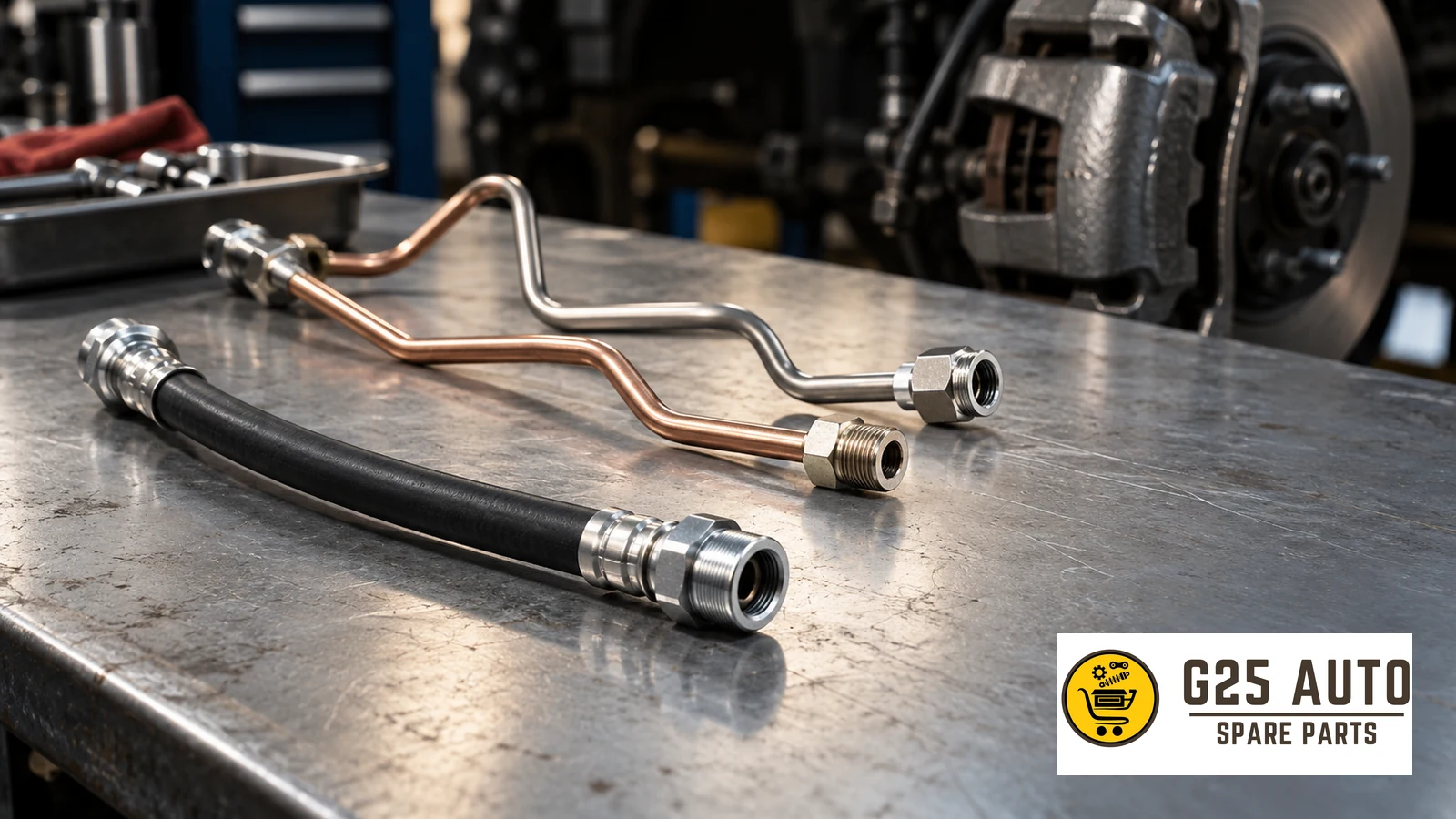
Brake hoses and metal brake pipes carry hydraulic pressure to the calipers. Rigid pipes connect fixed points; flexible hoses accommodate steering and suspension movement. Both must remain in sound condition for safe braking.
What Are Brake Hoses and Metal Brake Pipes?
Hoses are flexible components, commonly using rubber or steel-braided reinforcement near the wheels. Rigid pipes connect the hydraulic system along the body and may use steel or copper-nickel alloys, depending on specification.
The master cylinder sends pressurised fluid through pipes and hoses to the calipers, which press pads against discs. Leaks, damage or blockages can compromise braking.
Brake Hose and Metal Pipe Fault Symptoms
Possible warning signs include:
Visible Signs
- Swelling or bulging hoses
- Cracking, tearing or peeling surfaces
- Rust, corrosion or deformed pipes
- Wet connections or fluid leakage
- Fluid around wheels or rims
- Oily, slippery drops beneath the vehicle
Symptoms During Driving
- A soft or spongy pedal
- Increased pedal travel
- Pedal vibration or pulsation
- Longer stopping distances
- A pedal sinking towards the floor
- Pulling to one side
- Sudden loss of braking effectiveness
System Warnings
- Brake warning light illuminated
- Continuously falling fluid level
- An ABS warning where associated with the fault
How Are Faults Diagnosed?
These symptoms require professional diagnosis; they do not identify one component conclusively. Workshop checks include:
Visual Inspection
With the vehicle safely raised, inspect hoses, pipes and connections for damage, corrosion, leaks, bends, crushing and abrasion.
Pressure Testing
Use manufacturer-specified procedures to assess leaks or abnormal hose expansion under pressure. Results require professional interpretation.
Leak Checks
Inspect every connection, union and sealing area. Even small leaks require attention.
Internal Hose Condition
Deteriorated inner layers can restrict flow, particularly in aged hoses. Appropriate tests help investigate irregular braking.
Brake Hoses and Metal Pipes Compared
| Feature | Brake Hose | Metal Brake Pipe |
|---|---|---|
| Material | Rubber or steel-braided reinforcement | Steel or copper-nickel, as specified |
| Flexibility | Flexible for moving areas | Rigid for fixed areas |
| Location | Wheel connections | Main lines along chassis |
| Service life | Condition and manufacturer guidance | Condition, corrosion and manufacturer guidance |
| Fault causes | Ageing, cracks, internal deterioration | Rust, corrosion, impact damage |
| Replacement | Professional installation | Routing can increase complexity |
| Leak risk | Damage and ageing matter | Pipe condition and connections matter |
Hose and Pipe Inspection Checklist
Include these checks in regular brake maintenance:
Visual Checklist
- Inspect hoses at manufacturer-recommended intervals
- Look for cracks, tears or swelling
- Check pipes, especially underneath, for corrosion
- Check connections for wetness
- Look for fluid beneath the vehicle
- Check reservoir level against MIN–MAX markings
- Have cloudy or darkened fluid assessed
Functional Checklist
- Have pedal firmness assessed
- Check pedal travel against specifications
- Have pulling during braking investigated
- Leave controlled braking tests to competent personnel
- Monitor warning lights
- Include professional inspection in scheduled servicing
- Inspect wheel-area components during tyre replacement
Choosing Original or Aftermarket Parts
Both supply channels offer options; selection depends on documented quality and the vehicle application.
Original Parts
Original parts follow the vehicle manufacturer’s supply specifications. Verify the exact application and relevant warranty terms; original branding alone cannot guarantee fitment.
Aftermarket Parts
Alternative manufacturers offer replacement components with varying specifications. Check documented quality, application and supplier traceability rather than assuming equivalent performance or certification.
Selection Priorities
Quality and suitability are critical for braking components. For either option:
- Verify OEM and part-reference cross-matches
- Check VIN, engine code and production date
- Review documented specifications and applicable requirements
- Confirm warranty terms
- Use professional installation
For G25Auto B2B procurement across Europe and the Balkans, provide verified vehicle and part details when requesting suitable components.
Why Fitment Verification Matters
Incorrect hoses or pipes create serious risks. Verify the following before ordering:
OEM and Part References
References help identify applications. Different production years or versions can require different parts; confirm the correct cross-reference with the supplier.
Vehicle Identification Number (VIN)
A VIN supports catalogue identification but does not guarantee suitability alone. Check vehicle documents or identification markings and verify the resulting application.
Engine Code and Production Date
Components may vary by engine and production period. Use vehicle documentation or identification labels to establish these details.
Installation and Replacement
Professional replacement generally involves:
Replacement Stages
Securely raise the vehicle, remove wheels as required and collect escaping fluid during removal. Install the replacement using specified routing, tightening torques and seals; check unions for leakage.
Bleeding
Opening the hydraulic circuit can introduce air and impair braking. Bleed using the vehicle manufacturer’s specified sequence and equipment rather than a universal wheel order.
Testing and Inspection
Complete specified pressure, leak and controlled braking checks. Do not release the vehicle until safe operation is confirmed.
Frequently Asked Questions
How Often Should Hoses Be Replaced?
Follow manufacturer guidance and actual condition. Cracks or swelling require prompt assessment regardless of age.
What Happens When Metal Pipes Rust?
Corrosion can weaken pipes, causing leaks or rupture and severe braking loss. Professional assessment determines replacement needs.
Why Is Hose Swelling Dangerous?
Bulging suggests structural deterioration. Abnormal expansion can compromise pressure transmission and increase failure risk.
Are Aftermarket Hoses Safe?
Assess documented specifications, verified application and manufacturing quality. Price or broad certification claims alone are insufficient.
Should One Hose or All Hoses Be Replaced?
The technician should assess every hose, considering damage, age and condition before deciding the replacement scope.
How Long Does Replacement Take?
Access, pipe routing and damage affect workshop time. Allow for bleeding and testing; request a vehicle-specific estimate.
Why Does Fluid Level Fall?
Pad wear can gradually lower the level. Rapid or persistent loss needs investigation of hoses, pipes, calipers and master-cylinder seals.
Conclusion
Hoses and pipes are essential hydraulic components. Regular inspections and timely attention to damage support safe operation.
Investigate warning signs promptly. Verify references, VIN application, engine code and production date when selecting replacements.
Professional installation, bleeding and testing are essential before returning the vehicle to service.
Combine suitable parts with regular maintenance and qualified workshop support. Have any braking concern assessed without delay.