
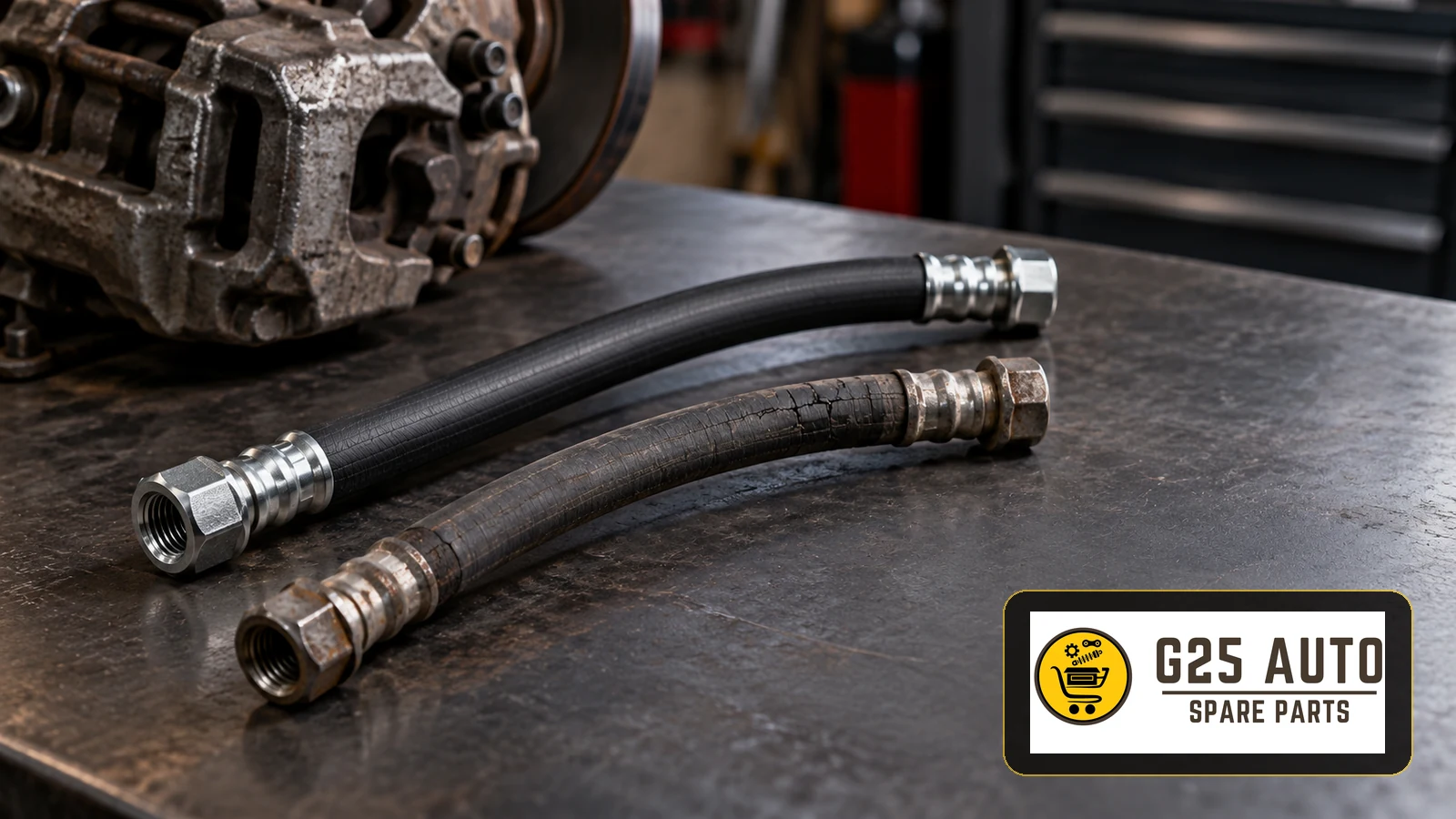
Brake hoses transmit hydraulic pressure to the brake calipers. These safety-critical flexible components require correct selection and regular inspection; faults can compromise braking.
What Is a Brake Hose and How Does It Work?
A flexible rubber or steel-braided hose carries pressurised brake fluid towards the caliper, accommodating steering and suspension movement where rigid pipes cannot.
Arrangements vary by vehicle. Hoses must withstand operating pressure while allowing movement. Rubber designs typically have an inner lining, reinforcement and outer cover.
Brake Hose Fault Symptoms
Recognising possible warning signs early matters:
Visible Warning Signs
- Surface cracks or tears
- Bulges or swelling
- Brake fluid leakage or wetness
- Chafing marks
- Corroded metal fittings
- Discolouration or hardening
Symptoms Noticed During Driving
- A progressively sinking brake pedal
- A spongy pedal
- Longer stopping distances
- Pulling to one side when braking
- Abnormal wheel-area heat after braking
- Reduced braking after sustained use
Warning Signs Versus a Confirmed Diagnosis
These signs suggest possible faults, but require professional diagnosis. A soft pedal can also involve air or other hydraulic problems; pulling can involve calipers or uneven pad condition.
A workshop should inspect each hose, fittings and fluid level, using appropriate tests and manufacturer procedures. Bleeding and controlled braking checks should follow where required.
Types of Brake Hose
Different constructions serve different applications:
Standard Rubber Hoses
Common in passenger vehicles, these use suitable synthetic rubber and reinforcement. Material specification and suitability depend on the application.
Stainless Steel Braided Hoses
A stainless braid surrounds the inner hose in some performance or demanding applications. Expansion behaviour and pedal feel depend on the design; suitability must be verified.
PTFE-lined Hoses
Some specialist hoses use a PTFE lining. Confirm documented temperature and fluid compatibility rather than assuming universal suitability or service life.
Original and Aftermarket Brake Hoses Compared
| Feature | Original Hose | Aftermarket Hose |
|---|---|---|
| Manufacturer | Original supply channel | Alternative manufacturer; verify traceability |
| Compatibility | Confirm vehicle application | Verify references and application |
| Quality requirements | Check vehicle specifications | Check documented specifications and applicable requirements |
| Availability | Confirm with supplier | Confirm with supplier |
| Warranty | Check applicable terms | Check product and supplier terms |
| Range | Application-specific references | Range varies by manufacturer |
What to Check When Selecting a Brake Hose
OEM and Part Reference Verification
Identify the correct reference. Different equipment levels, engines and production years within one model may require different hoses. A reference alone does not guarantee fitment.
Check markings on the old hose where legible. Otherwise, use vehicle details and a VIN-based catalogue lookup through a service provider or supplier. Verify before ordering.
VIN and Production Date
Production updates can change specifications between otherwise similar vehicles. Check the VIN application and production date.
Providing the VIN helps suppliers identify relevant vehicle details and reduce ordering errors; it does not replace checking the specified part.
Engine and Equipment Level
Diesel, petrol, different power outputs and equipment packages may use different brake configurations. ABS and stability-control equipment can also be relevant.
Performance packages may specify different hose constructions. Include the engine code and equipment information when selecting parts.
Brake Hose Replacement Checklist
Workshop checks before and after replacement include:
Before Replacement
- Is the vehicle on firm, level ground?
- Is it secured according to workshop procedures?
- Are suitable wheel-removal tools available?
- Has the replacement reference been verified?
- Is the specified brake fluid available?
- Will the reservoir be handled according to service instructions?
- Is a suitable fluid collection container ready?
After Replacement
- Are connections tightened to specified torque?
- Is fluid at the correct level?
- Has the system been bled as specified?
- Has pedal operation been professionally checked?
- Are all connections free from leaks?
- Has braking been safely checked before release?
- Have any brake warning lights been investigated?
- Do wheels rotate without brake drag?
Safety and Maintenance Recommendations
Follow vehicle-specific inspection and replacement guidance rather than a universal age or mileage interval. Closer inspection may be appropriate with:
- Frequent road-salt exposure
- Extreme hot or cold conditions
- Off-road or dusty use
- Demanding driving or heavy loads
- Older vehicles
Include hoses in brake servicing. Cracks, swelling or hardening require prompt professional assessment and replacement where necessary.
Brake Hose Sourcing for G25Auto B2B Buyers
For European and Balkan B2B procurement, compare original and aftermarket references using documented specifications and verified applications.
Apply the same checks to other brake components. Confirm the vehicle details before requesting suitable parts.
Frequently Asked Questions
When Should Brake Hoses Be Replaced?
Follow the manufacturer’s guidance and actual condition. Damage requires prompt attention regardless of the planned interval; operating conditions affect deterioration.
What Happens If a Hose Bursts?
Hydraulic pressure and braking effectiveness can fall severely. Stop safely and arrange recovery; do not continue driving with a suspected hydraulic failure.
Should One Hose or All Hoses Be Replaced?
Inspect the remaining hoses when replacing a damaged one. Whether to replace an axle pair or more depends on condition and manufacturer guidance.
Are Aftermarket Brake Hoses Safe?
Suitability depends on verified application, documented specifications and reliable manufacture. References or general certification claims alone cannot establish safety.
Does Hose Replacement Require New Brake Fluid?
Fluid can escape and air can enter during replacement. Follow specified fluid replacement and bleeding procedures; assess whether a complete fluid change is due.
How Can a Fault Be Recognised?
Possible signs include a soft or sinking pedal, longer stopping distances, cracks, swelling, leakage and pulling. Professional inspection must establish the cause.
Conclusion
Regular inspection and timely replacement matter. Verify references, VIN application and production date; incorrect hoses can compromise braking.
For original and aftermarket options, assess documented quality and suitability. Cost comparisons should follow technical verification, and competent personnel should perform installation.
Maintain regular brake checks and seek professional assistance promptly when warning signs appear.