
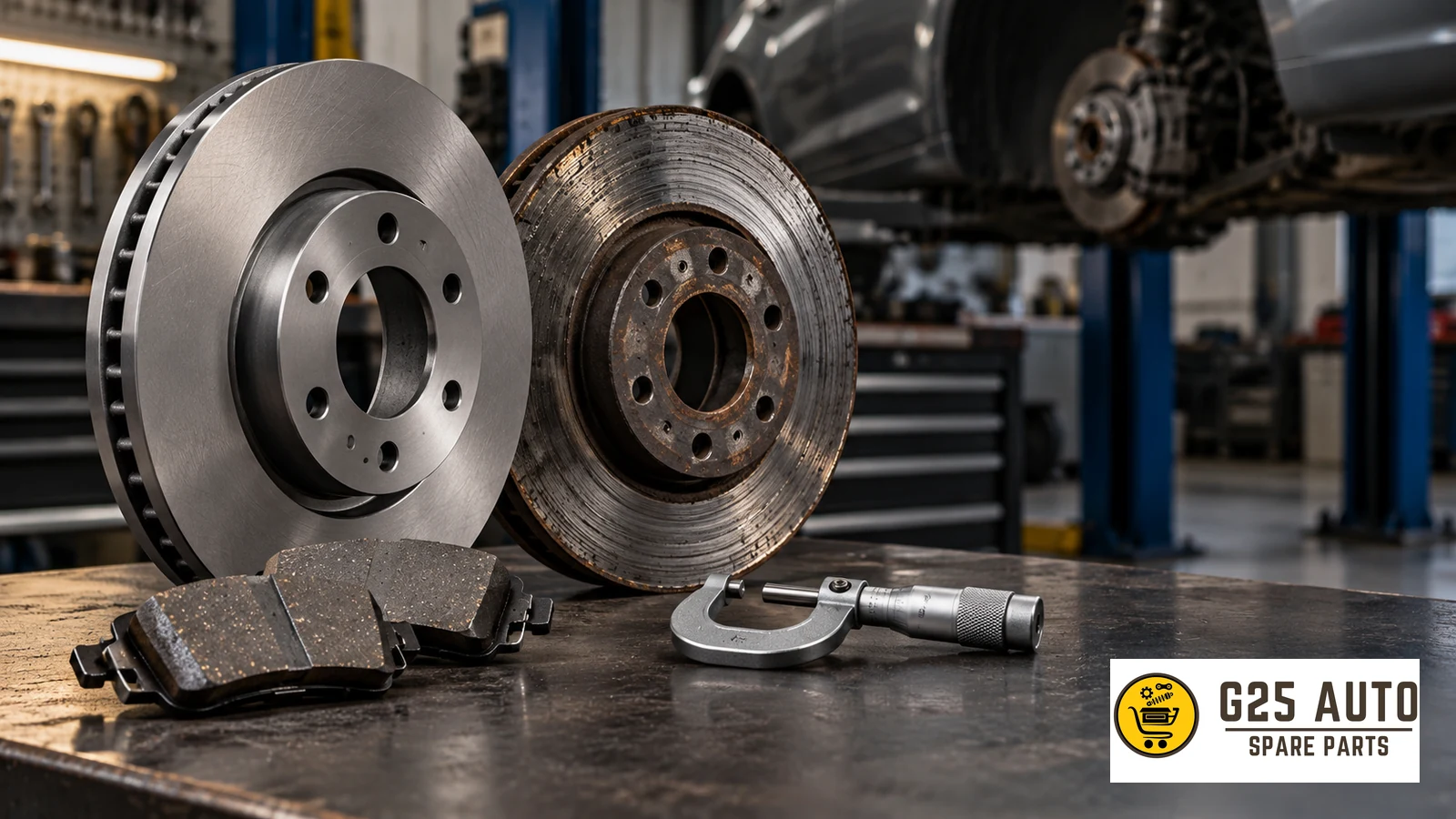
Brake discs are critical to slowing and stopping a vehicle. Selection requires checking the VIN, engine code and production date against the specified brake system. Without OEM or part-reference verification, a replacement disc may be unsuitable and create safety risks.
What Is a Brake Disc and How Does It Work?
A brake disc rotates with the wheel and is gripped by the brake pads to slow it down. Disc brakes are commonly fitted at the front, and many vehicles also use them at the rear.
Hydraulic pressure makes the caliper press the pads against both sides of the disc. Friction converts kinetic energy into heat. Discs therefore use heat-resistant materials and gradually wear.
Signs of Brake Disc Problems
Possible signs of worn or damaged discs include:
- Vibration: Shaking through the steering wheel or pedal during braking may indicate disc irregularities.
- Squealing or noise: Grooves or worn pads may cause braking noise.
- Pulling: Uneven braking may involve disc wear or caliper problems.
- Longer stopping distances: Reduced braking performance can involve worn discs or pads.
- Visible wear: Cracks, deep grooves or uneven surface wear.
- Burning smell: A persistent smell warrants inspection; heavy braking can cause overheating.
Warning Signs Versus a Confirmed Diagnosis
These symptoms require professional assessment. Vibration can also arise from pads, sticking calipers or suspension problems. Dust or moisture may sometimes cause temporary noise.
Diagnosis includes:
- Measuring disc thickness against manufacturer specifications
- Checking surface condition and regularity
- Inspecting visually for cracks
- Professionally testing the complete braking system
Critical Factors in Brake Disc Selection
Verifying OEM and Part References
One of the main mistakes in brake disc selection is relying only on make and model. Even vehicles from the same model range can have different disc specifications. Identify the actual brake configuration before ordering. Check:
- VIN: Use the vehicle identification number with application data to identify the relevant specification.
- Engine code: Engine variants may require different disc diameters or thicknesses.
- Production date: Technical changes may occur within a model year.
- OEM/part reference: Cross-check the existing reference against replacement application data.
Ordering without these identification details increases the risk of receiving an unsuitable part. A mismatch can compromise the braking system and create unnecessary return procedures. Check the replacement against the vehicle application rather than relying on visual similarity.
Original and Aftermarket Brake Discs Compared
| Feature | Original disc | Aftermarket disc |
|---|---|---|
| Compatibility | Verify the correct manufacturer application | Verify cross-references and brake specification |
| Quality requirements | Vehicle manufacturer specification | Check relevant product documentation and approvals |
| Warranty | Check supplier terms | Terms vary by manufacturer and supplier |
| Cost | Compare the applicable quotation | Alternative pricing may be available |
| Availability | Confirm before ordering | Confirm before ordering |
| Brand choice | Vehicle manufacturer’s supply range | Multiple manufacturers may offer suitable products |
Assessing Original and Aftermarket Options Fairly
A correctly identified original disc follows the vehicle manufacturer’s specification. This does not mean that every aftermarket part is poor quality. Established replacement-part manufacturers may offer suitable alternatives, but assess documented specifications rather than assuming equivalence based on production origin or brand reputation.
When choosing aftermarket discs:
- Check relevant product approval documentation
- Buy from established, reliable suppliers
- Verify OEM cross-references and application
- Question unusually low prices and unclear specifications
A suitable aftermarket disc may be an option when its specification is verified. The priority is ordering the correct reference from a reliable source. A reference match alone does not guarantee equivalent performance; product documentation and the vehicle application still need checking.
Brake Disc Replacement Checklist
Include these checks when arranging replacement:
- Record VIN, engine code and production date
- Check the existing OEM or part reference
- Verify disc diameter and thickness
- Order the verified application from a reliable supplier
- Inspect pads and follow replacement requirements when fitting discs
- Replace discs as an axle pair according to the service procedure
- Check brake fluid and caliper condition
- Follow the disc and pad manufacturer’s bedding-in instructions
- Check pedal feel and vehicle behaviour after replacement
Choosing a Reliable Brake Disc Supplier
For safety-critical parts such as brake discs, working with reliable, experienced suppliers matters. A useful product range should be accompanied by clear identification support and documented commercial conditions. Assess:
- Relevant product range and confirmed availability
- Support for OEM-reference verification
- Technical guidance
- Documented warranty and returns terms
- Clear transport arrangements
For G25Auto B2B sourcing across Europe and the Balkans, provide vehicle details and part references, and confirm specifications and commercial terms before ordering.
Frequently Asked Questions
When Should Brake Discs Be Replaced?
The replacement point varies with operating conditions and disc wear. Follow manufacturer inspection guidance rather than a universal mileage interval. Replace discs below the specified minimum thickness or otherwise outside service limits. Arrange prompt inspection if vibration, noise or reduced braking performance appears.
Should Discs and Pads Be Replaced Together?
Follow the service and component manufacturer’s requirements when replacing discs and pads. Worn pads may fail to contact a new disc evenly and can damage its surface. Assess both components together, considering contact condition and balanced wear.
Can Only One Side Be Replaced?
Discs are generally replaced as an axle pair following the service procedure. Unequal braking condition can contribute to imbalance or pulling.
Can Brake Discs Be Resurfaced?
Only where the manufacturer permits it and the disc remains within the applicable thickness and condition limits. Machining removes material; measure first and reject cracked or unsuitable discs.
Are Aftermarket Brake Discs Safe?
Assess documented quality, applicable product approvals and verified fitment. Buy from reliable suppliers; price or a reference match alone does not establish suitability.
Brake Disc Maintenance Tips
To support disc life and braking performance:
- Avoid unnecessary harsh braking
- Use appropriate engine braking on descents
- Arrange regular brake inspections
- Check corrosion, especially after prolonged parking
- Replace worn pads before they damage discs
- Consider more frequent inspection under heavy loads or towing
Conclusion
Brake disc selection, installation and maintenance require care. Recognising symptoms is useful, but diagnosis needs professional inspection. Verify VIN, engine, production details and part references against the required specification.
Compare original and aftermarket options using documented suitability and supplier reliability. A suitable replacement must meet the application requirements; cost should not displace those checks. Regular maintenance and appropriate driving habits help manage disc wear and maintain braking condition.
Arrange professional inspection promptly when braking symptoms appear, keeping the complete system in serviceable condition.