
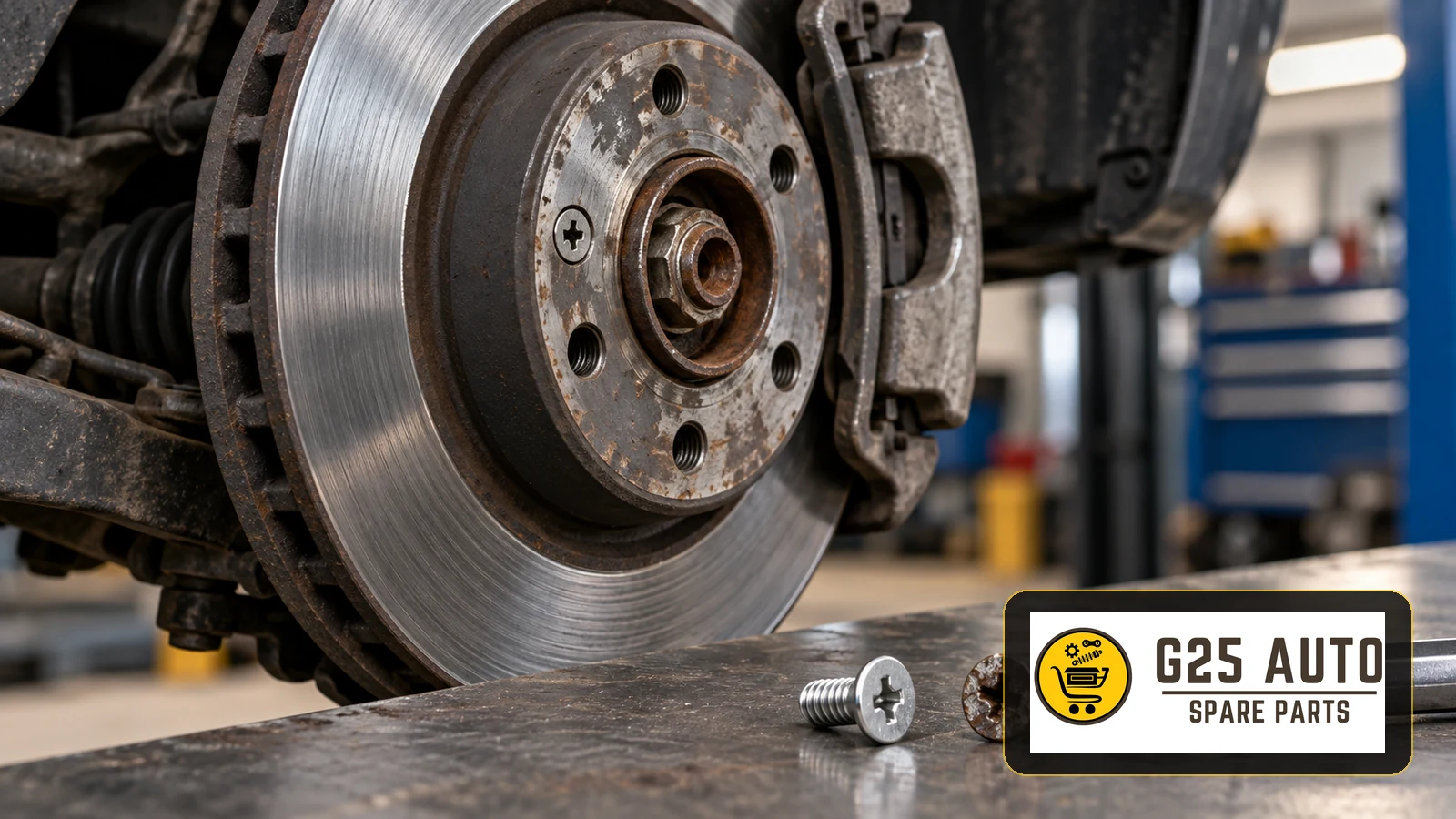
Brake disc retaining screws can seize through corrosion, overtightening or unsuitable materials. Common problems include seized or broken screws. Penetrating fluid, correctly fitting tools and, where necessary, specialist extraction can help. Correct installation and suitable replacement screws reduce future problems.
Why Brake Disc Retaining Screws Matter
Brake disc retaining screws are small components that hold the disc against the hub during assembly. They help keep the disc positioned while the mechanic works, making disc replacement and reassembly easier.
Some vehicle manufacturers fit these screws as standard; others use different arrangements. Where fitted, their quality and condition deserve attention. Frequent exposure to moisture and road salt increases the risk of corrosion.
Signs of Retaining Screw Problems
Problems usually become apparent during servicing:
- Damaged head: Rounded recess or slipping driver.
- Corrosion: Brown-orange deposits around the screw.
- Seizure: Screw resists normal removal force.
- Breakage: Head separates during removal.
- Burrs: Raised metal around the seat.
- Difficult installation: Binding or damaged threads.
Checks for Diagnosis
A systematic inspection helps identify the source of the problem before selecting a removal method:
1. Visual inspection: Check corrosion and whether the head recess remains intact.
2. Material: Identify the specified steel or coating from documentation; magnetism alone cannot establish suitability.
3. Tools: Match the driver type and size: Phillips, Torx or hex. Incorrect tools damage heads.
4. Threaded hole: Inspect for crushed or deformed threads.
Removal Problems and Solutions
Corroded Screws
Corrosion is a common removal problem, particularly in damp climates and regions where roads are salted during winter.
Penetrating fluid: Use an appropriate product according to its instructions, allowing time to penetrate. Keep it off braking surfaces.
Heat: Controlled heating may help, but can damage surrounding components. Leave this to professionals following suitable procedures.
Vibration: Controlled tapping or a suitable impact driver may loosen corrosion.
Damaged Screw Heads
When the head recess is damaged, an ordinary screwdriver may no longer engage. Specialist removal methods may be necessary:
Extractor: A reverse-thread extractor can engage a carefully prepared pilot hole.
Chisel or rotary tool: Cutting a slot may provide purchase but risks surrounding damage.
Welding: A specialist may weld on a nut for grip where appropriate.
Broken Screws
When the head breaks off, the remaining shank can be difficult to access. The appropriate method depends on how much remains exposed:
Exposed shank: A protruding section may permit gripping with pliers.
Drilling: A specialist can drill centrally, progressively removing material without damaging hub threads.
Left-hand drill: A reverse-cutting bit may sometimes release the screw.
Prevention and Maintenance
Installation Precautions
Tightening torque: Follow the vehicle service specification. Overtightening damages heads and complicates removal.
Anti-seize: Use only if the service procedure permits it; lubrication affects tightening. Avoid excess and friction-surface contamination.
Screw quality: Select the specified material, strength and coating; stainless steel is not automatically suitable.
Periodic Checks
Inspect screws during brake disc replacement and scheduled servicing. If heavy corrosion is present, replace affected screws before they cause removal problems. Vehicles exposed to road salt may warrant closer attention.
Retaining Screw Selection Checklist
- OEM reference: Confirm through reliable parts documentation.
- VIN: Check vehicle-specific application and production changes.
- Engine and build date: Check relevant variant differences.
- Material: Follow the specified grade.
- Coating: Match approved requirements and service conditions.
- Head: Match the original specified drive type.
- Length and diameter: Verify exact dimensions.
- Thread pitch: Incorrect pitch damages threads.
Original and Aftermarket Parts
Original and aftermarket retaining screws are available. Each option has advantages and points to consider; neither should be selected without checking the application.
Original Parts
Advantages: A correctly identified original part follows the vehicle manufacturer’s design specification, providing a documented starting point for selection.
Considerations: Original parts may carry a higher price. For a simple component, compare documented suitability and cost rather than assuming a meaningful performance difference.
Aftermarket Parts
Advantages: Alternative suppliers and pricing may be available; assess claimed material benefits against specifications.
Considerations: Poor materials or unsuitable production quality can result in premature corrosion or breakage. Reliable suppliers and traceable manufacturer information matter.
Making the Choice
Confirm references and specifications using VIN, engine and production details. These support identification but do not guarantee fitment alone.
Check manufacturer cross-references and relevant documentation. General quality certification does not prove application suitability.
For G25Auto B2B sourcing across Europe and the Balkans, confirm application details with the supplier before ordering.
Screw Material Comparison
| Feature | Standard steel | Zinc-coated steel | Stainless steel |
|---|---|---|---|
| Corrosion resistance | Limited unprotected | Coating-dependent | Grade-dependent |
| Durability | Specification-dependent | Specification-dependent | Specification-dependent |
| Reuse | Inspect; follow procedure | Inspect coating; follow procedure | Inspect; follow procedure |
| Climate suitability | Consider exposure | Consider coating | Confirm application approval |
| Removal | Corrosion can hinder | Coating condition matters | Seizure remains possible |
| Overall | Verify specification | Verify specification | Not universally preferable |
Head Types and Applications
| Head | Advantages | Limitations | Application |
|---|---|---|---|
| Phillips | Common tools | Can cam out | Vehicle-specific |
| Torx | Positive engagement | Matching bit required | Vehicle-specific |
| Hex socket | Positive engagement | Corrosion can obstruct | Vehicle-specific |
| Slotted | Simple drive | Limited engagement | Less common |
Frequently Asked Questions
Are retaining screws always required?
No. Designs differ; some use them as assembly aids. Where specified, reinstall according to the service procedure.
What if the head is damaged?
Extraction, slotting or drilling may help. Obtain professional assistance before risking hub damage.
How can a corroded screw be removed?
Allow suitable penetrant to work. Controlled vibration or professionally applied heat may help; avoid excessive force.
Which anti-seize should I use?
Use only the product and application method permitted by the vehicle procedure. Copper-based paste is not universally appropriate.
What tightening torque applies?
Use the vehicle’s service value, not a universal figure. Overtightening damages heads.
Can I reuse a screw?
Follow the replacement policy. Reject corroded, damaged or deformed screws; an intact head alone does not establish suitability.
Are aftermarket screws suitable?
Check supplier documentation, reference, dimensions, pitch and material against the application.
Can I replace the disc with a broken screw remaining?
Have the fragment professionally assessed and removed as required. Confirm correct seating and fastening before returning the vehicle to service.
Conclusion and Recommendations
Brake disc retaining screws are small but useful components. Appropriate maintenance and installation can reduce corrosion and the removal difficulties associated with damaged heads or seized threads.
Key recommendations:
- Select specified materials and coatings.
- Use anti-seize only where permitted.
- Apply specified torque with appropriate tools.
- Match driver type and size.
- Allow penetrant time; leave heat to professionals.
- Verify references, VIN and production details.
- Seek assistance rather than forcing damaged screws.
Whether selecting original or aftermarket parts, work with reliable suppliers and verify the vehicle specification. Correct identification, appropriate quality and fitment checks matter more than the category alone.
The braking system requires careful assembly. Although retaining screws primarily help position the disc, they should not be overlooked. Regular inspection, suitable replacement parts and correct installation reduce avoidable servicing problems.