
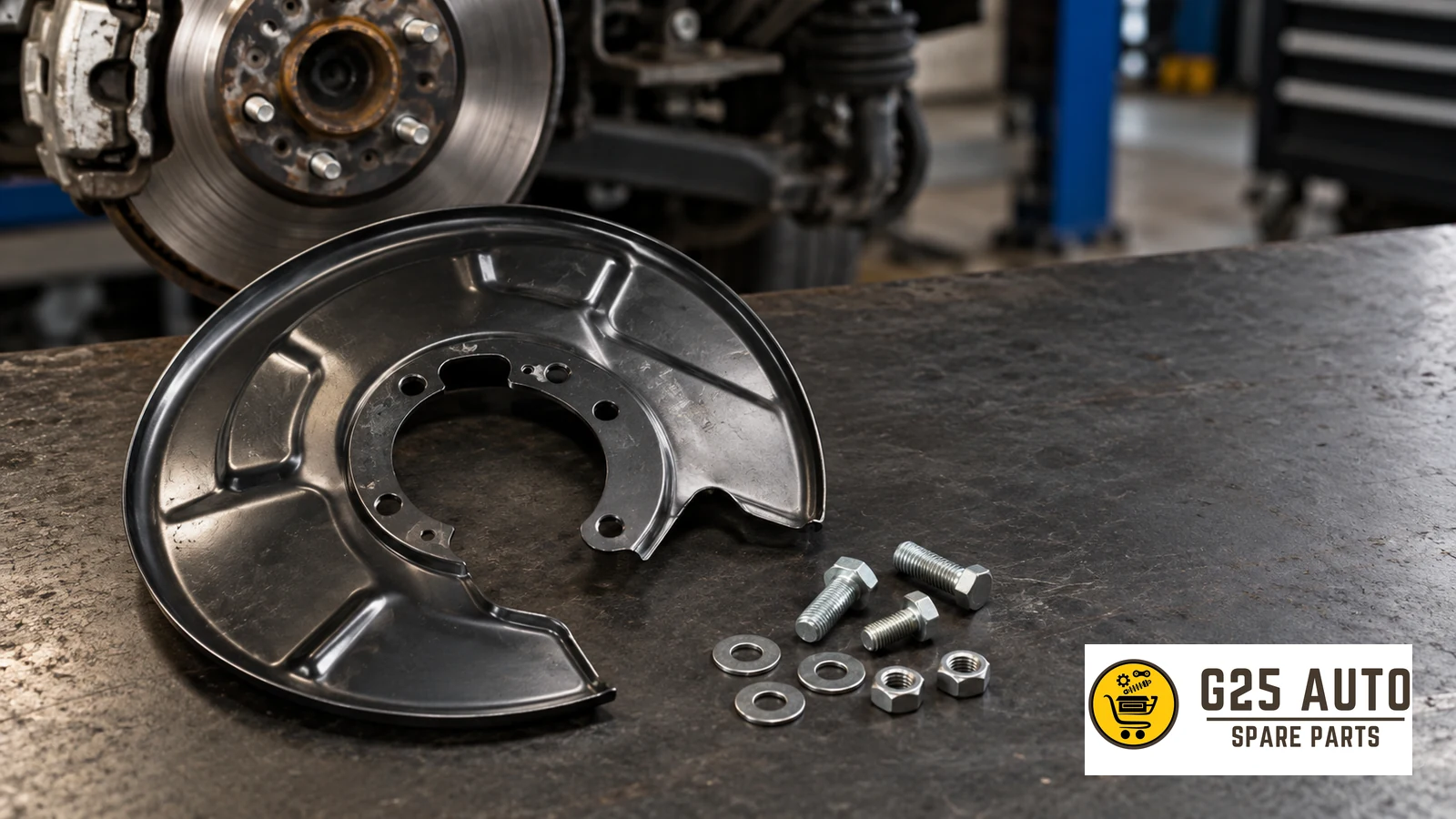
A brake disc dust shield helps protect the disc from mud, water and road debris. Its fasteners secure it to the axle assembly. Damage or missing hardware can leave the disc more exposed or allow contact with rotating parts. Check the vehicle’s VIN, production details and relevant original part references before selecting a replacement.
What Is a Brake Disc Dust Shield and Why Does It Matter?
The braking system is essential to vehicle safety. The dust shield, sometimes called a baffle or backing plate, is a thin metal panel behind the brake disc. It helps limit direct exposure to road dirt, mud and water.
A missing or damaged shield leaves the disc more exposed, particularly on wet or muddy roads. Corrosion and uneven wear should be investigated rather than attributed to the shield alone.
Main Functions
- Help shield the disc from mud, stones and debris
- Limit exposure to splash and moisture
- Influence the path of brake wear debris, depending on design
- Guide airflow around the brake, depending on design
- Help keep the brake assembly cleaner
The Role and Types of Fasteners
The shield attaches to the axle housing or hub carrier using hardware that may include:
- Application-specific metric bolts
- Self-locking nuts
- Spring washers and flat washers
- Plastic clips and retaining brackets
- Corrosion-protected fittings
Suitable hardware and correct installation keep the shield secure under vibration.
Possible Fault Symptoms
Problems with the shield or its mountings may produce these signs:
Audible Signs
- Scraping or rattling near a wheel
- Metal rubbing even without braking
- Whining or squealing that changes with speed
- Noise that increases during turns
Visible Signs
- Cracks or broken sections
- Marks indicating contact with the disc
- Rust at mounting points
- Loose or missing bolts and nuts
- A bent or distorted shield
Related Brake Symptoms
- Early disc corrosion
- Uneven disc wear
- Increased vibration during braking
- Excessive dust around the wheel
Fault Finding and Diagnosis
Important: These symptoms can suggest a shield problem but need professional assessment. Calipers, discs, pads and wheel bearings can cause similar symptoms.
Professional Inspection Steps
A workshop inspection may include:
- Safely lifting the vehicle and removing the wheel
- Inspecting the brake assembly
- Checking shield movement and clearance
- Checking fastener security and corrosion
- Examining the disc for damage and wear
- Inspecting other brake components where necessary
A qualified technician should establish the cause using appropriate inspection and measurement methods.
Why Compatibility Checks Matter
Shields and hardware can vary by model, production year, engine and vehicle specification. Incorrect selection can cause fitting problems, premature failure and safety risks.
Information Needed for Selection
- VIN: A reference for checking vehicle-specific catalogue information
- Original part references: Cross-check these against the intended application
- Production date: Components may change within a model’s production run
- Engine code: Different versions may use different axle arrangements
- Axle position: Front and rear shields may differ
- Brake specification: Disc diameter and caliper design can affect selection
Incomplete identification can lead to returns and delays. Provide accurate vehicle details and confirm the catalogue application before ordering.
Original and Aftermarket Parts Compared
| Factor | Original part | Aftermarket part |
|---|---|---|
| Compatibility | Check the manufacturer’s application | Check the supplier’s application and references |
| Quality | Vehicle manufacturer specification | Assess documented product specifications |
| Cost | Compare the actual quotation | Compare suitable alternatives |
| Availability | Confirm with the supplier | Confirm with the distributor |
| Range | Manufacturer’s specified design | Different brands and specifications may be offered |
| Warranty | Check applicable terms | Check applicable terms and product coverage |
Which Type Should You Choose?
The decision depends on the vehicle, workshop requirements and budget:
Reasons to consider an original part:
- Relevant vehicle warranty requirements
- Preference for the manufacturer’s specified component
- A need for clear application documentation
Reasons to consider an aftermarket part:
- Replacement options for older vehicles
- Budget considerations
- Confidence in a documented aftermarket product
- Availability confirmed for the required job
Either option must meet the application’s requirements and have verified fitment.
Installation and Maintenance Checklist
Check the following when replacing or servicing a shield:
Before Installation
- Confirm the replacement against vehicle details and part references
- Obtain all required bolts, nuts and washers
- Identify the cause of the previous damage
- Check the brake disc’s condition
- Clean and inspect the mounting area for corrosion
During Installation
- Position the shield correctly
- Maintain the manufacturer’s specified disc clearance
- Tighten mounting bolts as specified
- Use the manufacturer’s torque values
- Use locking nuts according to the service instructions
- Check for rubbing by rotating the assembly as directed
After Installation
- Carry out the prescribed functional check or road test
- Check for abnormal noise or vibration
- Recheck mountings where the service procedure requires it
- Inspect the shield during scheduled maintenance
Frequently Asked Questions
Does a damaged shield always need replacement?
A specialist should assess minor distortion. Cracks, broken sections or serious corrosion may require replacement.
Can the vehicle be used without it?
The vehicle may still operate, but the missing shield leaves the brake more exposed. Have the condition assessed and restore the specified protection.
Can fasteners be reused?
Do not reuse damaged hardware. Follow the manufacturer’s replacement rules for locking nuts and other fittings; sound appearance alone does not establish reusability.
How often should it be checked?
Include it in the vehicle’s prescribed maintenance inspections. Additional inspection may be appropriate after demanding off-road use.
Do aftermarket parts affect the vehicle warranty?
Check the applicable vehicle warranty terms and the proposed part’s documentation before selection.
What matters most when selecting a part?
Verified compatibility is central. Cross-check the VIN, production date and original references, then assess relevant product quality documentation.
Selecting Parts with G25Auto
For European and Balkan B2B sourcing, identify the required shield and mounting hardware before comparing original and aftermarket options.
Provide the VIN, production year and engine code with the enquiry. Confirm the exact application with the supplier before ordering.
Conclusion
Dust shields and their fasteners support the brake assembly’s protection. Their condition and secure mounting deserve attention during inspection.
Have suspected damage assessed professionally. Verify replacement selection using vehicle details, original references and production information.
Original and aftermarket options should both be assessed for suitability, quality and professional installation.
Regular inspection and appropriate maintenance help identify deterioration. Small details around the brakes can matter to safe operation.