
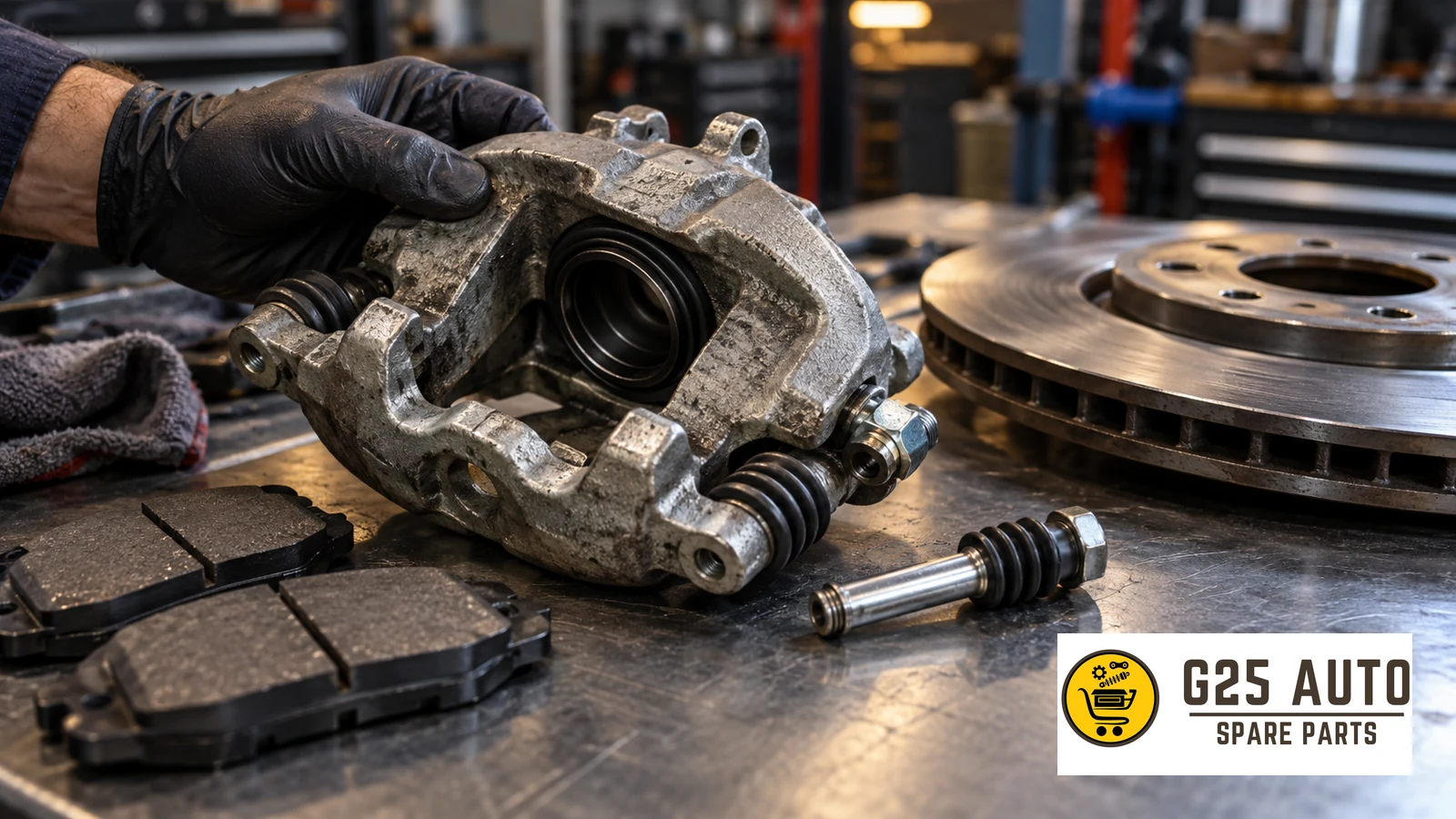
The brake caliper is a critical component for safe stopping. It presses brake pads against the disc, creating friction to slow or stop the vehicle. This hydraulic mechanism operates when the brake pedal is pressed.
This guide explains caliper construction, operation, fault symptoms and part selection.
What Is a Brake Caliper and How Does It Work?
A disc brake caliper houses the pads. Pressing the pedal increases hydraulic pressure, moving the caliper piston to push the pads towards the rotating disc and create braking friction.
Two common caliper types are:
- Fixed calipers: Pistons act on both sides of the disc while the body remains fixed. These are used in various applications, including performance vehicles.
- Floating calipers: Pistons act from one side; the body slides to apply the opposite pad. This is a widely used design.
Brake Caliper Functions
The caliper’s main functions include:
- Converting hydraulic pressure into mechanical force
- Applying the pads to the disc in a controlled manner
- Creating friction to slow the vehicle
- Containing hydraulic fluid within its working chambers
- Keeping pads correctly positioned
Brake Caliper Fault Symptoms
Possible symptoms warrant attention. They can also have other causes:
Symptoms Noticed While Driving
- Pulling: The vehicle pulls sideways under braking
- Hard or soft pedal: Unusual pedal resistance
- Squealing: Abnormal braking noises
- Vibration: Shaking through the pedal or steering
- Reduced braking: Increased stopping distance
- Burning smell: Particularly around a wheel
- Overheating: Abnormal heat around the wheel after braking
Signs Found During Visual Inspection
- Brake fluid leakage around the caliper
- Heavy rust or corrosion
- Unusual brake dust accumulation on the wheel
- Uneven pad wear
- Worn or damaged caliper pins
Professional Inspection for Diagnosis
These signs indicate a possible fault; diagnosis requires professional inspection. A technician checks:
- Piston movement
- Pin and slide condition
- Hydraulic seal condition
- Body cracks or deformation
- Brake hose condition
- Hydraulic pressure operation
- Related ABS operation where relevant
Original and Aftermarket Caliper Comparison
| Feature | Original part | Quality aftermarket part |
|---|---|---|
| Fitment | Specified for particular applications | Application must be verified |
| Quality standards | Vehicle manufacturer’s requirements | Check relevant product documentation |
| Warranty | Check applicable terms | Depends on manufacturer and supplier |
| Cost | Compare current quotations | Compare suitable alternatives |
| Availability | Confirm before ordering | Confirm before ordering |
| Choice | Manufacturer catalogue options | Different manufacturers may offer alternatives |
What to Check When Selecting a Caliper
Take time to identify the correct safety-critical component:
Part Selection Checklist
- OEM reference: Note the existing caliper’s identification
- VIN: Use vehicle identification for catalogue checks
- Engine code: Brake configurations may differ
- Production date: Parts can change during production
- Front or rear axle: Specifications differ
- Left or right side: Calipers may be handed
- Equipment: Record relevant braking and stability systems
- Documentation: Check applicable quality evidence
- Supplier reliability: Review warranty and return terms
Why Verify OEM and Part References?
Make, model and year alone can lead to ordering errors:
Different Versions Within One Model
A manufacturer may change caliper suppliers during production. VIN-based catalogue checks help identify the relevant version.
Engine and Equipment Differences
Fuel type, power output and equipment packages may affect brake configuration. Check engine and equipment details.
Market Differences
Versions sold in Europe, America or Asia may differ. Cross-check OEM references and market specification; a reference alone cannot guarantee fitment.
Aftermarket or Original: A Balanced Assessment
Both options have considerations for the vehicle and buyer:
When to Consider Original Parts
- Vehicle warranty requirements
- Premium or sports applications
- Specified performance requirements
- Resale considerations
- Long-term ownership plans
When to Consider Quality Aftermarket Parts
- Vehicles outside warranty
- Budget considerations
- Reliable manufacturers with relevant documentation
- Older vehicles requiring a balanced investment
- Professional workshop recommendations
Avoid poor-quality or untraceable products. Verify suitability and supporting documentation rather than relying on a general certification claim.
Brake Caliper Replacement Process
Replacement requires experience and professional procedures. The general sequence is:
- Raise the vehicle safely and remove the wheel
- Disconnect the brake hose while managing fluid loss
- Remove caliper fasteners and the old caliper
- Inspect the disc and replace if required
- Install the new caliper and tighten connections as specified
- Bleed the hydraulic system using the applicable procedure
- Check and replenish brake fluid as specified
- Verify operation with appropriate checks and a controlled test
Caliper Service Life and Maintenance
Service life varies. Factors affecting condition include:
- Frequent braking in urban traffic
- Mountainous or winding routes
- Road salt and chemical exposure
- Neglected maintenance
- Unsuitable or deteriorated brake fluid
Maintenance Recommendations
- Change fluid according to manufacturer instructions
- Replace worn pads promptly
- Maintain pins and slides with specified lubrication
- Clean brake areas appropriately during underbody care
- Include brakes in routine servicing
Choosing a Reliable Caliper Supplier
Assess suppliers against these requirements:
- Relevant product range and confirmed availability
- Detailed product specifications
- OEM and VIN-based application checking support
- Documented quality and warranty terms
- Clear return and exchange policies
- Professional customer support
For G25Auto B2B sourcing in Europe and the Balkans, review product details and verify the required application before ordering.
Frequently Asked Questions
When should a caliper be replaced?
Seizure, leakage, serious corrosion or mechanical damage may require replacement. Pulling, noise or reduced braking require diagnosis before deciding.
Should calipers be replaced in pairs?
One may be replaceable individually, but inspect both on the axle. Condition and manufacturer instructions determine the appropriate scope.
Are aftermarket calipers safe?
Assess documented quality, application suitability and traceable origin. A recognised name or generic certification claim alone is insufficient.
How long does replacement take?
Time depends on the vehicle, condition and access. Allow for bleeding, testing and any additional faults identified.
What needs attention after replacement?
Follow the specified bedding-in procedure where applicable. Report abnormal pedal feel or noise promptly and check fluid as instructed.
Conclusion
Correct caliper operation is essential for safe braking. Arrange prompt professional inspection when symptoms appear.
Choose original or aftermarket parts according to vehicle requirements, documented quality and verified references.
Prioritise safety over savings. Use VIN and OEM information for application checks and experienced technicians for installation.
Drive safely.