
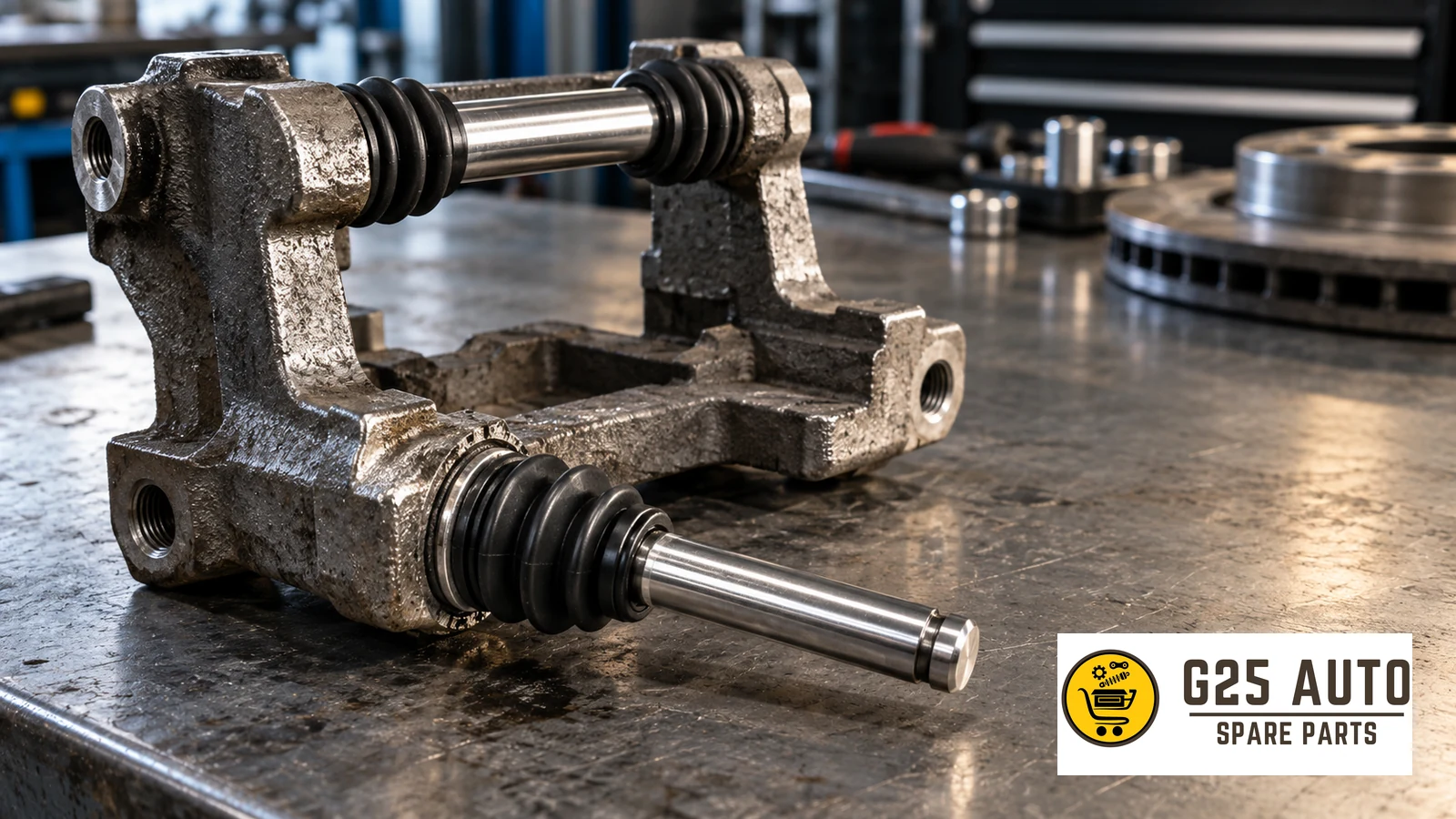
Brake caliper slide pins and boots are small but important brake components. Pins guide caliper movement; boots protect them from dirt and moisture. This guide covers their functions, fault symptoms, maintenance and replacement.
What Is a Brake Caliper Slide Pin and How Does It Work?
Slide pins are metal guides along which a floating caliper moves when the brakes are applied and released.
Hydraulic pressure pushes the piston and pad towards the disc. The caliper body must also move slightly. Slide pins guide this movement, helping the pads contact the disc evenly.
Slide Pin Construction
Steel pins need smooth working surfaces. Their arrangement depends on the caliper design. Where specified, lubricant surrounds the pin and is protected by the boot.
What Does the Caliper Boot Do?
The flexible protective boot surrounds the slide pin. Its functions include:
- Keeping out dust, dirt and road debris
- Limiting water entry and corrosion
- Helping retain lubricant
- Keeping the working area clean
- Reducing sticking and seizure risks
The boot flexes with caliper movement and can deteriorate or tear over time.
Fault Symptoms: How Can You Recognise a Problem?
Pin or boot faults may cause the following signs. These also have other possible causes and require assessment.
Early Symptoms
- Slight pulling during braking
- A faint squeak from one side
- More brake dust than usual
- Changed pedal feel
- Low-speed braking vibration
More Advanced Symptoms
- Pronounced pulling under braking
- A persistent burning smell after braking
- One wheel becoming unusually hot
- Uneven pad wear
- Disc discolouration or overheating marks
- Higher fuel consumption associated with brake drag
- Longer stopping distances
How Is the Fault Diagnosed?
Symptoms indicate a possible problem; diagnosis requires professional inspection:
Visual Inspection
With the wheel removed, a technician checks for torn, cracked or displaced boots. Damage warrants checking the pin for contamination and corrosion.
Functional Test
The technician checks caliper movement for binding or resistance, then examines the removed pin for cleanliness, surface damage and lubrication.
Measurement and Comparison
Pad thicknesses are compared across the axle. Marked differences may indicate restricted movement. Disc wear and heat marks are also assessed.
Slide Pin and Boot Comparison
| Feature | Slide pin | Boot |
|---|---|---|
| Material | Typically steel | Flexible elastomer specified for the application |
| Service life | Condition and maintenance dependent | Condition and exposure dependent |
| Function | Guides caliper movement | Protects the pin |
| Failure consequences | Binding and uneven braking | Contamination, corrosion and sticking |
| Replacement | Appropriate tools and procedure required | Access and procedure depend on design |
| Maintenance | Cleaning and specified lubrication | Regular inspection |
Maintenance and Inspection Checklist
Regular maintenance helps protect both components:
Routine Inspection Checklist
- Follow the manufacturer’s brake inspection schedule
- Visually inspect boots
- Check slide pin movement
- Check pad wear for evenness
- Inspect discs for unusual wear or heat marks
During Pad Replacement
- Inspect boots and replace damaged ones
- Remove and clean pins as specified
- Check for corrosion and scoring
- Use only the specified, compatible pin lubricant
- Seat boots correctly in their grooves
- Check free caliper movement
Seasonal Changes
- Consider seasonal brake inspections
- Pay attention to exposure to winter road salt
- Use appropriate underbody cleaning to limit contamination
Choosing the Correct Parts Matters
Incorrect pins or boots can impair braking. Selection must suit the actual brake assembly.
OEM References and Part Identification
Versions of the same model can use different brake components. Relevant identification information includes:
- OEM reference: the manufacturer’s part identifier
- VIN: vehicle identification for catalogue checks
- Engine code: potentially relevant to brake configuration
- Production date: changes may occur within a model year
- Equipment level: some packages use different brakes
Cross-check available references and vehicle details before ordering; identifiers alone do not guarantee fitment.
Original and Aftermarket Parts
Both original and aftermarket slide pins and boots are available, with selection considerations for each.
Original Parts
Original parts are supplied through vehicle manufacturer channels. Verify the exact application and applicable warranty terms rather than assuming universal compatibility.
Aftermarket Parts
Independent manufacturers offer alternatives. Product quality, manufacturer reliability and application suitability remain essential.
Check relevant documentation, traceability and catalogue references. A familiar brand or certification claim alone does not establish fitment.
For G25Auto B2B sourcing in Europe and the Balkans, confirm the required application and part references before ordering.
Replacement Timing and Process
Replacement requires suitable technical knowledge, tools and the correct service procedure.
When Should Replacement Be Considered?
- Torn, cracked or hardened boots
- Corroded or scored pins
- Binding caliper movement
- Boot damage identified during pad replacement
- Uneven brake wear requiring investigation
Checks After Replacement
A technician should verify the repair:
- Free caliper movement
- Correctly seated boots
- Normal pedal operation
- No pulling or vibration during an appropriate controlled test
- No abnormal brake drag or overheating
Frequently Asked Questions
Can the boot be replaced separately?
Where the design permits and a suitable replacement is available, yes. Inspect the underlying pin and clean or replace it as necessary.
At what mileage should the boot be replaced?
There is no universal mileage limit. Condition depends on use, climate and maintenance. Inspect according to the vehicle’s service requirements.
Must both sides be replaced if only one pin is faulty?
Inspect both sides of the axle. Replacement scope should follow their condition and the manufacturer’s instructions; replacing both cannot eliminate future faults.
Which lubricant should be used?
Use the lubricant specified for the caliper and boot material. Do not substitute engine oil or general-purpose grease.
Should a torn boot be replaced promptly?
Yes. Lost protection allows dirt and moisture to reach the pin, increasing corrosion and binding risks. Arrange prompt professional assessment.
Conclusion: Small Parts, Significant Importance
Slide pins and boots support correct caliper operation. Faults can affect braking and create safety risks.
Regular inspection can identify deterioration early. Check both components during pad replacement to help avoid further damage.
Use OEM references and vehicle details to verify replacement applications with a reliable supplier.
Choose original or aftermarket components on documented suitability and quality, with professional installation and appropriate maintenance.
Include these small components in routine brake care; do not overlook warning signs.