
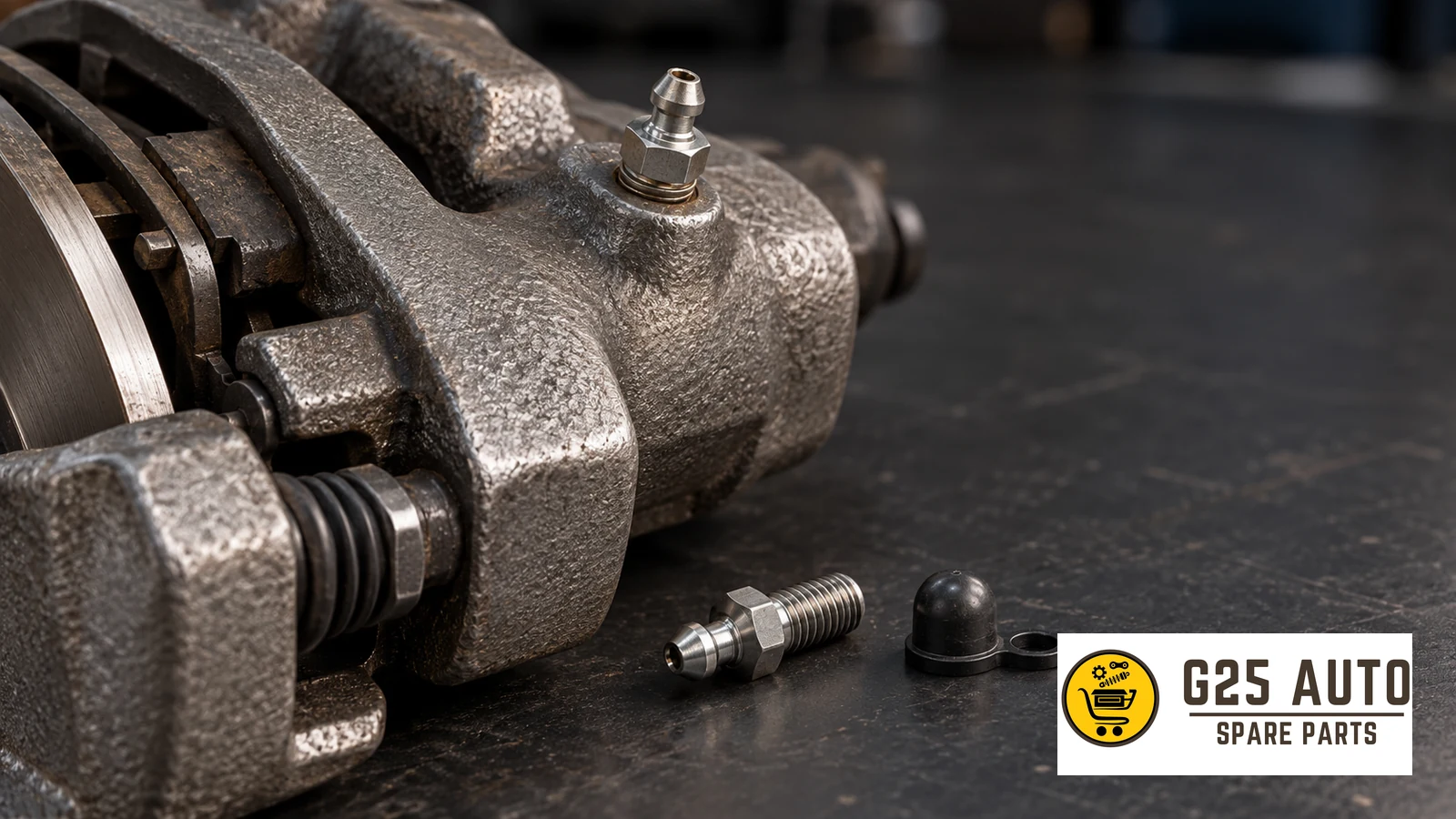
Brake caliper bleeder screws release air from the hydraulic circuit. Their protective caps shield the exposed outlet from dirt and moisture. Damage or missing protection warrants inspection; a leaking screw can compromise braking.
What Is the Caliper Bleeding System?
The bleeder screw provides a controlled outlet for removing air during brake servicing.
Brake fluid transmits pedal force to the calipers. Compressible air can reduce effective pressure transmission and produce a spongy pedal, making correct bleeding essential.
Bleeder Screw and Protective Cap Construction
Metal screws vary in thread, dimensions and seat design. The sealing seat must match the caliper specification.
Rubber or plastic caps fit over the exposed outlet to help protect it from road contamination.
Material Characteristics
- Steel: common, with corrosion resistance dependent on material and finish.
- Stainless steel: corrosion resistance depends on grade and application.
- Rubber caps: flexible, but may harden with age.
- Plastic caps: durability and impact resistance vary.
Fault Symptoms and Diagnosis
Warning Signs
Possible brake-system symptoms include:
- A soft or spongy pedal.
- Pedal travel towards the floor.
- Falling brake-fluid level.
- Leak traces around the caliper.
- Fluid stains inside the wheel.
- Inconsistent or reduced braking.
- An illuminated brake warning lamp.
Professional Checks for Diagnosis
These symptoms can originate elsewhere in the braking system. A qualified workshop should check:
- Caliper condition visually.
- Bleeder screw security and sealing.
- Cap presence and condition.
- Hydraulic pressure as specified.
- Fluid moisture and contamination.
- The remaining brake components systematically.
Important: Seek professional assessment for braking concerns rather than relying on self-diagnosis.
When to Replace Screws and Caps
Assess replacement in the following circumstances:
Damage Requiring Attention
- Significant screw corrosion.
- Damaged or stripped threads.
- A worn or damaged sealing tip.
- Persistent leakage around the screw.
- A missing or torn cap.
- A hardened cap that no longer protects properly.
- Caliper replacement, according to supplied components and service instructions.
Preventive Inspection
- Inspect during fluid changes; renew where needed.
- Check regularly under harsh operating conditions.
- Include checks in pre-winter maintenance.
- Assess the cap after every bleeding operation.
Original and Aftermarket Parts Compared
| Factor | Original part | Aftermarket part |
|---|---|---|
| Fitment | Verify vehicle and caliper application | Verify cross-reference and specifications |
| Material quality | Check product specifications | Assess manufacturer documentation |
| Availability | Confirm with supplier | Confirm with supplier |
| Warranty | Check applicable terms | Check applicable terms |
| Cost | Request a quotation | Compare equivalent specifications |
| Choice | Application-specific range | Brands and specifications vary |
Choosing the Correct Part
Identification Checklist
Part Selection Checklist
- Vehicle make and model.
- Vehicle identification number (VIN).
- Engine code.
- Production year and month.
- Installed caliper make and model.
- OEM reference, where available.
- Screw diameter and thread specification.
- Front or rear axle.
- Brake configuration, including disc and caliper type.
- Previous replacement records.
Why Reference Verification Matters
Brake components can differ within one model according to equipment, production date and engine variant.
VIN: Supports catalogue identification; confirm the installed caliper and technical specification too.
OEM reference: Helps compare original and aftermarket candidates; verify the cross-reference.
Engine code: Helps distinguish variants with different brake configurations.
Production date: Helps identify design changes within a model year.
Maintenance Recommendations
Regular Inspection Points
- Check cap presence and condition during servicing.
- Inspect after winter exposure to salt and chemicals.
- Inspect screws when wheels are removed.
- Assess caps during fluid replacement and renew deteriorated ones.
- Replace missing or damaged caps promptly.
Precautions During Bleeding
Bleeding requires professional knowledge and suitable equipment:
- Use the specified tightening torque; overtightening can damage the screw or seat.
- Use the correctly sized, suitable tool.
- Refit the protective cap afterwards.
- Replace damaged or excessively worn screws.
- Check for leaks after bleeding.
Common Problems and Remedies
Corrosion
Road salt, water and dirt can corrode exposed screws, making removal difficult and potentially affecting sealing.
Prevention: Keep suitable caps fitted and replace missing ones promptly.
Thread Damage
Unsuitable tools or excessive torque can damage the screw assembly, preventing correct tightening and causing leaks.
Prevention: Use qualified technicians and appropriate tools.
Leakage
Leaks may involve incorrect tightening, a damaged tip or a damaged caliper seat.
Action: Have the screw inspected and replaced where necessary. Persistent leakage may indicate seat damage.
Sourcing for European and Balkan B2B Buyers
Reliable sourcing matters for brake components supplied to workshops and trade buyers.
When evaluating original and aftermarket screws or caps for G25Auto enquiries, provide vehicle and caliper details.
Confirm application, specifications and commercial terms with the supplier before ordering.
Frequently Asked Questions
Can a Bleeder Screw Be Used Without Its Cap?
A missing cap leaves the outlet exposed to contamination and corrosion. Replace it promptly and inspect the screw; the cap does not replace hydraulic sealing.
How Often Should the Screw Be Replaced?
There is no universal interval. Follow service instructions and assess corrosion, damage and leakage, including during caliper replacement.
Do All Calipers Use the Same Screw?
No. Dimensions and designs vary. Verify the caliper application and relevant part reference.
Can I Replace It Myself?
Brake work requires expertise. Incorrect replacement or bleeding creates serious risks; use a qualified workshop.
How Is a Rusted Screw Removed?
Removal risks breakage or seat damage. A technician should select methods and tools suitable for the assembly.
Are Aftermarket Screws Safe?
Assess documented quality and verified application. VIN and reference checks support selection; aftermarket status alone establishes neither suitability nor equivalent performance.
Conclusion
Small screws and caps deserve regular inspection, appropriate maintenance and timely replacement.
Have warning signs assessed professionally without delay.
Use VIN, engine code, production date and part references to support application checks.
Compare original and aftermarket options by verified suitability, quality, availability and commercial terms.
Combine suitable parts with regular maintenance and qualified workshop support.