
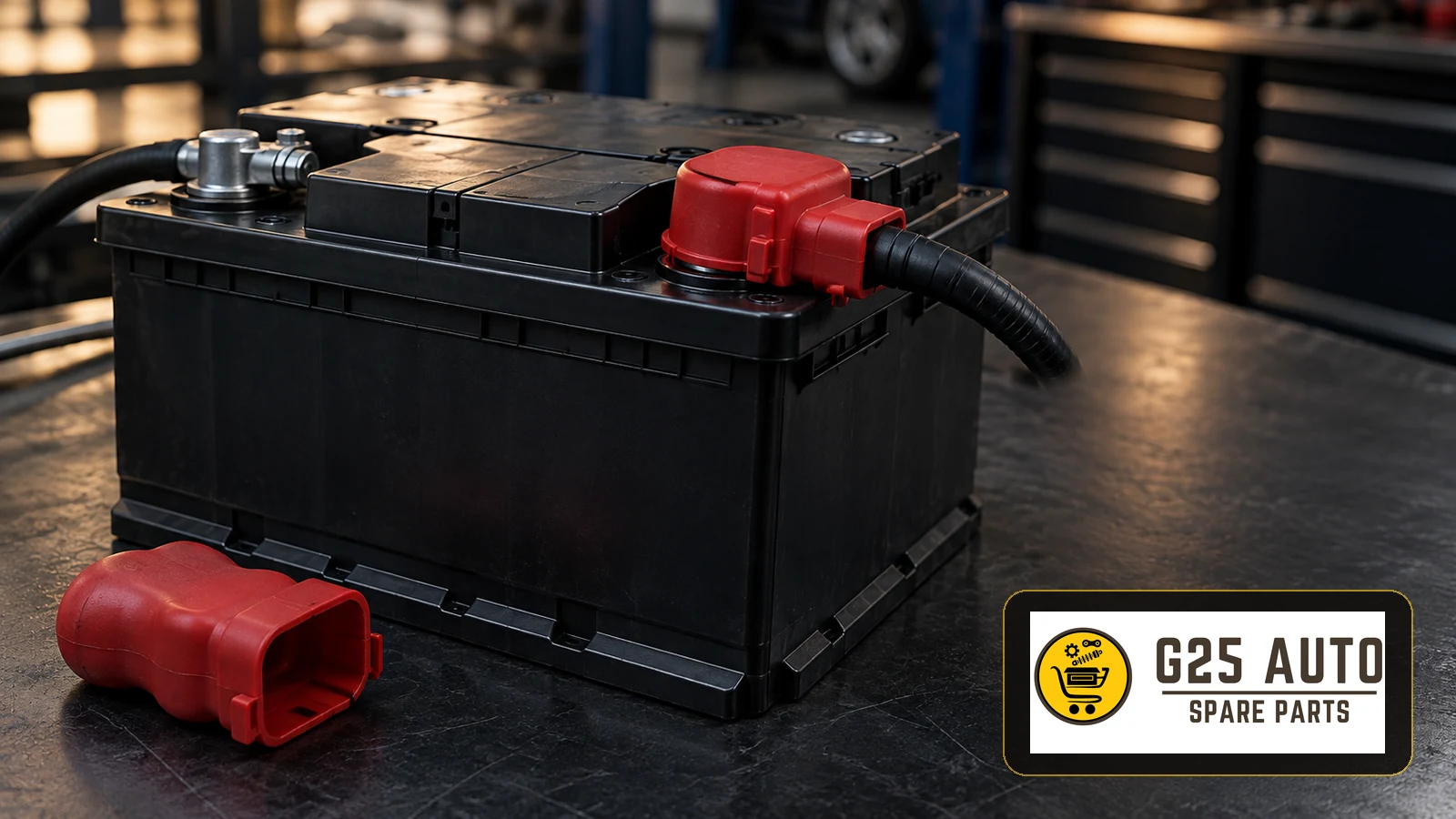
A battery terminal cover shields an exposed electrical connection from accidental contact and helps keep debris away. Replace a missing, split or insecure cover with the correct part for the installed terminal assembly. A new cover cannot repair a loose clamp, damaged cable or overheating connection: those faults need diagnosis before the vehicle returns to service.
Understand which cover the vehicle needs
For workshops, fleet operators and parts distributors across Europe and the Balkans, the first task is identifying the component. A request for a “battery cap” can refer to several different items. Ask for photographs showing the complete battery installation, cable exits and retaining features before selecting a replacement.
Terminal protection in service
A vehicle terminal cover may clip over a clamp, form part of a positive distribution assembly or surround a cable connection as a flexible boot. Its shape must accommodate the actual hardware and cable route. A similar colour or an apparently suitable opening does not establish fitment. Confirm polarity from the vehicle documentation and terminal markings, rather than colour alone.
Transport caps and ventilation components
A cap supplied on a replacement battery for handling or transport is not automatically a substitute for the vehicle’s fitted terminal protection. Keep these items distinct when ordering. Ventilation also needs separate attention: ACDelco documents some batteries whose transport terminal cap carries a removable vent plug. That arrangement is application dependent; it is not an instruction to plug every opening. Preserve the specified vent hose and port arrangement.
Inspect the connection before replacing its cover
Record what has failed: a broken hinge, missing latch, hardened boot, distorted shell or exposed conductive hardware. Photograph heat marks before disturbing the assembly. Melting or discolouration warrants investigation of the connection and surrounding components; replacing the plastic alone leaves the cause unresolved.
Corrosion and starting difficulties also require a wider assessment. An intact cover does not prove that the clamp and cable are sound. Where the complaint concerns starting or intermittent electrical operation, the technician should follow the vehicle’s diagnostic process and document the findings instead of attributing the fault to the cover by appearance alone.
Select parts against the installed assembly
Begin with the VIN and the vehicle manufacturer’s parts information, then compare the existing installation. Previously replaced batteries or cables may change what is actually present. Resolve discrepancies before purchase. Confirm whether the catalogue supplies the cover separately or as part of a larger terminal, cable or distribution assembly.
Compare latch position, hinge orientation, cable exit direction and clearance around neighbouring components. The cover should retain securely without stretching the cable or pressing against other parts. Do not trim an unsuitable cover simply to make it close. Ask the supplier to resolve unclear application information.
For an aftermarket option, request documented application coverage and product identification. A material description alone does not demonstrate suitability for the installation. Use manufacturer documentation for any environmental rating; do not infer temperature resistance, service life or chemical resistance from colour, flexibility or appearance.
Workshop handling and installation
Consult the vehicle procedure before disturbing a battery connection, including shutdown, isolation and any restoration requirements. VARTA’s battery replacement guidance calls for eye protection, polarity checks and the specified tightening torque. On a conventional negative-earth installation, disconnection normally starts with the negative connection and reconnection starts with the positive. Follow the applicable vehicle instructions and protect disconnected cables against unintended contact.
Do not assume that opening or replacing a cover always requires removing the battery clamp. The cover design and service instructions determine the work required. After the underlying connection is checked, fit the correct protector and verify its retention and cable clearance. Ford’s owner guidance specifically includes checking terminal covers after battery installation. Record the completed repair and any follow-up diagnostic work.
Parts enquiry and release checklist
- Record the VIN, vehicle variant and relevant catalogue reference.
- Identify the required terminal cover, transport cap or distribution housing.
- Provide photographs of the installed assembly and failed retaining features.
- Confirm the cable route, hinge, latch and surrounding clearance.
- Check whether the cover is supplied separately and what the package includes.
- Resolve corrosion, heat damage or connection faults before fitting the protector.
- Preserve the specified battery ventilation arrangement.
- Document secure retention and the completed vehicle-specific checks.
Frequently asked questions
Will a universal red cover fit any positive terminal?
No. Check the installed clamp or distribution assembly, cable exit and retention system. A product described as universal still needs its suitability verified for that installation.
Does fitting a cover eliminate corrosion?
No. Treat the cover as a protective component, not a corrosion repair. Investigate existing deposits or recurring contamination and restore the connection according to the service information.
Should a melted cover simply be replaced?
Replace damaged protection as part of a diagnosed repair. Establish why the area overheated and assess the affected connection before closing it with a new cover.
Is there a fixed replacement interval?
Use the vehicle’s inspection guidance and the component’s condition. There is no single replacement interval established here for all terminal cover designs or operating environments.
Technical references
VARTA: battery replacement guidance; Ford Kuga owner manual: battery maintenance and cover installation; ACDelco: application-specific battery vent plug arrangements. These references support general workshop principles; use the documentation for the vehicle being repaired for its exact procedure.