
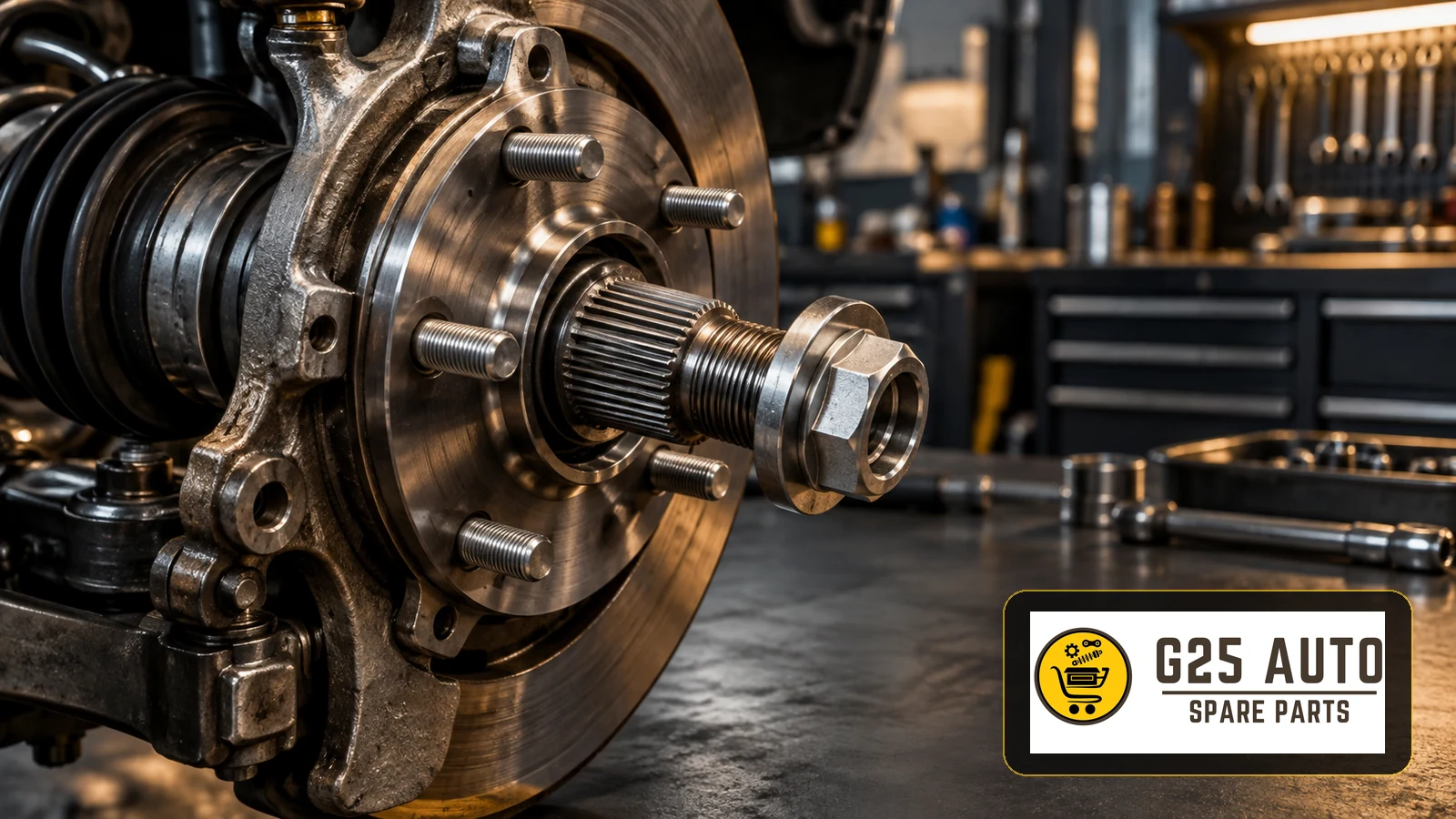
The axle nut and hub lock assembly are critical components that secure vehicle wheels to the chassis, directly impacting driving safety and vehicle performance. These parts are subject to wear, loosening, and damage over time, making correct diagnosis and timely intervention essential for maintaining both safety and operational integrity in commercial and passenger vehicles.
What Is the Axle Nut and Hub Lock System?
The axle nut is a specially designed fastener positioned on the wheel hub spindle that locks the entire mounting system in place. The hub lock assembly comprises additional components that support this nut, enable torque transmission, and provide secure fastening under dynamic loads.
A typical system includes the following elements:
- Axle nut (hub nut)
- Lock washer or circlip
- Hub bearing retaining ring
- Thread guide adapter
- Protective cap and seal
These components work together to maintain wheel alignment, bearing preload, and rotational stability. Failure in any part of this assembly can lead to bearing damage, wheel play, or—in extreme cases—wheel detachment.
Failure Symptoms and Warning Signs
Problems with the axle nut or hub lock assembly may present through various symptoms. Early detection is crucial to prevent escalation into major safety hazards or costly repairs.
Common indicators that may suggest an issue include:
- Unusual grinding, humming, or squealing noises from the wheel area
- Vibration or wobble felt through the steering wheel
- Increased noise intensity during cornering
- Perceptible play or looseness in the wheel
- Abnormal brake pedal response or pulsation
- Imbalance noticeable even at low speeds
- Grease leakage around the wheel hub or rim edge
It is important to note that these symptoms do not automatically confirm a fault in the axle nut or lock assembly. They may also indicate issues with the wheel bearing, suspension components, or brake system. Professional diagnosis using appropriate equipment is necessary to isolate the root cause and determine the correct repair procedure.
Part Selection: OE Reference and VIN Verification
Choosing the correct axle nut and hub lock assembly is critical for safety and compatibility. Incorrect parts may result in improper fitment, inadequate torque retention, or unsafe operating conditions.
When sourcing replacement parts, always use the following information:
- Vehicle Identification Number (VIN) for precise configuration matching
- OE (Original Equipment) part number from the existing component
- Engine code and production date to account for mid-cycle revisions
- Axle type (front, rear, all-wheel drive) and brake system configuration
- Thread diameter, pitch, and nut height specifications
Even within the same model range, manufacturers may use different hub assemblies depending on engine type, transmission, or market specification. VIN-based lookup ensures that the replacement part matches your vehicle’s exact build specification. Platforms such as g25auto.com support VIN and OE cross-referencing to help buyers identify verified compatible parts across original and aftermarket suppliers.
Quality Standards and Aftermarket Considerations
Both OE and quality aftermarket parts can meet safety and performance requirements, provided they are sourced from reputable suppliers and conform to recognized manufacturing standards.
When evaluating aftermarket axle nuts and lock assemblies, consider:
- Compliance with ISO or equivalent quality certifications
- Material specifications (e.g., heat-treated alloy steel)
- Thread accuracy and surface finish
- Inclusion of lock washers, seals, or retaining hardware as required
- Supplier warranty terms and technical support availability
Aftermarket parts that meet OE specifications offer cost-effective alternatives without compromising safety, especially for fleet operators managing mixed-brand inventories. However, always verify compatibility before ordering, and consult your parts specialist if technical documentation is unclear.
Installation and Safety Recommendations
Installation of axle nuts and hub lock assemblies requires torque wrenches, специalized sockets, and adherence to manufacturer torque specifications. Incorrect installation can lead to bearing failure, ABS sensor malfunction, or catastrophic wheel separation.
Key installation guidelines include:
- Always apply the manufacturer’s specified torque value (typically between 200–300 Nm, but verify per vehicle)
- Replace single-use axle nuts; do not reuse
- Renew lock washers, circlips, and seals during assembly
- Inspect threads for damage or wear before installation
- Use calibrated torque tools and appropriate sockets
- Check bearing preload and wheel end-play after tightening
Given the safety-critical nature of this work, installation should be performed by qualified technicians in a properly equipped workshop. Improper torque or reuse of worn components significantly increases the risk of premature failure.
Frequently Asked Questions
How often should the axle nut be replaced?
Axle nuts are typically replaced during wheel bearing service. Many manufacturers specify that axle nuts are single-use and must be renewed each time they are removed. Under normal conditions, wheel bearings last between 100,000 and 150,000 km, though operating conditions and load factors may shorten this interval.
Is it safe to use aftermarket axle nuts?
Yes, provided the aftermarket part meets OE specifications and is sourced from a certified supplier. Quality aftermarket axle nuts are manufactured to the same standards as OE parts. The key is to verify the correct OE reference and ensure the supplier provides technical documentation and warranty coverage.
What happens if the axle nut becomes loose?
A loose axle nut is a serious safety hazard. It can cause bearing damage, wheel wobble, abnormal noise, and in the worst case, wheel detachment while driving. If any symptoms of looseness are detected, the vehicle should be inspected immediately by a qualified technician and the axle nut retorqued or replaced as necessary.