
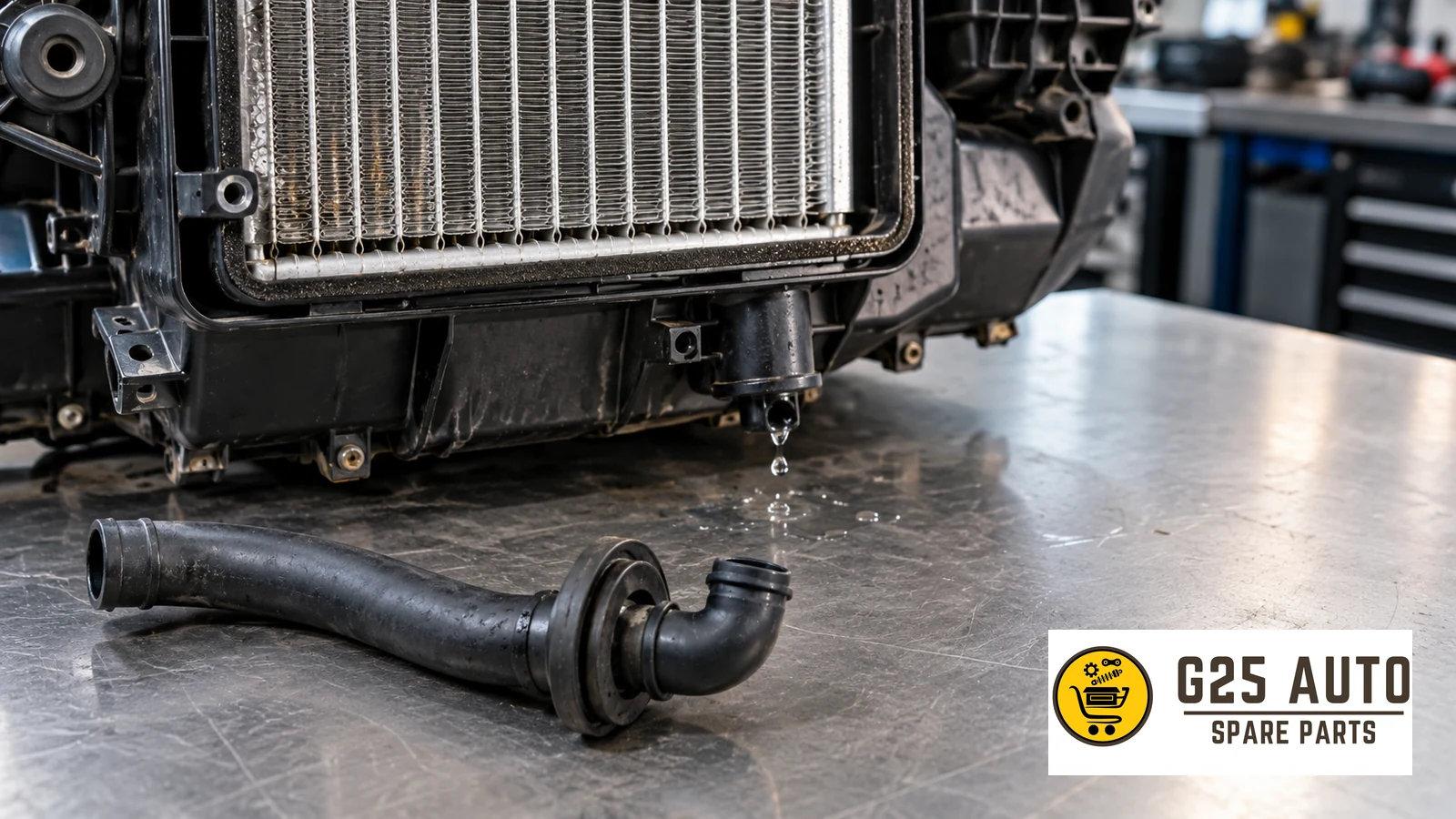
The air-conditioning evaporator condensate drain hose carries moisture and water formed during cooling safely out of the vehicle. A blocked or damaged hose can lead to water accumulating inside, unpleasant smells and problems with air-conditioning operation. Addressing the first signs helps protect cabin comfort and prevent further damage.
What Is an Air-Conditioning Evaporator Condensate Drain Hose?
When a vehicle’s air conditioning operates, condensation naturally forms as air is cooled at the evaporator. Just as water droplets collect on the outside of a cold glass, water gathering on the evaporator surface is a normal physical process. The condensate drain hose carries this water outside the vehicle.
The hose is generally made from a flexible material and runs from the evaporator housing towards an outlet through the vehicle body. When drainage is working, water may drip beneath a parked vehicle with the air conditioning running. Clear condensate dripping from the drain is normally expected, although the amount depends on operating conditions.
Fault Symptoms and Diagnostic Methods
Common Fault Symptoms
Problems with the condensate drain hose may produce the following signs:
- Water inside the vehicle: Wet carpets or floor mats, particularly in the front passenger footwell.
- Mould or damp smells: Unpleasant odours from the ventilation system when the air conditioning is switched on.
- Misting windows: Persistent misting associated with increased cabin humidity.
- No water beneath the vehicle: An absence of the usual drips after air-conditioning operation may warrant inspection, depending on conditions.
- Water leaking from air vents: Water may drip from ventilation outlets while the air conditioning operates.
- Electrical problems: Accumulated water can affect electrical components inside the vehicle.
Professional Diagnostic Procedure
After symptoms appear, a professional inspection is needed to establish their cause:
- Visual inspection: A technician checks the physical condition of the hose.
- Blockage check: Inspect for dirt, leaves, insect debris or other obstructions inside the drain.
- Connection inspection: Examine the connections at the evaporator housing and vehicle body.
- Damage assessment: Identify cracks, tears and worn areas.
- Drainage test: Run the air conditioning and observe whether condensate drains correctly.
These checks should take place in a professional workshop. The symptoms alone do not confirm a drain-hose fault; the diagnosis requires a technician’s assessment.
Original and Aftermarket Parts Compared
| Feature | Original Part | Quality Aftermarket Part |
|---|---|---|
| Fitment | Specified for particular vehicle applications | Application and reference must be verified |
| Material quality | Specified by the vehicle manufacturer | Check the individual manufacturer’s specifications |
| Durability | Depends on material and operating conditions | Depends on product quality and operating conditions |
| Warranty | Check the manufacturer’s applicable terms | Check the supplier’s applicable terms |
| Availability | Confirm for the required reference | Confirm for the required reference |
| Cost | Compare the actual quotation | May offer an alternative cost option |
Checklist for Selecting the Correct Part
Use the following checklist when replacing a condensate drain hose:
- ☐ Prepare the vehicle details: Make, model and year are essential.
- ☐ Identify the vehicle identification number (VIN): Use it to check the vehicle’s application in the relevant catalogue.
- ☐ Find the engine code: Different vehicle variants may use different air-conditioning arrangements.
- ☐ Check the production date: Versions can differ within the same model year.
- ☐ Identify the existing part’s OEM reference: Note any reference on the old part, where available.
- ☐ Identify the air-conditioning system: Manual and automatic systems may differ.
- ☐ Seek professional support: Ask a specialist when any details are uncertain.
The Importance of OEM References and Verification
Correct part selection is essential in automotive repair. Although it may look like a simple hose, its length, diameter, connection shape and material specification can vary between applications.
An OEM (Original Equipment Manufacturer) part reference identifies a part in the manufacturer’s catalogue. Checking this reference against the vehicle application helps to:
- Identify a suitable replacement.
- Reduce the risk of ordering an incorrect part.
- Avoid installation problems.
- Prevent unnecessary loss of time and money.
A catalogue enquiry using the VIN can help identify applicable parts, subject to the catalogue’s coverage and vehicle data. There may be important differences between pre-facelift and facelift models, equipment packages and versions produced for different markets.
The engine code and production date also matter. Manufacturers may change suppliers or introduce engineering revisions during production, so apparently similar vehicles can use different parts.
Replacement and Maintenance Recommendations
When Should the Hose Be Replaced?
A condensate drain hose can remain in service for a long time, but replacement may be necessary in the following circumstances:
- Physical damage such as cracks, tears or holes is found.
- Ageing has caused the material to harden or crack.
- Blockages keep returning and cleaning does not resolve the problem.
- Connection points are damaged beyond repair.
- The hose has lost its shape and no longer stays correctly positioned.
Maintenance and Preventive Measures
Appropriate maintenance can help keep the drain in good condition:
- Drain inspection and cleaning: Check for obstructions during servicing and clean using the vehicle manufacturer’s procedure where necessary.
- Air-conditioning cleaning: Inspect the drain when the evaporator is cleaned.
- Cabin filter replacement: Replacing the filter as specified supports general system cleanliness.
- Air-conditioning use: Where appropriate for the vehicle, running the fan briefly after switching off cooling may help dry the evaporator.
- Parking conditions: Be aware of leaves and insect debris that could obstruct the drainage outlet.
Understanding the Installation Process
The difficulty of replacing a condensate drain hose depends on the vehicle’s design. Some hoses are readily accessible; others may require removal of dashboard panels or other components.
General installation steps include the following and should be carried out by a qualified technician:
- Remove the old hose from the evaporator housing.
- Clean the connection points.
- Fit the new hose in its correct position.
- Check the connections for leaks.
- Verify the hose outlet through the vehicle body.
- Run the air conditioning to test condensate drainage.
The hose must follow the correct route without kinks or crushing. Incorrect installation can allow the original problem to continue even with a new hose.
Sourcing Aftermarket Parts
Choosing a reliable source matters when sourcing quality aftermarket parts. For G25Auto B2B enquiries across Europe and the Balkans, provide the vehicle details and part reference so that the proposed application can be checked before ordering.
Consider the following when selecting an aftermarket part:
- Manufacturer assessment: Review the manufacturer’s reputation and any relevant quality documentation available for the product.
- Material properties: Check suitability for the heat, chemical exposure and wear expected in the application.
- Product warranty: Review the actual written warranty terms; a warranty alone does not establish product quality.
- Technical support: Prefer suppliers able to assist with application checks.
- Returns terms: Check the agreed B2B terms for incorrect or unsuitable parts before ordering.
Frequently Asked Questions
Is the Condensate Drain Hose the Same on Every Vehicle?
No. Hose designs differ between applications in length, diameter, connection shape and material. Select the replacement using the vehicle details and relevant catalogue information.
Is Water Dripping Beneath the Vehicle Normal?
Yes, clear condensate draining beneath the vehicle during air-conditioning operation is normally expected. A small puddle from the drain can be normal, but the source should be checked if the fluid or location is uncertain.
Can I Clear a Blockage Myself?
Some minor obstructions can be cleared, but access is often difficult and incorrect cleaning can cause damage. Have a workshop follow the manufacturer’s cleaning procedure rather than applying uncontrolled air or water pressure.
Can an Aftermarket Hose Match the Original’s Quality?
A suitable aftermarket product may provide comparable service, but this must be assessed for the particular product. Choose a reputable manufacturer and verify its reference, application and material specifications rather than assuming equivalence.
How Long Does Replacement Take?
This depends on the vehicle. Replacement is usually more straightforward where access is easy, while removing dashboard panels can make the work considerably longer. The workshop should provide an estimate after checking access.
Is Only the Hose Replaced, or Are Other Parts Needed?
Often only the hose needs replacement, but damaged connectors or fittings may also need renewal. The technician should identify the necessary parts after inspection.
Conclusions and Recommendations
The air-conditioning evaporator condensate drain hose is small but important. Proper drainage supports cabin comfort and helps protect electrical components from water exposure. Arrange a professional inspection when fault symptoms first appear to reduce the chance of a minor issue developing further.
When replacement is necessary, selecting the correct part is the priority. Use the OEM reference, VIN, engine code and production date to check the application and reduce installation problems. Take time to verify the details and seek professional assistance where needed.
The choice between original and aftermarket parts depends on the application and purchasing requirements. Check fitment, product specifications and warranty terms for either option. Source the part from a reliable supplier and have it installed by a qualified technician.
Regular maintenance and appropriate use can support air-conditioning service life. Cabin filter replacement, system cleaning and suitable operating habits help maintain comfort and may reduce avoidable maintenance costs.
Understanding condensate drain hoses, using accurate vehicle information and obtaining professional support helps workshops assess problems and make informed repair decisions.