
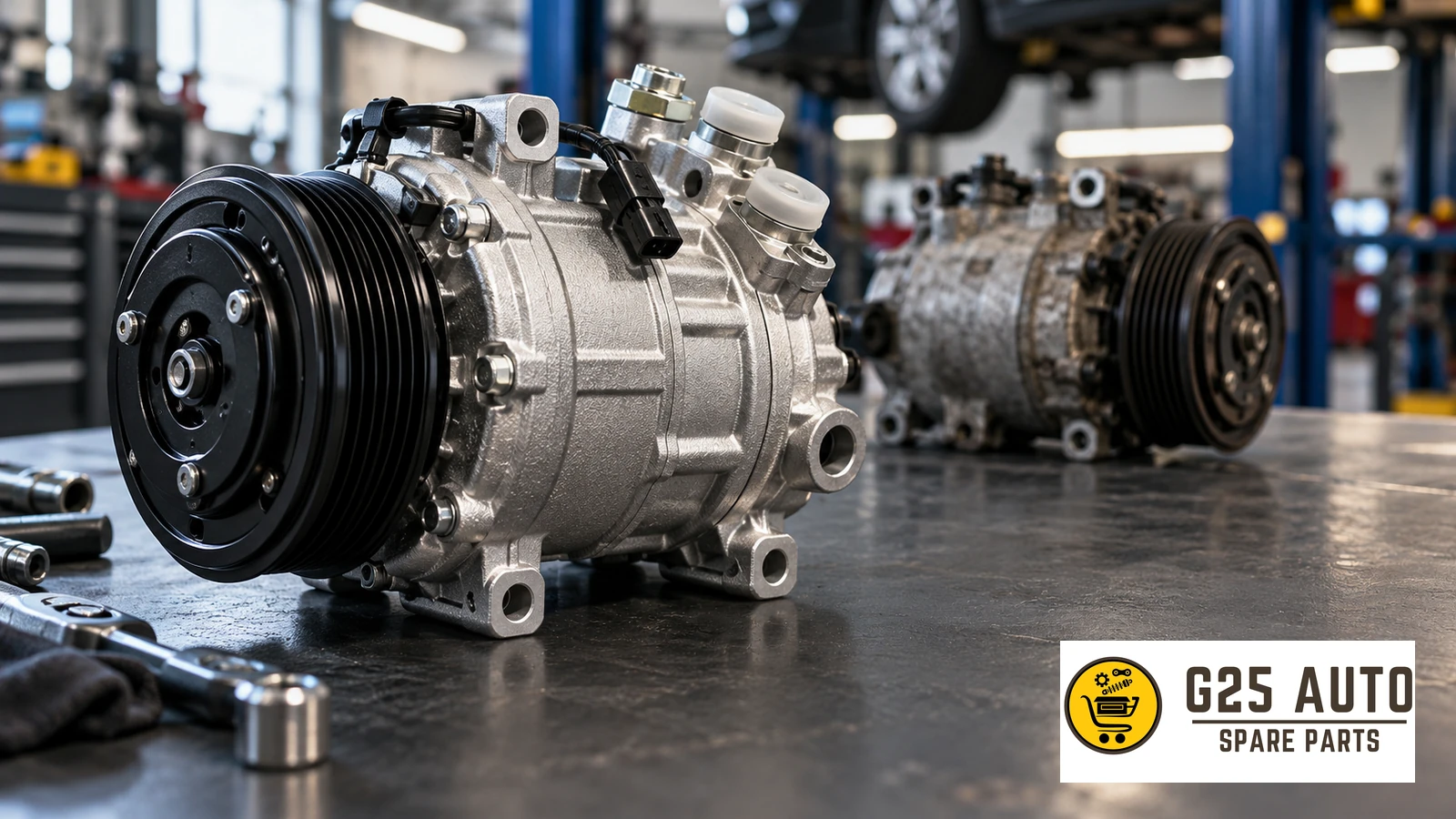
The compressor is at the heart of a vehicle’s air-conditioning system, and a failure can stop the system from cooling altogether. Possible symptoms include unusual noises, insufficient cooling, compressor drive-belt wear and vibration while the air conditioning is running. When selecting a replacement, checking compatibility against the OEM reference, vehicle identification number and engine type is essential.
What Is an Air-Conditioning Compressor and How Does It Work?
The compressor compresses refrigerant vapour and circulates it through the vehicle’s air-conditioning circuit. In a belt-driven system, the engine drives the compressor, which raises the pressure of the low-pressure refrigerant vapour and sends it to the condenser. This process is fundamental to the system’s ability to produce cool air.
Depending on its design, a compressor contains pistons, vanes or scroll mechanisms. These moving components can wear over time. Lubrication reduces friction, but performance can still deteriorate with age and operating conditions.
Air-Conditioning Compressor Fault Symptoms
A compressor fault can produce noticeable symptoms, but their presence does not necessarily mean that the compressor itself has failed. Professional diagnosis is needed:
Common Fault Symptoms
- Unusual noises: Squealing, rattling or knocking may be heard while the compressor operates.
- Insufficient cooling: The air conditioning runs but does not reach the desired temperature.
- Compressor drive-belt wear: The belt may show cracks, deterioration or breakage.
- Vibration: Excessive vibration may occur when the air conditioning engages.
- Signs of leakage: Oil or refrigerant leakage may be found around the compressor housing.
- Clutch faults: Where fitted, the compressor clutch may fail to engage or remain engaged.
- Electrical problems: The compressor’s electrical connections may be corroded or damaged.
What Is Needed for a Reliable Diagnosis?
These symptoms can point to a compressor fault, but a professional inspection is essential to identify the cause. Similar symptoms can also result from:
- A blocked condenser or evaporator
- A refrigerant leak
- An expansion valve fault
- Electrical system problems
- Pressure sensor faults
A professional workshop measures system pressures with suitable manifold gauges, checks the compressor’s mechanical condition and performs electrical or electronic tests to establish the cause. This diagnostic stage should not be skipped.
Checking Compatibility When Choosing a Replacement Compressor
Selecting the correct part is one of the most important aspects of compressor replacement. An unsuitable choice can result in financial loss and damage to the system.
The Importance of OEM and Part References
An OEM (Original Equipment Manufacturer) reference identifies the manufacturer’s original part. This reference:
- Helps identify the intended vehicle application
- Provides a basis for checking the required technical specifications
- Is an important reference when identifying the correct replacement
- Provides a starting point for researching aftermarket alternatives
However, the OEM reference alone may not be sufficient. Different equipment configurations within the same vehicle model can require different compressors.
Verification Using the Vehicle Identification Number
The vehicle identification number (VIN) identifies the vehicle and can be used with the relevant manufacturer’s records or parts catalogue to check its equipment. VIN-based lookup can help verify:
- The vehicle’s model year
- Its production date
- The engine type and displacement
- Its original equipment configuration
- Changes introduced during production
VIN checks are particularly important around model changes or updates made during a production year.
Engine Type and Production Date
A vehicle model may have several engine options, and different versions can require different compressors. Checking the engine code and production date matters because:
- Petrol and diesel versions may use different compressors
- Compressor capacity may vary with the engine application
- Technical updates may have been introduced during the production year
- Different emissions specifications may be associated with different system configurations
Comparing Genuine and Aftermarket Compressors
A common question during compressor replacement is whether to choose a genuine or aftermarket part. Both options have potential advantages and limitations.
| Feature | Genuine Part | Aftermarket Part |
|---|---|---|
| Compatibility | Intended for the specified application; confirm the exact reference | Application coverage depends on the product; verify fitment |
| Quality standards | Specified by the vehicle manufacturer | Vary by brand and manufacturer |
| Warranty period | Check the applicable supplier and manufacturer terms | Varies by manufacturer and supplier |
| Availability | Depends on the reference and supplier | Depends on the reference and supplier |
| Cost | May be higher | More economical alternatives may be available |
| Choice | Options follow the manufacturer’s parts range | A range of quality levels and prices may be available |
Genuine Part Characteristics
Genuine compressors are specified for the relevant original vehicle application. Potential advantages include:
- Compatibility with the specified application when the correct reference is selected
- Service-life expectations associated with the original specification
- Maintaining the vehicle’s original specification
- Parts selection aligned with the applicable vehicle warranty requirements
Possible disadvantages include higher cost and difficulty sourcing particular references.
Aftermarket Part Characteristics
Aftermarket compressors are alternatives whose specifications should be checked against the original application. Quality aftermarket options may:
- Be supplied by established automotive component manufacturers
- Meet the required specifications where supported by product documentation
- Offer a more economical purchase option
- Cover a broad range of vehicle applications across their product range
The key is to choose a dependable manufacturer and a suitable product. Very inexpensive parts from unknown manufacturers may seem attractive initially but can create problems later.
Air-Conditioning Compressor Replacement Checklist
The following checks help support a successful compressor replacement:
Checks Before Purchasing
- ☑ Record the vehicle identification number (VIN).
- ☑ Identify the engine code and type.
- ☑ Find the OEM reference on the existing compressor.
- ☑ Check the vehicle’s production date.
- ☑ Identify the compressor design, such as piston or scroll.
- ☑ Record the belt type and dimensions, where applicable.
- ☑ Check the electrical connector type.
Checks When Selecting the Part
- ☑ Check that the product application information includes the vehicle model.
- ☑ Verify compatibility with the engine type.
- ☑ Check the covered production-year range.
- ☑ Confirm that the technical specifications match.
- ☑ Establish whether compressor oil is included.
- ☑ Review the warranty terms.
- ☑ Check the applicable B2B return and exchange terms.
Checks After Installation
- ☑ Evacuate the system and perform the specified leak checks.
- ☑ Charge it with the correct refrigerant type and specified quantity.
- ☑ Check the compressor oil quantity against the relevant procedure.
- ☑ Check or adjust drive-belt tension as specified, where applicable.
- ☑ Check the electrical connections.
- ☑ Measure system pressures.
- ☑ Check for unusual noises during operation.
Points to Consider When Sourcing Aftermarket Parts
A dependable supplier is particularly important for critical components such as air-conditioning compressors. For workshops and trade buyers in Europe and the Balkans, product documentation and a clear part-matching process can support selection.
Key Criteria When Choosing a Supplier
- Product range and confirmed availability
- A process for verifying part compatibility
- Access to technical support
- Clear warranty terms
- Transparent return and exchange procedures
- Customer feedback and supplier evaluations
- After-sales support
Recommendations for Supporting Compressor Service Life
Appropriate maintenance and operating habits can help support the service life of an air-conditioning compressor:
- Regular operation: Follow the vehicle manufacturer’s guidance on operating the air conditioning, including during colder periods, to support normal system lubrication.
- Periodic servicing: Have the system checked at the recommended intervals. If refrigerant is low, have the cause investigated and the system serviced to specification rather than simply topping it up.
- Filter replacement: Replace the cabin filter at the recommended intervals.
- Condenser cleanliness: Keep the condenser in front of the radiator free from debris using suitable cleaning methods.
- Belt checks: Have the compressor drive belt inspected regularly where fitted.
- Sudden load changes: Adjust cooling progressively where appropriate and follow the vehicle’s operating guidance; this is not a guarantee against compressor wear.
Frequently Asked Questions
Does a Compressor Fault Prevent the Vehicle from Being Driven?
Some compressor faults only affect air-conditioning performance, but continued vehicle use depends on the failure. A seized compressor or damaged drive belt can affect other systems. Have the fault assessed before deciding whether the vehicle can continue in service.
Is System Cleaning Always Necessary When Replacing a Compressor?
If the compressor has failed internally, metal particles may have entered the circuit. In that case, system cleaning and drier replacement may be required under the applicable repair procedure. Contamination left in the system can damage the replacement compressor.
Can an Aftermarket Compressor Affect the Vehicle Warranty?
If the vehicle is still under warranty, check the applicable warranty conditions and repair requirements before selecting a part. For vehicles outside warranty, a suitable quality aftermarket compressor may be an option, but compatibility and the part supplier’s warranty terms still need checking.
Which Other Parts Should Be Renewed During Compressor Replacement?
Assess the receiver-drier, expansion valve and drive belt under the relevant repair procedure and replace them where required. The condenser and evaporator may also need attention if contamination is present; follow the specified cleaning or replacement requirements.
Are Compressors Different in Electric Vehicles?
Electric vehicles and many hybrids use electrically driven compressors rather than conventional engine-driven units. Their drive systems, component requirements and part references differ, so selection must follow the specific vehicle application.
Why Is Compressor Oil Important?
Compressor oil lubricates moving components and reduces wear. An incorrect oil type or insufficient quantity can cause premature failure. Each compressor application has specific oil requirements that must be followed.
Conclusion
Air-conditioning compressor faults can often be resolved through correct diagnosis and part selection. Recognising symptoms is useful, but professional checks are necessary to establish the cause. When selecting a replacement, verify compatibility using the OEM reference, VIN, engine type and production date.
Both genuine and aftermarket parts can have advantages. Genuine parts follow the original application specification, while suitable aftermarket products may provide economical alternatives. In either case, the priorities are a dependable supplier, the correct reference and professional installation.
Compressor replacement involves more than changing one component: the condition of the complete system, any required cleaning and correct commissioning all matter. Appropriate maintenance and operating practices can help support compressor service life.
The compressor is an important part of a complete air-conditioning system. Its components must work together correctly to support comfort and vehicle operation. Take time to verify the part application and obtain professional support before choosing the replacement.