
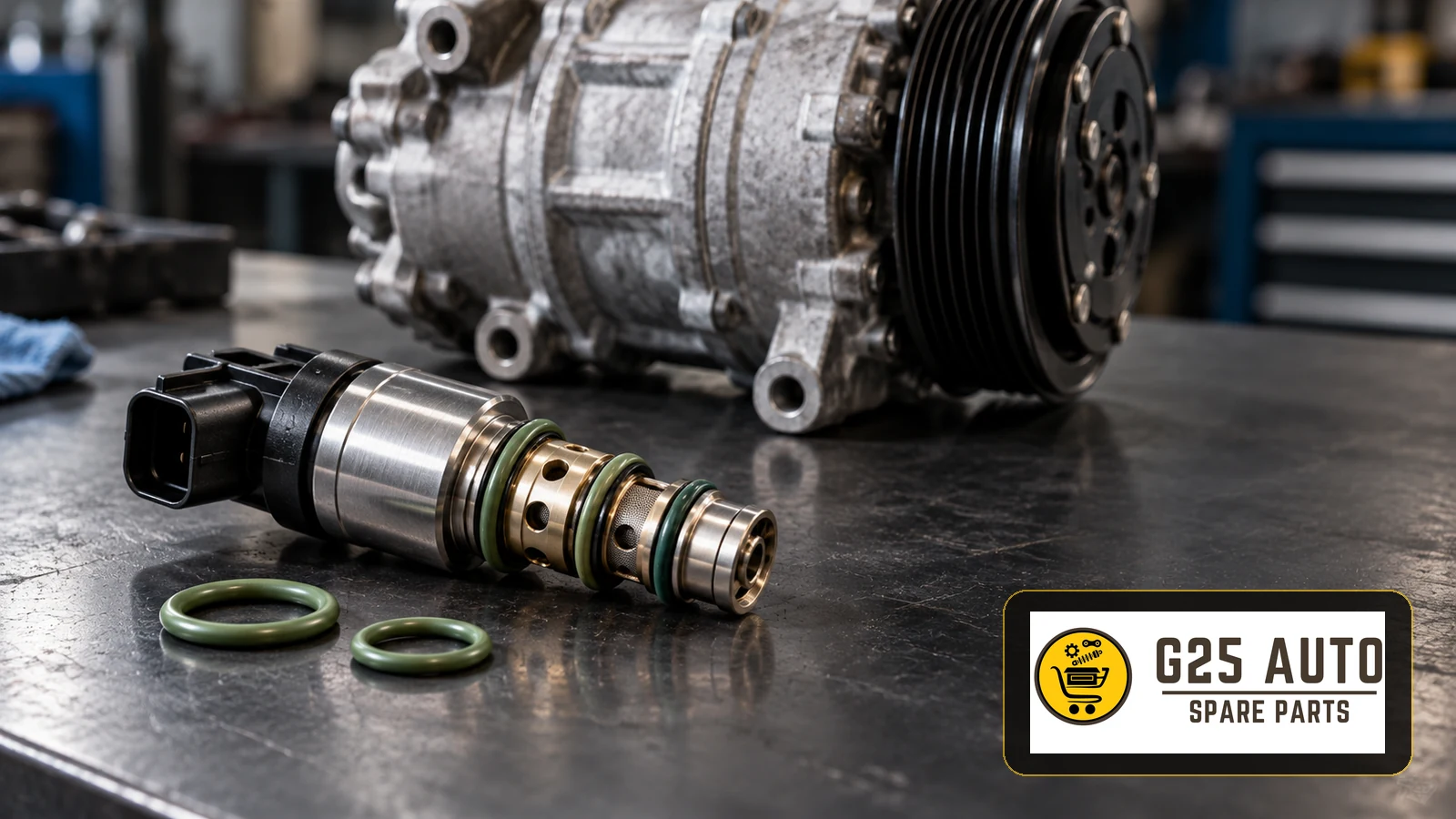
The air-conditioning compressor control valve and sealing gasket are important components for effective vehicle air conditioning. The control valve regulates compressor operation, while the seal helps retain refrigerant within the system. Problems with these parts can reduce cooling performance, damage the compressor and lead to expensive repairs.
What Is an Air-Conditioning Compressor Control Valve and How Does It Work?
The compressor control valve is an electrically or mechanically controlled component that regulates compressor capacity and thereby influences refrigerant pressure and flow. It is commonly used in variable-displacement compressors, adjusting their output to the demands of the air-conditioning system.
The valve allows compressor output to vary within its operating range, helping manage energy consumption and cabin comfort. A faulty valve can prevent the compressor from delivering the required cooling or cause inappropriate output and increased energy consumption; the precise behaviour depends on the compressor design.
Seals and Their Importance
Seals at the compressor’s various connections help prevent refrigerant and compressor oil from escaping. They are made from suitable sealing materials that must withstand the pressure, temperature and fluids specified for the application.
Seal problems can result from material ageing, high temperatures, chemical degradation or incorrect installation. Even a small seal defect can lead to refrigerant loss and eventually prevent the system from cooling properly.
Fault Symptoms and Observations
The following symptoms can prompt investigation of the control valve and seals, although none proves a particular component has failed:
Possible Control Valve Fault Symptoms
- The air conditioning fails to cool or operates intermittently
- Engine vibration or unusual noise at idle
- Higher than usual fuel consumption while the air conditioning is operating
- Insufficient or inconsistent cooling
- Repeated compressor clutch cycling or failure to engage, on clutch-equipped systems
- An air-conditioning warning or fault indication, where provided
- Abnormal compressor heating
Possible Seal Fault Symptoms
- Oil leakage or wet marks around the compressor
- Gradually declining cooling performance
- Cooling that stops shortly after the system starts
- An unusual chemical smell in the engine compartment, which requires investigation and does not identify a seal leak by itself
- Refrigerant pressures outside the expected range under the test conditions
- Visible signs of leakage at particular connections
- Leak traces detected using an appropriate UV dye test
Diagnostic Methods
Professional inspection is needed to establish the cause of these symptoms. Diagnostic methods include the following:
Control Valve Diagnosis
Diagnosing a control valve requires suitable equipment and measurements. For an electrically controlled valve, a technician may measure electrical resistance with a multimeter, inspect the control signal with an oscilloscope and assess system pressures with air-conditioning service equipment. Vehicle diagnostic software can be used to read relevant fault codes and available operating data. The checks must suit the particular valve and compressor.
Seal Diagnosis
Where appropriate, a compatible UV dye and UV lamp can help locate leak traces. An electronic refrigerant leak detector can also help identify the source. Pressure and vacuum checks should follow the applicable service procedure; a vacuum-holding check alone does not establish that every joint is leak-free in operation. Visual inspection looks for damaged seals, cracks, deformation and oil traces.
OEM Part References and Verification
Selecting the correct part is a critical step when replacing a compressor control valve or seal. Air-conditioning systems can vary with vehicle model, engine type, production date and vehicle identification number.
Check the following details when selecting parts:
Verification Checklist
- OEM (Original Equipment Manufacturer) part reference
- Vehicle identification number (VIN)
- Engine code and type
- Production date, including possible changes during a model year
- Compressor manufacturer and model
- Air-conditioning system type, such as manual or automatic climate control
- Specified refrigerant type, such as R134a or R1234yf
- Regional specification, such as European or Gulf-market equipment
An incorrect selection can cause mismatched seal dimensions, unsuitable operating characteristics or fitting problems, and may affect warranty coverage under the applicable terms. Verify the relevant details against the parts catalogue and compressor information before ordering.
Comparing Genuine and Aftermarket Parts
Genuine and aftermarket compressor components may be available. Each option has potential advantages and points to assess.
| Feature | Genuine Part | Aftermarket Part |
|---|---|---|
| Compatibility | Confirm the correct factory reference and application | Verify the manufacturer’s reference and application data |
| Quality control | Specified by the vehicle manufacturer | Varies by manufacturer and product |
| Warranty | Check the applicable vehicle and part warranty terms | Check the product warranty and any implications for existing coverage |
| Supply lead time | Confirm with the supplier | Confirm actual availability with the supplier |
| Cost | Depends on the part and quotation | May offer a lower-cost option; compare actual quotations |
| Range of options | Application-specific parts range | Several products or quality levels may be offered |
Which Option Suits Which Situation?
A genuine part may be worth considering for a vehicle under warranty, a recent model, a specialist or premium vehicle, or a high-value application. The vehicle’s requirements and warranty terms should guide the decision rather than an assumption of universal suitability.
A suitable aftermarket part may offer an alternative for an older vehicle or a repair with a limited budget, provided the manufacturer is reliable, application coverage is confirmed and installation is professional.
In either case, part quality, correct diagnosis and professional installation are central to the repair.
Installation and Points to Check
Replacing a control valve or seal requires professional equipment and knowledge. Air conditioning is a pressurised system, so qualified technicians should carry out the work.
Installation Preparation and Service Checklist
- Recover refrigerant safely before opening the circuit
- Remove the old parts without damaging surrounding components
- Clean the mating surfaces
- Lubricate new seals with the specified compressor oil where the service procedure requires it
- Apply the specified tightening torques
- Evacuate the system according to the service procedure
- Recharge with the specified refrigerant quantity
- Complete the prescribed leak checks at the appropriate stages
- Test system performance
Common Mistakes and How to Avoid Them
Common air-conditioning maintenance mistakes can increase costs over time:
Simply adding refrigerant: If there is a leak, recharging alone does not repair it. Locate and repair the cause first.
Choosing the wrong part: Fitting a component because it looks similar can cause system problems. Verify the part reference and application.
Choosing poor-quality parts on price alone: An unsuitable or poorly made component may fail prematurely and create repeat repair costs. Price alone does not establish quality.
Attempting repairs without suitable equipment: Air-conditioning work requires specialist equipment. Incorrect intervention can damage the system and release refrigerant.
Neglecting maintenance: Overlooking the vehicle’s servicing requirements can allow small faults to develop into larger problems.
What Should You Check When Choosing an Aftermarket Part?
Quality remains important when choosing an aftermarket component. A suitable product may provide comparable performance, but this should be assessed for the specific part and application. Consider:
- The manufacturer’s industry experience and reputation
- Documented quality certifications and their relevance to the product
- Warranty duration and conditions
- Available support after installation
- Relevant user experience from objective sources, where available
- Product identification and packaging quality, alongside supporting documentation
For European and Balkan B2B sourcing through G25Auto, compare the relevant part references, application information and supplier terms before placing an order.
Frequently Asked Questions
Should the Control Valve and Seals Be Replaced Together?
When replacing the control valve, inspect the seals at the connection being opened and replace them as required by their condition and the service procedure. Addressing them during the same repair can reduce duplicated labour and the risk of subsequent leakage.
How Long Do Compressor Components Last?
Service life depends on operating conditions, maintenance and part quality. There is no single reliable replacement age for all control valves or seals. Harsh climates and intensive use can accelerate deterioration.
Can an Aftermarket Part Affect Warranty Coverage?
If the vehicle is still under warranty, review the relevant terms and obtain clarification about the proposed part and repair. Do not assume that either genuine or aftermarket status alone determines coverage.
Can a Faulty Control Valve Damage the Compressor?
A faulty valve can cause inappropriate compressor operating conditions, potentially increasing stress on internal components and contributing to premature failure. A confirmed valve fault should be addressed promptly, with the compressor’s condition assessed as part of diagnosis.
Can I Replace a Seal Myself?
The system contains refrigerant under pressure. Opening it, recovering refrigerant, evacuating the circuit and recharging require specialist equipment and appropriately qualified personnel. Arrange professional service rather than opening the circuit without the necessary equipment and expertise.
Can a Seal Leak Stop by Itself?
A suspected seal leak should be investigated rather than assumed to have resolved. Continued leakage can deplete refrigerant and oil, impair cooling and put the compressor at risk if lubrication becomes insufficient. Have a confirmed leak repaired promptly.
Maintenance and Preventive Measures
Appropriate maintenance and operation can help extend compressor component service life:
- Operate the air conditioning periodically during colder months where the vehicle’s instructions and operating controls permit
- Arrange professional air-conditioning inspections in line with the vehicle’s service requirements
- Replace cabin filters according to the maintenance schedule and their condition
- Have reduced cooling performance checked promptly
- Look for oil leakage around the compressor
- Obtain professional inspection if unusual noises or vibration develop
- Follow the vehicle’s guidance for periodic operation during prolonged storage
Conclusion
The compressor control valve and seals play important roles in vehicle air-conditioning performance. Faults can reduce comfort and lead to substantial repair costs. Recognising symptoms early, obtaining a reliable diagnosis and selecting suitable parts support performance and cost control.
Consider vehicle age, warranty terms, usage and budget when planning replacement. Genuine parts have their applicable warranty terms, while suitable aftermarket products may offer an economical alternative. In both cases, verify compatibility using the OEM reference, vehicle identification details and engine information alongside the compressor specification.
Air conditioning is a sensitive system that requires professional equipment. Qualified technicians should handle diagnosis, part selection and installation. Appropriate maintenance and correct operation can help extend component life.
If cooling performance declines, prompt professional inspection can help prevent a smaller fault from developing into a more expensive repair.