
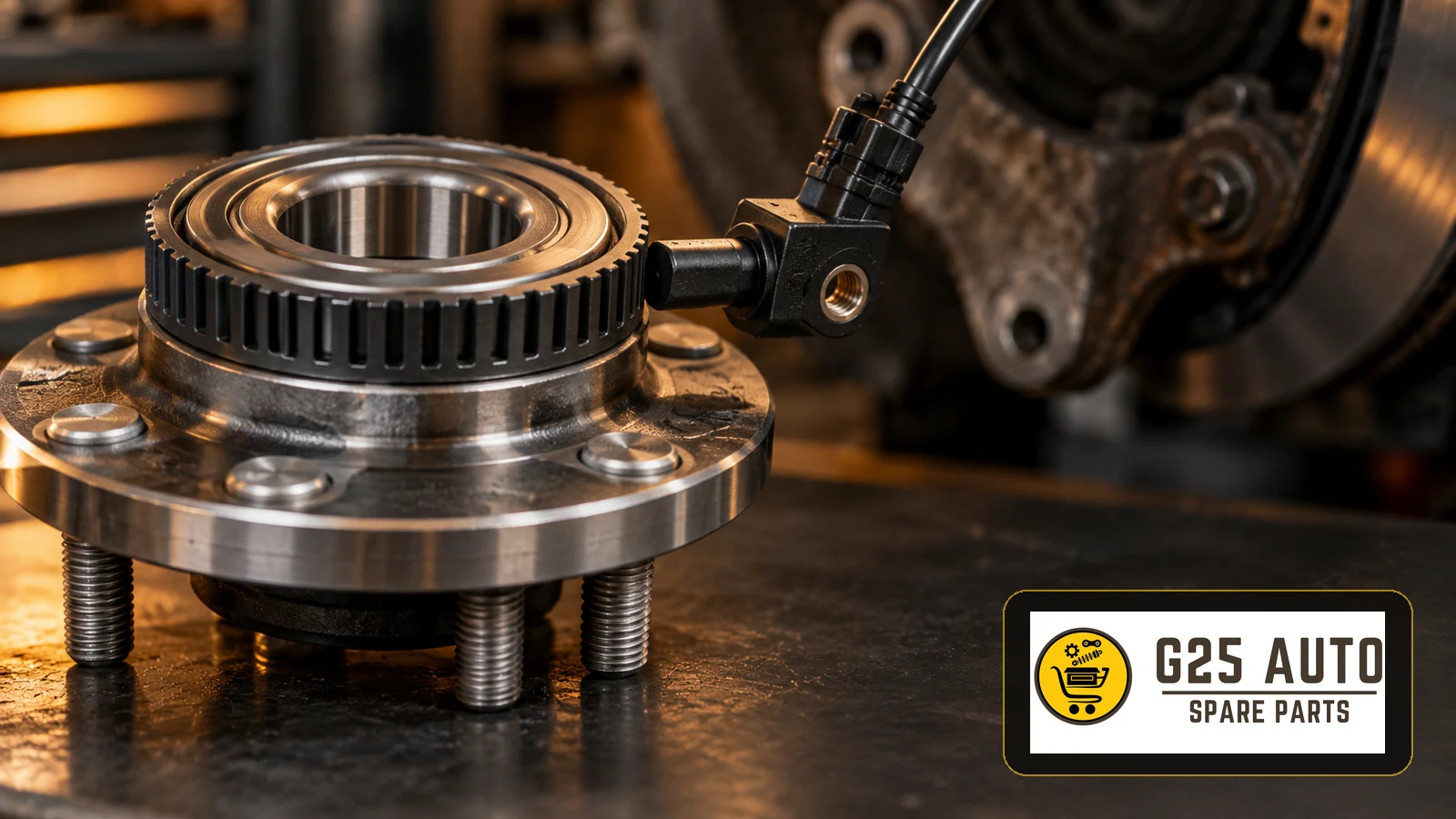
An ABS magnetic encoder ring is a toothed or magnetically encoded component mounted on the wheel hub or axle shaft that enables the ABS sensor to measure wheel speed. As the wheel rotates, this ring generates magnetic field changes that the sensor reads to calculate rotational velocity. When damaged or malfunctioning, the ABS system may deactivate, triggering dashboard warning lights and compromising braking performance—critical concerns for workshop professionals and fleet buyers.
What Is an ABS Magnetic Encoder Ring and How Does It Function?
The Anti-lock Braking System relies on continuous monitoring of each wheel’s rotational speed to prevent lockup during emergency braking. Each wheel assembly includes a magnetic encoder ring positioned near an ABS sensor. This ring is typically manufactured from stainless steel or specialized ferromagnetic alloys, featuring either machined teeth or embedded magnetic poles arranged at regular intervals around its circumference.
As the wheel turns, these features pass the stationary sensor, inducing electrical signals that the vehicle’s Electronic Control Unit interprets as speed data. Modern systems use two distinct technologies: passive systems employ toothed ferromagnetic rings that work with inductive sensors to detect flux changes, while active systems use magnetically encoded rings with alternating north-south poles, offering superior sensitivity at low speeds and compatibility with advanced ESP/stability control systems.
Understanding the distinction between passive toothed rings and active magnetic encoder rings is essential for parts buyers, as these components are not interchangeable and require matching sensor technology for proper system operation.
Common Fault Symptoms and Diagnostic Considerations
Several observable symptoms may indicate encoder ring issues, though professional diagnosis is always required to confirm the root cause. Workshop technicians typically encounter these signs:
- Persistent or intermittent ABS warning lamp illumination on the instrument cluster
- Simultaneous activation of ESP, traction control, or stability system warnings
- Warning lights appearing at low speeds or during vehicle standstill
- Wheel speed sensor fault codes logged in the vehicle control module
- System deactivation during specific speed ranges or cornering maneuvers
- Unusual brake pedal feedback or vibration characteristics
However, these symptoms do not exclusively indicate encoder ring failure. ABS sensors themselves, wiring harness defects, connector corrosion, control module faults, or even mechanical issues like excessive bearing play can produce identical warnings.
Physical damage to encoder rings typically results from impact (curb strikes, collisions), corrosion in harsh environments, contamination by metal debris or lubricants, improper installation, or careless handling during bearing replacement. Visual inspection during wheel-off service often reveals broken teeth, cracks, deformation, or separation from the hub assembly—all requiring replacement rather than repair.
Professional Diagnosis and Verification Methods
Accurate fault identification requires systematic diagnostic procedures beyond simple visual inspection. Professional workshops follow structured protocols:
- Scan tool interrogation: Read stored diagnostic codes to identify which wheel position is reporting anomalies
- Visual inspection: Remove the wheel and examine the encoder ring for physical damage, corrosion, contamination, or separation
- Air gap measurement: Verify the sensor-to-ring clearance falls within specification
- Signal testing: Use diagnostic equipment to monitor sensor output during wheel rotation
- Mechanical assessment: Check for wheel bearing play, axle runout, or mounting surface defects that affect ring position
It bears emphasizing that ABS warning lamps frequently result from sensor or wiring faults rather than encoder ring damage. Systematic diagnosis prevents unnecessary parts replacement and reduces comebacks.
Part Selection: Critical Compatibility Factors
Selecting the correct replacement encoder ring requires attention to multiple technical specifications. Unlike some serviceability items, encoder rings demand precise matching to vehicle configuration:
- OE reference verification: Always cross-reference the original equipment manufacturer part number against the replacement component
- VIN-based confirmation: Vehicle identification numbers resolve ambiguity in model years with production changes or mid-cycle updates
- Sensor system type: Confirm whether the vehicle uses passive (inductive) or active (Hall-effect/magnetoresistive) sensing technology
- Pulse count specification: Encoder rings carry specific tooth or magnetic pole counts that must match sensor calibration
- Integration type: Determine if the ring is bearing-integrated (non-serviceable separately) or an independent component
- Axle position: Some vehicles use different specifications for front/rear or left/right positions
- Production date sensitivity: Manufacturing dates often determine component variants, especially during model transitions
Professional buyers should always request VIN verification from suppliers. Platforms like g25auto.com support OE reference and VIN-based cross-referencing to minimize compatibility risks and reduce warranty claims from incorrect part supply.
Avoid selecting parts based solely on vehicle make and model descriptions. Production variations, optional equipment packages, and regional market differences create substantial specification diversity within seemingly identical vehicle populations.
Installation Considerations and Professional Service
Encoder ring replacement complexity varies significantly depending on vehicle design. Some installations integrate the ring into sealed bearing units, requiring complete hub assembly replacement, while others allow independent ring service. Typical procedures involve wheel removal, brake caliper repositioning, sensor extraction, bearing or hub disassembly, ring replacement, reassembly with correct torque specifications, air gap verification, and system reinitialization with fault code clearing.
Specialized tools and technical knowledge are essential for proper installation. Incorrect air gaps, contamination during assembly, or mechanical damage during handling will cause immediate or premature failure. Professional workshop execution protects component investment and maintains system reliability.
Frequently Asked Questions
When should an ABS encoder ring be replaced?
Replacement is necessary when physical damage is confirmed (broken teeth, cracks, deformation), severe corrosion is present, or diagnostic testing identifies the ring as the fault source. These components do not require preventive replacement but should be inspected during bearing service.
Can an ABS encoder ring be cleaned instead of replaced?
Surface contamination from brake dust, metal particles, or lubricants can be carefully cleaned using appropriate solvents without damaging the ring. However, structural damage, missing teeth, or corrosion-induced material loss requires replacement—cleaning will not restore function.
Are aftermarket encoder rings equivalent to original equipment parts?
Quality aftermarket components from certified manufacturers can deliver equivalent performance when correctly matched to vehicle specifications. Critical success factors include verified OE reference compatibility, correct pulse count, appropriate material specification, and proper installation. Always verify compatibility through VIN and OE cross-reference rather than relying on generic fitment claims.