
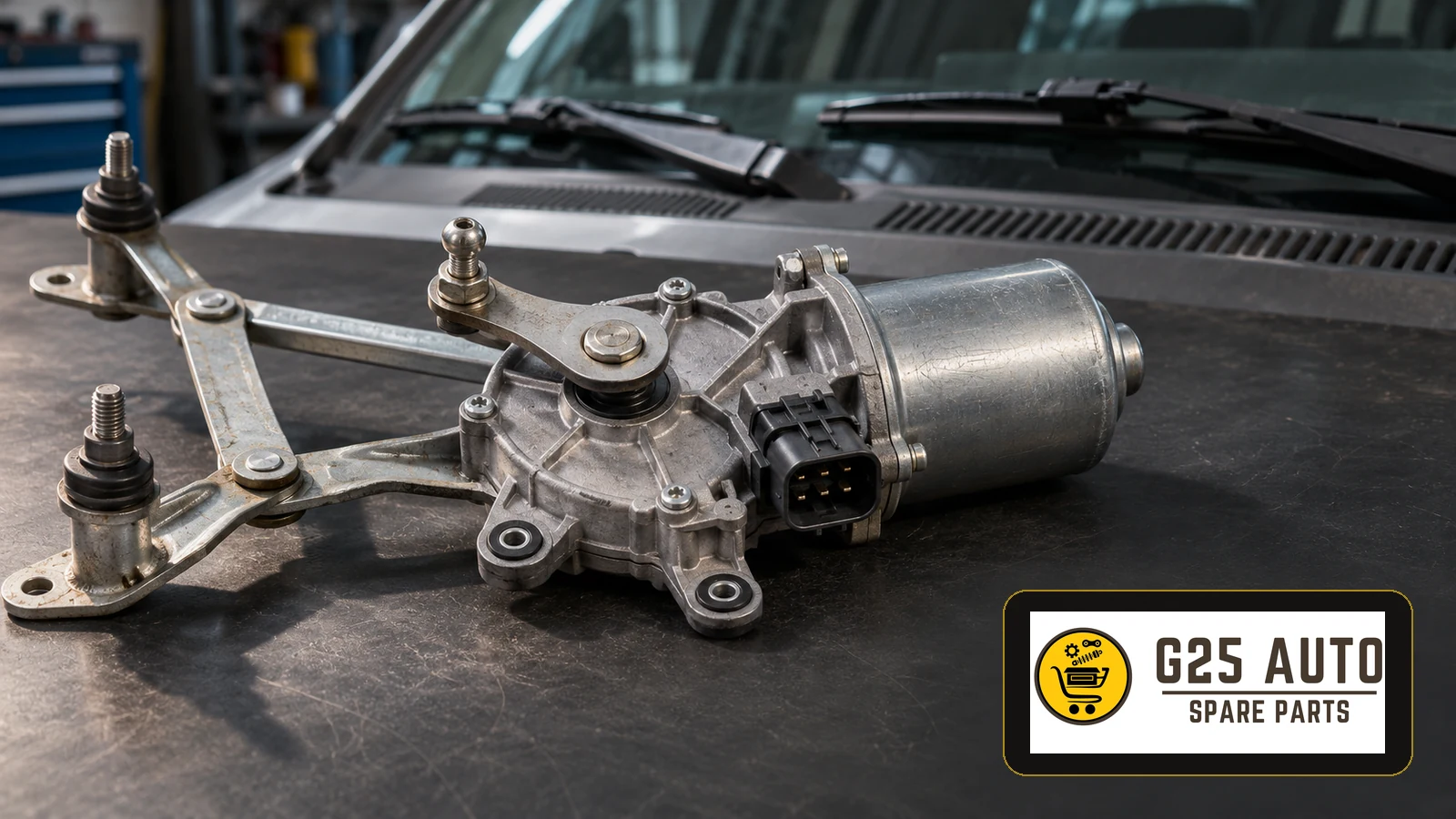
The wiper motor drives the arms that sweep across the windshield. If the wipers slow down, stop altogether, or move erratically, the fault may be in the motor or elsewhere in the system. This guide explains how the motor works, what the symptoms mean, and how to identify the right replacement.
What Is a Wiper Motor and How Does It Work?
A wiper motor converts electrical energy from the vehicle into mechanical motion. In a conventional system, a DC motor turns a reduction gear that slows the output and increases torque. The linkage converts that rotation into the back-and-forth sweep of the wiper arms.
Main Components
- Electric motor unit
- Reduction gears
- Linkage arms and joints
- Control electronics and, where fitted, a relay
- A parking mechanism or position sensor that lets the system return the blades to their rest position
Symptoms of a Wiper Motor Fault
Changes in how the wipers move can indicate an electrical or mechanical fault. Note which speeds and operating modes are affected before replacing parts.
Common Symptoms
- No movement. The wipers stay still when you operate the control stalk.
- Slow or laboured movement. The arms sweep noticeably slower than usual.
- Only one speed works. The other speed settings produce no response.
- Failure to park. The blades stop partway across the windshield after switch-off.
- Unusual noise. Squeaking, knocking, or groaning accompanies the sweep.
- Unexpected stops. The wipers cut out and restart during operation.
- Burning smell. A smell from the motor area can indicate overheating.
Checks to Confirm the Fault
A technician can narrow down the cause by checking both the electrical circuit and the mechanical drive:
- Test power and ground at the relevant connections with a multimeter.
- Check the fuse and any relay used by the vehicle.
- Measure motor current draw against the vehicle’s service information.
- Inspect the linkage and joints for damage or binding.
- Check the control stalk and switch inputs.
- Inspect the wiring and connectors for loose or damaged connections.
A failed fuse, faulty relay, defective control stalk, or wiring problem can produce the same symptoms as a faulty motor. Have the cause confirmed before ordering a replacement.
What Causes Wiper Motor Faults?
Electrical Causes
- Damaged motor windings or worn brushes on motors that use them
- Loose or broken wiring connections
- Fuse or relay faults that interrupt the supply
- A short circuit
Mechanical Causes
- Worn or damaged reduction gears
- Damaged linkage arms or joints
- Excessive load on the motor shaft
- A fault in the parking mechanism
Environmental Factors
- Moisture or water entering the assembly
- Freezing conditions that leave blades stuck to the windshield and overload the mechanism if operated
Genuine and Aftermarket Wiper Motors Compared
| Feature | Genuine Part | Aftermarket Part |
|---|---|---|
| Supplier | Sold through the vehicle manufacturer’s parts network | Offered by independent parts manufacturers |
| Fitment | Confirm the manufacturer’s part reference for the vehicle | Confirm the cross-reference and match the connector and mounts |
| Warranty terms | Check the terms for the specific part | Check the terms offered by the supplier |
| Availability | Check availability for the exact reference | Check availability for the verified equivalent |
| Specifications | Use the vehicle manufacturer’s catalogue entry | Use the part maker’s application and specification data |
| Choice | Depends on the motor versions listed for the vehicle | Several manufacturers may list a replacement for the same reference |
How to Identify the Correct Replacement
Check the OE Part Number
Vehicles with the same model name can use different wiper motors depending on their build date, engine variant, or equipment. Read the part number on the existing motor and check it against a catalogue for the vehicle. A documented cross-reference helps rule out a similar-looking assembly with a different connector or mounting pattern.
Check the Vehicle Identification Number
Use the VIN to look up the vehicle’s build details and equipment where the catalogue supports a VIN search. This can help distinguish between motor versions used before and after a production change. Cross-check the result against the old unit and the replacement listing.
Check the Variant and Production Date
A model that stayed in production for several years may have received updates without a change in its name or model code. Check the following details against the replacement specification:
- Motor electrical characteristics
- Connector shape and connection type
- Mounting points
- Electronic control system and options
Wiper Motor Buying Checklist
Before You Order
- Record the VIN and confirm the vehicle’s model year and engine variant.
- Read the part number from the existing motor.
- Check for equipment that affects the application, such as a rain sensor.
- Confirm the vehicle application in the replacement part listing.
- Find out whether additional parts are required for installation.
- Check the supplier’s warranty, return, and exchange terms.
Choosing Between Genuine and Aftermarket Parts
Either option can suit a repair when the application is confirmed. Compare the exact part reference, supplier information, and terms before deciding.
When to Consider a Genuine Part
A genuine unit is an option when you want the part listed in the vehicle manufacturer’s catalogue or when a particular repair agreement specifies the supplied part. Check the applicable terms if the vehicle is still under warranty.
When to Consider an Aftermarket Part
An aftermarket motor is an option when a manufacturer provides a clear equivalent for the required reference. Compare documented fitment, availability, and cost for the specific part.
Buying from a Parts Supplier
Select a supplier who can confirm the application and explain how to handle a mismatch. Compare alternatives using the VIN and part reference so you can resolve any differences before installation.
Installation and Use
Professional Installation
On some vehicles, replacing the motor requires removal of the cowl trim below the windshield. The electrical connector needs to be properly seated, and the wiper arms may need to be aligned to the specified park position. Some systems also have a calibration or coding step. Use the service procedure for the vehicle or have an experienced technician carry out the repair.
Checks After Installation
- Test every available speed.
- Check that the blades return to the correct park position.
- Listen for abnormal noise during the sweep.
- Check that the wipers operate with the washer system.
- Check intermittent operation where fitted.
Reducing Strain on the Wiper System
- Use washer fluid to wet the windshield when wiping dry dirt.
- Free frozen blades and clear ice before operating the wipers.
- Replace worn blades and keep the glass clean to reduce drag.
- Have the electrical supply checked if the motor is running slowly or cutting out.
Frequently Asked Questions
Can a Wiper Fault Affect a Vehicle Inspection?
It can affect the result where the inspection includes the condition and operation of the wipers. Check the requirements that apply to the vehicle and make sure the blades sweep and park correctly before the inspection.
Can a Wiper Motor Be Repaired?
On a serviceable assembly, worn brushes may be replaceable. Damaged windings or broken gears may call for replacement of the motor assembly. The decision depends on the diagnosed fault and the parts available for that unit.
Are Front and Rear Wiper Motors the Same?
The front and rear typically use different assemblies. Check the part reference and mounting position for the end of the vehicle you are repairing.
How Long Does Replacement Take?
It depends on access to the motor, the trim that has to come off, and whether alignment or calibration is required after fitting.
Does One Stationary Wiper Mean the Motor Has Failed?
On a system where one motor drives both arms, a stationary arm can point to a failed linkage arm, joint, or connection on that side. Check the mechanical drive before replacing the motor.
Conclusion
The wiper motor helps maintain visibility in rain and snow. Confirm the cause of slow, erratic, or failed operation before buying a motor. Use the VIN, original part reference, and build details to identify the right replacement, then check the full sweep and park position after installation.