
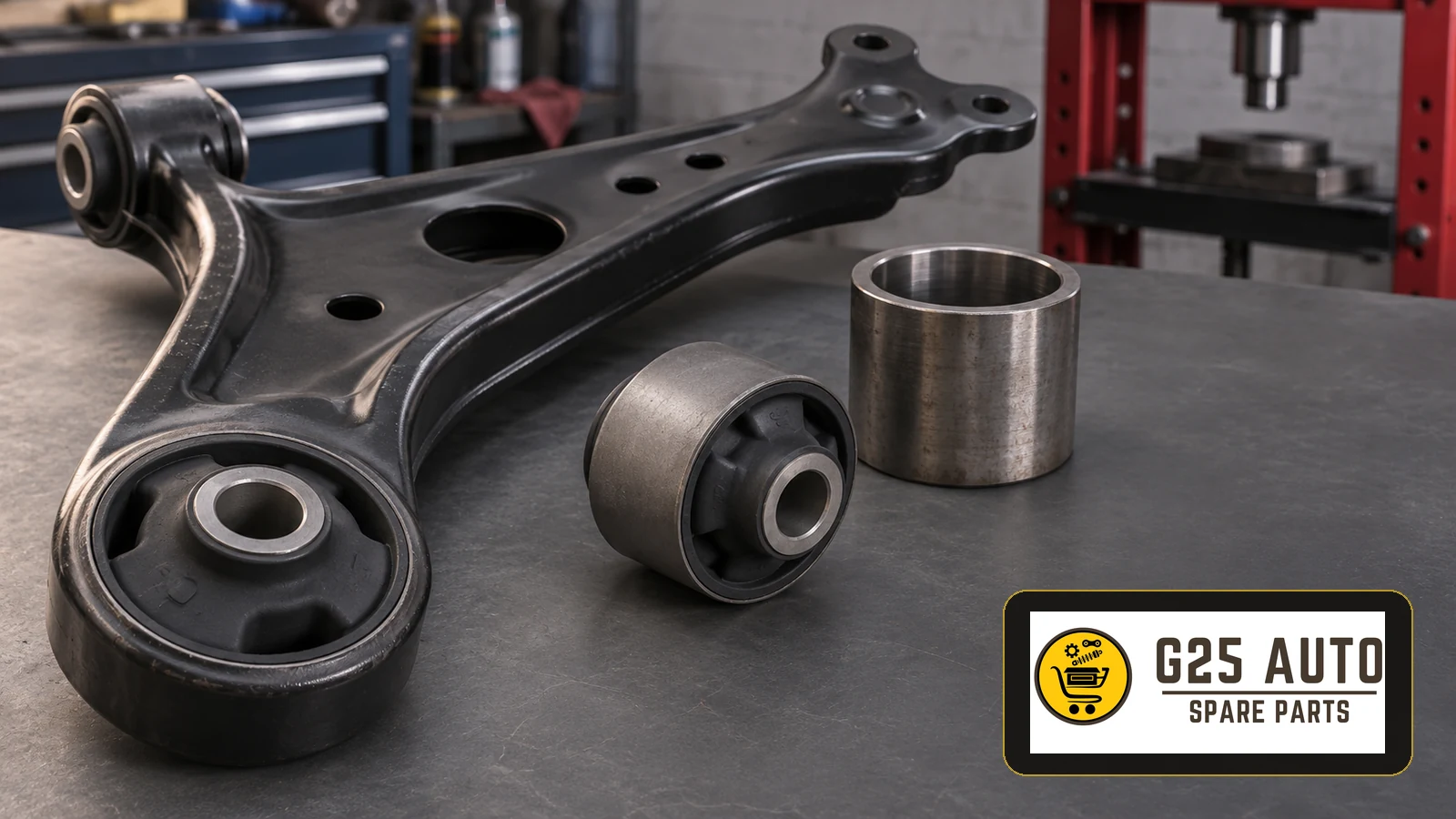
Control arm bushings are part of a larger family of suspension bushings. They allow controlled movement between metal components and help limit the vibration and noise that reach the cabin. If inspection shows a bushing needs replacement, use the vehicle identification number (VIN), build date and original part reference to confirm which replacement fits.
What are control arm bushings and suspension bushings?
A control arm bushing is a flexible mounting point between a control arm and the vehicle structure. Depending on the suspension design, control arm bushings may be found at the front or rear. Rubber and polyurethane are two materials used for bushings. The term suspension bushing also covers flexible mounts at other points in the suspension.
These bushings cushion contact between metal components, absorb some vibration and road shock, and reduce the noise transmitted into the cabin. Their flexibility allows the suspension to move in a controlled way, helping the vehicle maintain predictable handling.
How do control arm bushings differ from other suspension bushings?
Types of bushings and where they sit
- Lower control arm bushings connect the lower arms to the vehicle structure. They carry loads through the lower arm as the suspension moves.
- Upper control arm bushings support the upper arms in layouts such as double wishbone suspension.
- Anti-roll bar bushings support the bar that helps limit body roll in corners.
- Shock absorber bushings cushion the shock absorber at its mounting points, where the design uses them.
- Engine and transmission mount bushings serve a related purpose around the powertrain, outside the suspension.
Symptoms to watch for
Signs you may notice while driving
- Squeaks or knocks over bumps
- Excessive roll or a feeling of instability in corners
- Increased steering wheel vibration
- Pulling to one side under braking
- Uneven tyre wear
- Difficulty holding a straight line or reduced stability at speed
What a visual inspection may reveal
- Visible cracks or tears in the bushing
- Rubber that has hardened or started to crumble
- A bushing that is visibly distorted
- Oil or grease contamination from a nearby leak
- Unusual gaps or movement between metal parts
Several steering, braking and suspension faults can cause similar symptoms. A workshop can inspect the vehicle on a lift and use suitable equipment to identify where the movement or noise originates.
Comparing original-equipment and aftermarket bushings
| What to check | Original equipment | Aftermarket |
|---|---|---|
| Fitment | Check the vehicle and mounting location in the manufacturer’s catalogue. | Check the supplied applications and the cross-reference to the original part number. |
| Part specification | Confirm the listed version for the vehicle’s build date and configuration. | Check the supplier documentation for the stated specification and application. |
| Purchase conditions | Confirm the terms and what is included with the seller. | Check the supplier’s warranty and return conditions for the exact item. |
Checklist for choosing the right part
Before ordering
- Record the VIN and check the original reference on the existing part if it is legible.
- Confirm the production month and year. Include the engine variant if the catalogue uses it to distinguish parts.
- Identify the installation position: front or rear, right or left, upper or lower.
- Ask the supplier to confirm fitment against those details. Compare the product photos with the existing part as an additional check.
- Confirm whether the package contains a single bushing or a set, and whether installation requires a special tool.
- Check the warranty and return conditions before ordering.
Check the part on arrival
Verify the manufacturer and part reference on the label. Inspect the packaging for damage and look for visible defects in the rubber or corrosion or coating damage on the metal parts.
Why the VIN, original part number and build date matter
VIN
Two vehicles that look identical can use different bushings. The VIN helps a supplier or workshop look up the exact vehicle in the relevant parts catalogue and confirm which version it uses.
Original part number
The original part number helps identify the bushing and check aftermarket cross-references. It can also help identify a revised replacement where the catalogue lists a superseded part number.
Build date
A manufacturer may revise the suspension or change components during a model year. The build month and year help resolve differences where the catalogue specifies a production cutoff.
What to look for in an aftermarket bushing
Look for an identifiable manufacturer, a catalogue listing for the vehicle and position, and technical information for the exact part. Check any documentation the supplier provides and review the warranty and return terms. Choose a part with intact packaging and clear fitment information.
Installation and replacement
What the workshop does
Bushing replacement can require a lift, a press and application-specific tools. The workshop safely supports the vehicle and removes the relevant suspension components as needed. A press or a dedicated tool may be used to remove the old bushing and seat the replacement at the specified angle and position.
Fasteners should be tightened using the vehicle manufacturer’s procedure and specified torque. The workshop should check whether the repair calls for an alignment check and make adjustments as required.
After installation
Pay attention to how the vehicle steers and rides after the repair. Report unusual noises or vibration promptly. Follow the vehicle manufacturer’s service procedure and any follow-up instructions from the workshop.
Frequently asked questions
How long do control arm bushings last?
Service life varies with road conditions, vehicle use, loading and the bushing itself. Inspection and the manufacturer’s guidance help determine when replacement is needed.
Should both sides be replaced together?
Have the workshop inspect both sides. The condition of the other side and the vehicle manufacturer’s repair instructions help determine whether one side or both need replacement.
Are polyurethane bushings better than rubber?
Polyurethane options may be firmer and give a different driving feel. Rubber can provide more isolation, depending on the design. Choose based on the vehicle application and intended use.
What happens if I keep driving with a worn bushing?
Excessive movement at a suspension mounting point can affect wheel position under load, contribute to uneven tyre wear and make handling less predictable. Have suspected wear assessed before deciding whether the vehicle can continue in service.
Should I choose original equipment or aftermarket?
In either case, check the exact application against the vehicle and the original reference. Confirm the part specification and mounting position before ordering.
Conclusion
When a suspension bushing shows signs of wear, have the fault confirmed and identify the exact mounting position and replacement reference. Professional installation allows the related components to be checked and the alignment to be assessed as the vehicle procedure requires.