
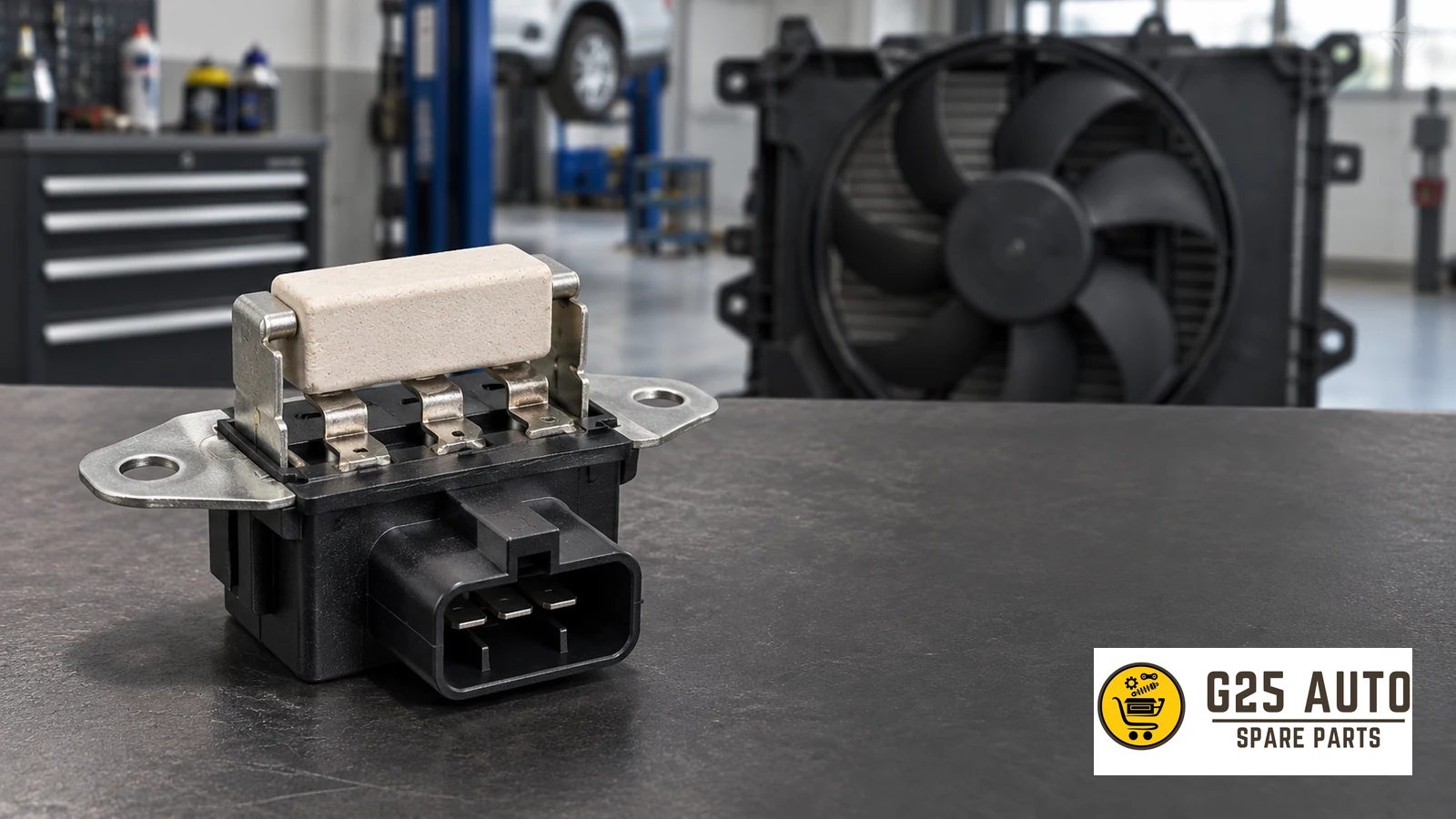
A radiator fan resistor lets the electric cooling fan run at different speeds. The fan can run at a lower speed when the cooling demand is low and at a higher speed when more airflow is needed. A resistor or control fault may leave the fan running at full speed, working at only one speed, or failing to run at all. These symptoms can lead to excess fan noise or engine overheating and can also originate elsewhere in the cooling system.
What Is a Radiator Fan Resistor and How Does It Work?
In a stepped fan circuit, the resistor reduces the voltage reaching the motor at lower speeds. In an electronically controlled system, a fan control module can vary the motor output electronically. The engine control unit (ECU) uses coolant temperature information to determine how much cooling is needed. How the ECU, relays and fan controller communicate depends on the vehicle.
Resistor Construction and Control
Conventional resistor units use resistive elements to provide distinct speed settings. Electronic modules can use pulse-width modulation (PWM) to vary the fan output more gradually. On systems with diagnostic monitoring, a fan control fault may also set a fault code.
Fan Speed Stages and How They Work
The number of speeds and the conditions that trigger them depend on the vehicle and its engine.
Two-Speed Systems
The first stage runs the fan at low speed. The second runs it at full speed when the system calls for more airflow.
Systems with Three or More Stages
Additional stages give the system intermediate settings between low and high. Fan demand can change when the air conditioning is switched on, so the expected response depends on the vehicle’s control strategy.
Symptoms of a Radiator Fan Resistor Fault
Fan behaviour provides useful clues, but several electrical and cooling faults can produce the same symptoms. Check the system before replacing the resistor.
Common Symptoms
- The fan runs continuously at maximum speed and is noticeably loud.
- The fan fails to run when cooling is needed.
- One speed works while other speeds fail to respond.
- The engine temperature warning appears on the dashboard.
- The fan fails to respond to an air-conditioning request when the vehicle would normally call for it.
- The fan runs intermittently or stops unexpectedly.
- There is an electrical burning smell or smoke near the resistor.
- The vehicle stores a fault code that can be read with a diagnostic tool.
Other Faults That Can Look Similar
| Symptom | Possible resistor or controller fault | Other possible causes |
|---|---|---|
| Fan never runs | Part of the fan control circuit may have failed. | Fan motor, relay, fuse, wiring or ECU fault |
| Only one speed works | One or more speed circuits may be inoperative. | Wiring, relay or ECU control signal fault |
| Engine overheats | The fan may fail to engage when cooling is needed. | Thermostat, water pump, coolant leak or trapped air |
| Fan stays at maximum speed | The lower-speed circuit or fan control may be faulty. | Temperature sensor, ECU or wiring fault |
Diagnosis Methods and Checklist
Start with a visual inspection and work through the circuit. The more involved checks may require vehicle-specific service information and diagnostic equipment.
Diagnostic Checklist
- Visual inspection. Locate the resistor, which may be near the radiator or fan housing. Look for physical damage, scorch marks or corrosion.
- Electrical connections. Inspect the connectors for loose seating, damaged terminals and corrosion.
- Fuses and relays. Check the fuses and relays for the fan circuit using the vehicle’s diagnostic procedure.
- Fan motor. Test the motor by the method specified for the vehicle.
- Diagnostic scan. Record any stored codes related to the cooling fan or temperature control.
- Temperature sensor. Check whether the reported temperature is consistent with the engine’s condition.
- Fan speeds. Check which speeds respond when the system commands them.
- Resistor readings. Where specified, compare multimeter readings at the relevant terminals with the service data.
Choosing an Original or Aftermarket Part
Replacement options include original and aftermarket parts. Compare the specifications and verify fitment before ordering.
Original Parts
Use the manufacturer’s part reference to identify the original resistor or module specified for the vehicle.
Aftermarket Parts
Independent suppliers offer alternatives designed for the same application. Check the supplier’s compatibility information against the original part reference and the vehicle’s details.
What to Check Before Ordering
- Part reference. Check the original part number and confirm that the replacement is listed against it.
- Vehicle identification number. The same model can use different resistors depending on its year and equipment. Check fitment against the VIN.
- Engine code. Cooling system configurations can differ between engines in the same model.
- Build date. Production changes can affect which resistor is fitted within a model year.
- Connector type. Verify the connector shape and pin count against the existing system.
Fitting and Replacement
Access varies by vehicle. Some resistors are easy to reach, while others require removal of the bumper or nearby parts.
General Replacement Steps
- Let the engine cool and follow the vehicle’s service procedure for making the fan circuit safe.
- Locate the resistor on or near the radiator or fan housing.
- Release the connector lock and unplug the connector carefully.
- Remove the fasteners or clips and lift out the resistor.
- Compare the replacement with the removed part and confirm fitment.
- Install and secure the replacement, then check that its connector is fully seated.
- Restore the electrical connections according to the service procedure and verify the fan’s response.
Checks After Fitting
- Check that the expected fan speeds respond as the engine warms.
- Check the response to air conditioning where applicable.
- Listen for unusual noise or vibration.
- Check for dashboard warnings and scan for relevant fault codes where possible.
Comparison of Resistor and PWM Control
| Feature | Conventional resistor | Electronic PWM module |
|---|---|---|
| Technology | Resistive elements | Semiconductor electronics |
| Speed control | Fixed speed stages | Can vary output in smaller steps |
| Diagnosis | Check the speed circuits and resistor against service data. | Check power, signals and any available diagnostic information. |
Preventive Maintenance
- Check coolant level as directed by the vehicle manufacturer and use coolant to the specified standard.
- If the engine overheats, pull over safely and let it cool.
- Inspect electrical connectors for corrosion or damage and have abnormal fan operation checked.
- Keep the radiator’s airflow path free of obstructions.
- Investigate thermostat or electrical supply faults if they are found during diagnosis.
Frequently Asked Questions
Can You Drive with a Failed Fan Resistor?
A fan that fails to run when required can allow the engine to overheat. If the temperature warning appears or the engine overheats, pull over safely and arrange an inspection.
Can a Resistor Fault Damage the Engine?
It can do so indirectly. If loss of fan operation leads to severe overheating, the head gasket, cylinder head or engine block can be damaged.
Can the Fan Resistor Be Cleaned or Repaired?
A loose or corroded connection may be serviceable. Check whether the fault is at the connector, in the wiring or inside the unit before deciding what needs replacement.
What Can Contribute to Fan Resistor Problems?
Inspect the resistor and its connectors as part of the cooling system diagnosis. Frequent fan use and the condition of the electrical connections are relevant when assessing the fault.
Is It Normal for the Fan to Stay at Maximum Speed?
High speed can be expected when the engine needs extra cooling. If it stays at high speed, check the fan control circuit, temperature sensor and ECU signal.
How Should You Compare an Aftermarket Resistor with the Original?
Verify that the replacement matches the original reference and the vehicle’s electrical and mounting requirements. Check the connector and fitment before installation.
Does the Vehicle Need Adaptation After Replacement?
Any adaptation or fault-code procedure depends on the vehicle. Follow the manufacturer’s instructions and verify that the fan responds as expected afterward.
Conclusion
If the fan stays at full speed, works at only one speed or fails to run, work through the fan motor, fuses, relays, wiring and temperature inputs before replacing the resistor. If replacement is needed, confirm the part reference and fitment using the vehicle’s VIN, engine code and build date, then check the fan’s response after installation.