
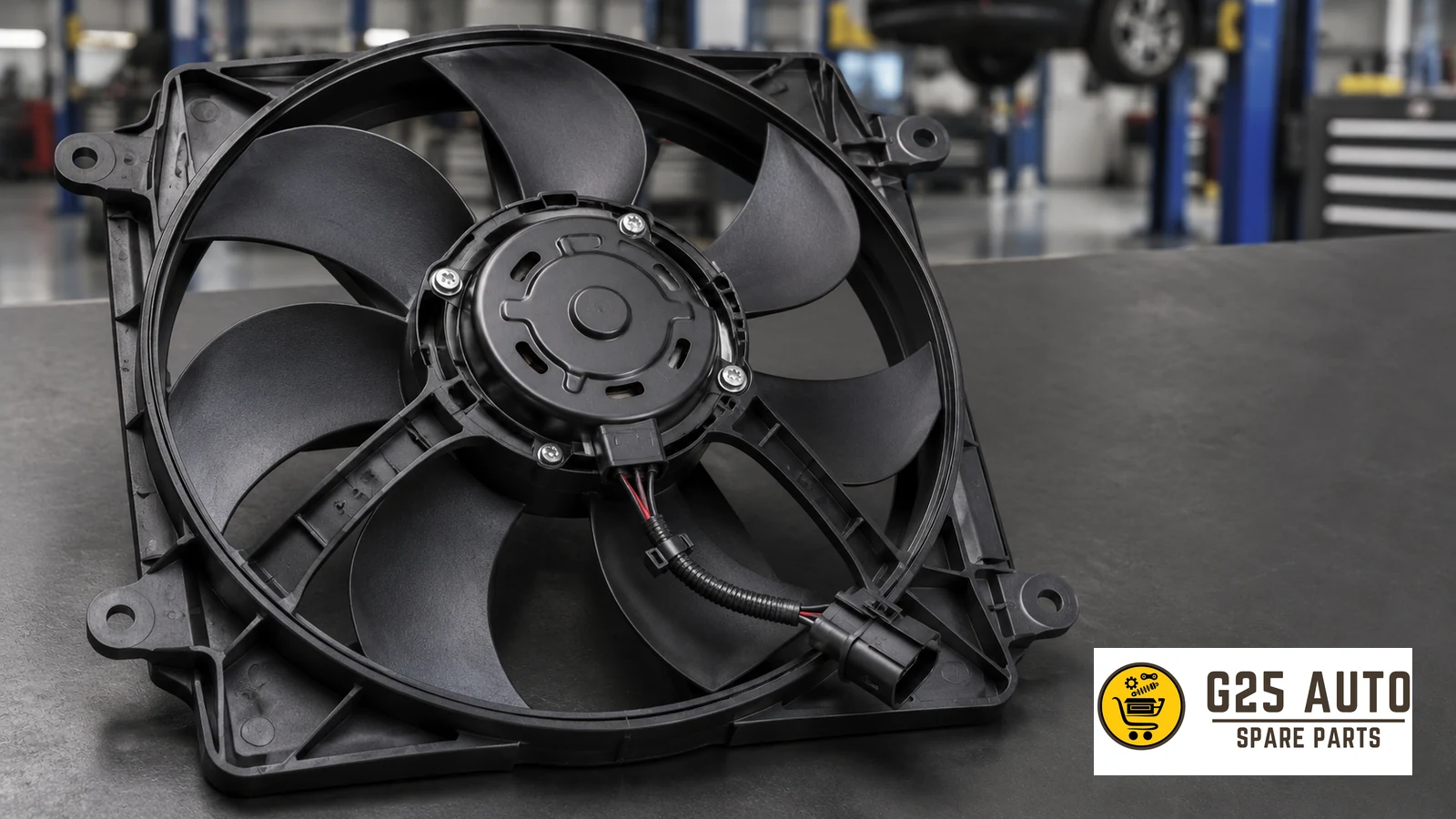
A faulty radiator fan motor can cause the engine to overheat, especially at idle or in slow traffic. Other possible signs include a fan that fails to run when commanded, weaker air conditioning while stopped, and a dashboard warning. This guide explains how the fan works, how to check the cause of a fault, and what to look for when choosing and fitting a replacement.
What Is a Radiator Fan Motor and How Does It Work?
The electric fan motor turns the blades that move air through the radiator. This airflow helps the radiator transfer heat from the engine coolant.
On vehicles with an electronically controlled fan, the control unit uses information from the coolant temperature sensor to determine when extra airflow is needed. It commands the fan through the vehicle’s control circuit and can switch it off again once the demand falls. The exact control arrangement depends on the vehicle.
Symptoms of a Faulty Radiator Fan Motor
Several symptoms can point to a fan motor problem. Early diagnosis can help prevent damage from overheating.
Unusually High Engine Temperature
The temperature gauge may rise above its normal range during stop-and-go traffic or low-speed driving. Air passing through the radiator as the car moves can make the problem less noticeable at higher speeds.
The Fan Is Silent When It Should Be Running
A fan that stays still when the vehicle commands it to run needs checking. Fan operation depends on the control strategy, so the absence of fan noise alone cannot confirm a motor fault.
Reduced Air-Conditioning Performance
Where the fan also provides airflow for the air-conditioning condenser, cooling in the cabin may weaken when the vehicle is stationary.
Dashboard Warning Light
On some vehicles, a fan circuit fault may trigger a warning light. A compatible diagnostic tool can check for related fault codes.
Unusual Fan Noise
Rattling, squealing or humming while the fan is running may indicate bearing wear or another mechanical problem in the assembly.
Diagnosing a Radiator Fan Motor Fault
Have the cause confirmed before replacing the motor. Visual checks, electrical tests and diagnostic information can help distinguish a motor fault from a problem elsewhere in the circuit.
Visual Inspection
With the fan circuit safely isolated according to the vehicle’s service procedure, inspect the blades and the area around the motor for cracks, damaged wires and other visible damage.
Electrical Checks
A technician can use the wiring diagram and a multimeter to check the power supply, the fan fuse, the relay where fitted, and the continuity of the relevant wiring.
Motor Operation Test
A technician can test the motor using the procedure specified for that fan design. If the motor passes the test, continue checking the supply wiring and fan control circuit.
Diagnostic Scan
Read any stored fan-related fault codes with a compatible diagnostic tool. Use the results together with the electrical and visual checks to locate the fault.
Comparing Original Equipment and Aftermarket Fan Motors
| Check | Original equipment part | Aftermarket part |
|---|---|---|
| Fitment | Check the part number for the exact vehicle configuration. | Check the stated application and the original part number it replaces. |
| Specifications | Check the assembly listed for the vehicle. | Compare the published electrical specifications and mounting points with those of the original. |
| Warranty terms | Check the terms for the specific part. | Check the terms offered for the specific part. |
What to Check When Choosing a Replacement
Different engines and production years can use different fan motors even within the same model. Confirm the exact application before ordering.
Original Equipment and Part Numbers
Look for a readable label or marking on the original motor housing. Use its part number as a reference when checking the replacement against the parts catalogue.
Vehicle Identification Number
Use the vehicle identification number (VIN) to look up the vehicle in the parts catalogue. This helps distinguish between variants of the same model.
Engine Code and Production Date
Compare the engine code and the vehicle’s production date with the catalogue entry, especially where the listed fan changes during a model year.
Technical Specifications
Check the stated voltage, operating speed, diameter and mounting points where the catalogue or service information provides them. A motor with different specifications may affect cooling performance or fail to fit.
Radiator Fan Motor Replacement Checklist
- Let the engine cool completely.
- Follow the vehicle manufacturer’s procedure to isolate the fan circuit.
- Disconnect the fan electrical connectors.
- Identify the fan assembly fasteners and remove the assembly according to the service procedure.
- Compare the removed part with the replacement to confirm fitment.
- Fit the replacement in the specified position and secure the assembly and connectors.
- Restore electrical power according to the service procedure.
- Check fan operation under the conditions specified for the vehicle and monitor the coolant temperature.
- Where applicable, recheck diagnostic codes and confirm the fault has been resolved.
What to Check on an Aftermarket Part
Manufacturer and Warranty Information
Check the manufacturer’s application information and read the warranty terms for the part you are considering.
Condition and Workmanship
Inspect the plastic parts and motor housing for visible defects. Check that the mounting points and electrical connectors correspond to the original assembly.
How Driving Conditions Affect Fan Use
In city traffic, the fan may run more often because less air passes through the radiator as the vehicle moves. Hot conditions can also increase cooling demand. Keep the radiator airflow path clear and have cooling problems investigated as they appear.
Preventive Maintenance and Checks
Ask for a fan operation check during routine servicing. Keep the radiator and cooling system in good condition, pay attention to unusual temperature readings, and have the electrical connections checked for dirt and corrosion.
Frequently Asked Questions
When should the radiator fan motor be replaced?
Replace it once testing confirms that the motor itself is faulty. If overheating is the main symptom, have the other possible causes checked first.
Can I drive with a failed radiator fan motor?
A failed fan can let the engine overheat, particularly in traffic, in hot weather or when climbing hills. Have the fault checked before driving the vehicle.
Can I replace the radiator fan motor myself?
The job requires suitable tools and access to the vehicle-specific service procedure. If you are unfamiliar with the electrical connections or mounting procedure, have a technician carry it out.
Can I use an aftermarket fan motor?
Check that the replacement is listed for the vehicle and matches the original part number reference and technical specifications.
Is anything else required after replacement?
Follow the vehicle’s service procedure to confirm that the fan and cooling system work correctly. Recheck diagnostic codes where applicable.
Conclusion
If the fan becomes noisy, stops working or the engine temperature rises, confirm the cause before buying a motor. Use the original part reference, VIN and engine details to check the replacement. Routine inspection can help catch problems with the fan, its wiring or the rest of the cooling system.