
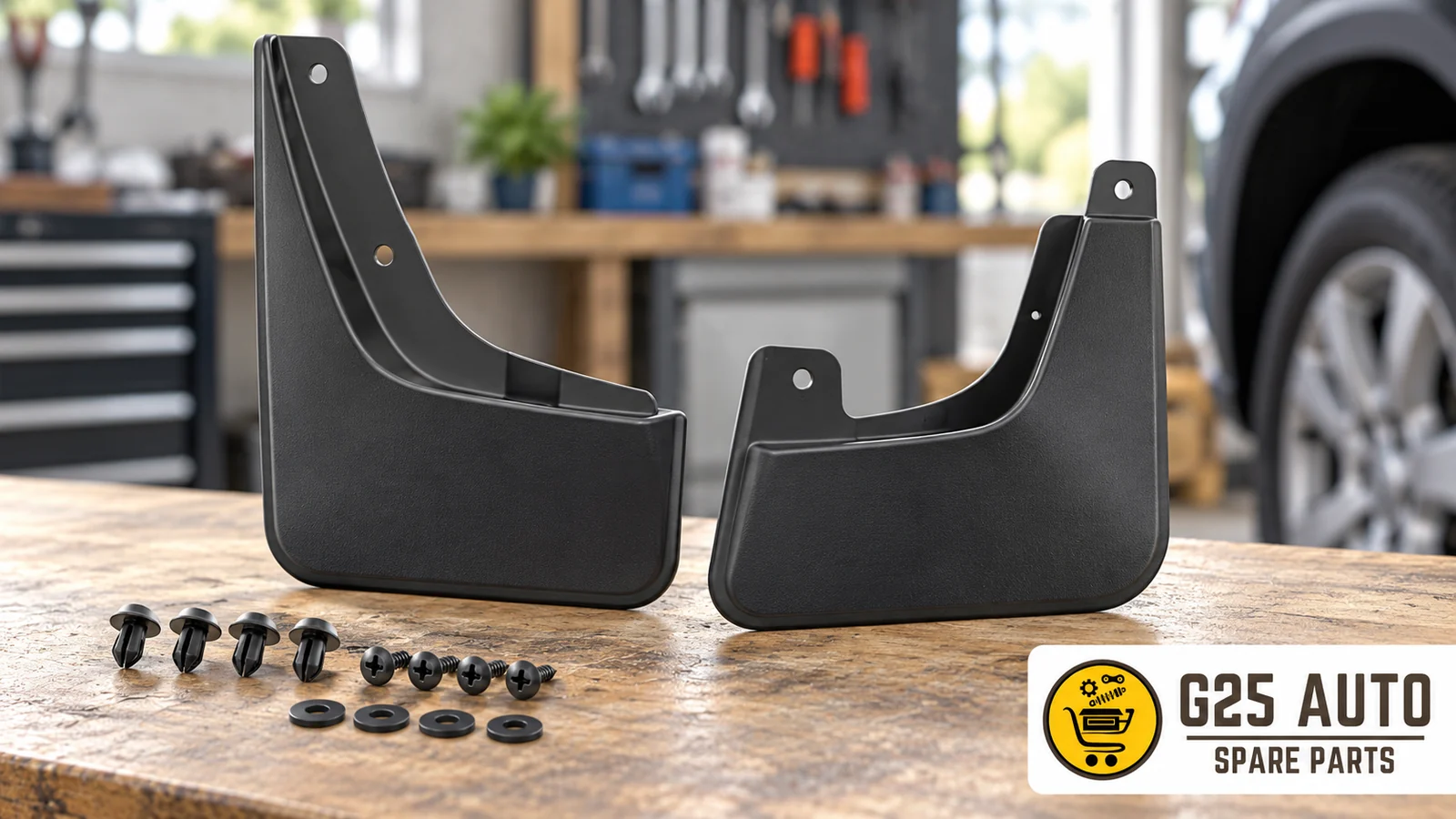
Short answer: When selecting mudflaps, verify the front or rear position, directional designation, and complete product reference together. Do not evaluate single-piece and set offerings within the same scope. Photographic similarity does not prove vehicle application. Request written confirmation from the seller about which parts will be shipped and on which document the application description is based; do not assume mounting parts are included.
Start the mudflap search with the correct position
Clearly describe the location of the part you are looking for on the vehicle. If a direction is specified in the listing alongside the front or rear position, also verify which part this information identifies. The presence of multiple mudflaps in the same photo does not indicate they will be shipped in the same package. Do not derive directional information from the order in the photo or the position on the screen. Ask questions to ensure that the written description of the offer and the product shown describe the same scope.
Do not consider a mudflap, wheel arch liner, or other protective part equivalent simply because it is located in a similar place. Use the full name and reference of the listing to understand that you and the seller are talking about the same product. You can share a photo of your existing part; however, do not record visual similarity as a definitive match. If what the part is remains unclear, clarify the description before converting the conversation into an order decision.
Read the manufacturer description within its own limits
Volvo’s official accessories page introduces mudflaps among accessories designed to protect the side of the vehicle from wheel splash. This general task description does not verify the reference, mounting arrangement, or package contents of a specific sales listing. If detailed product documentation is not accessible, do not draw definitive vehicle application conclusions using only the general introduction.
Keep the manufacturer’s general accessory introduction and the offer you will purchase as separate records. Which reference is offered for which vehicle application must be explained separately. The presence of mudflaps on a brand’s accessories page does not mean that another seller’s similar-looking product is the same part. Request the document associated with the relevant reference from the seller. Do not complete technical specifications or connection details that the source does not explain yourself.
Compare single-piece and set offers separately
If a listing says set, ask how many pieces the set consists of and which positions it covers. Do not derive quantity information from objects counted in the image. Ask separately whether mounting parts shown as examples in the same photo will be shipped. This text does not define the fixed contents of a specific mudflap set. The purpose is to make the scope of the purchased offer visible through the seller’s written explanation.
If you are looking for a single piece, state this clearly to the seller. Do not assume yourself whether separate parts from a set are offered. Do not create a new set definition by combining codes from different listings. If one offer covers the front position and another covers the rear position, do not compare them as equal packages based only on price or photos. First understand the scope; keep a record of which question remains unanswered.
Keep label and vehicle application in the same record
Record the product reference exactly as it appears on the label or manufacturer’s description. Write down which source the code came from. Do not rename the seller’s stock code as the manufacturer reference. Instead of completing unreadable characters with codes from another listing, request a clearer photo. If a code change is mentioned, ask for the explanation on which it is based; do not establish equivalence between codes by guessing.
Write your vehicle information in a separate field and associate the application response given by the seller with the relevant product. The mention of the model name and the complete coverage of the vehicle version are not the same information. If a condition related to existing equipment is asked, answer based on documentation or verified records of your own vehicle. Do not convert uncertain areas into definitive information. Keep product reference, vehicle application, and offer scope as independent verification areas.
Offer record table
| Heading | Evidence to be recorded | If no response |
|---|---|---|
| Position and direction | Written description linked to reference | Do not guess from image |
| Product code | Readable label or document | Request clear visual |
| Parts to be shipped | Seller’s package list | Have set statement clarified |
| Mounting parts | Included or excluded scope response | Do not assume included |
| Vehicle application | Application description for product | Write awaiting document |
Save the table together with the offer link and response date. If a different product is suggested later, open a separate record for the new reference. Do not fill gaps by transferring the previous product’s features to the new product. Specify which offer was converted into an order. Completion of one field does not mean the same result is valid in other fields. This way it remains clear which description you will verify upon delivery.
Questions to ask the seller
- For which position and direction is this offer presented?
- Can you share the complete product reference and label photo?
- Is a single piece or set being shipped; can you list the parts in the package?
- Are mounting parts included in the offer; can you specify the scope?
- Can you send the document on which your application response is based for the vehicle information I shared?
Instead of settling for short answers like same or fits, ask which code is meant. If there is a difference between the response and the product image, clearly show this to the seller. When a new explanation arrives, note which point changed without deleting the old record. Do not mark an unanswered question as resolved; keep the outstanding issue visible before the order decision.
Keep delivery verification separate from installation
When the product arrives, compare its label, stated direction, and shipped parts with the order record. If you find a difference, document it with photos and request an explanation from the seller. Do not use visual similarity in place of missing reference information. This stage is not a step for drilling holes, changing connections, or trying to force a part into place. Base your evaluation regarding installation on the manufacturer documentation for the vehicle and product; this text does not describe installation methods.
Frequently asked questions
Are mudflaps and wheel arch liners the same part?
Do not derive equivalence from name similarity or close position on the vehicle. Have the complete product name and reference verified by the seller.
If it says set, are all positions included?
Request a list of parts to be shipped. Do not assume the package contents without clarifying front, rear, and directional scope in writing.
If mounting parts are in the photo, will they be in the package?
Do not count the photo as a package list. Request in writing from the seller which parts are included and excluded in the offer you selected and save it with the order record.
How should records be kept if the label differs from the code in the order?
Save the reference in the order note and the photo of the delivered label side by side. Clearly specify the different characters; do not correct the code yourself and write it as if it were the same product. Request that the seller explain this difference based on the relevant product documentation. Also add the list of parts that came together to the question. If it is unclear whether this is only a packaging difference or a product reference difference, keep this as a separate uncertainty. When an explanation arrives, record which order it belongs to.
Source: Volvo Cars — Mudflaps. Verification: October 31, 2026. Manufacturer example is limited to general accessory introduction.