
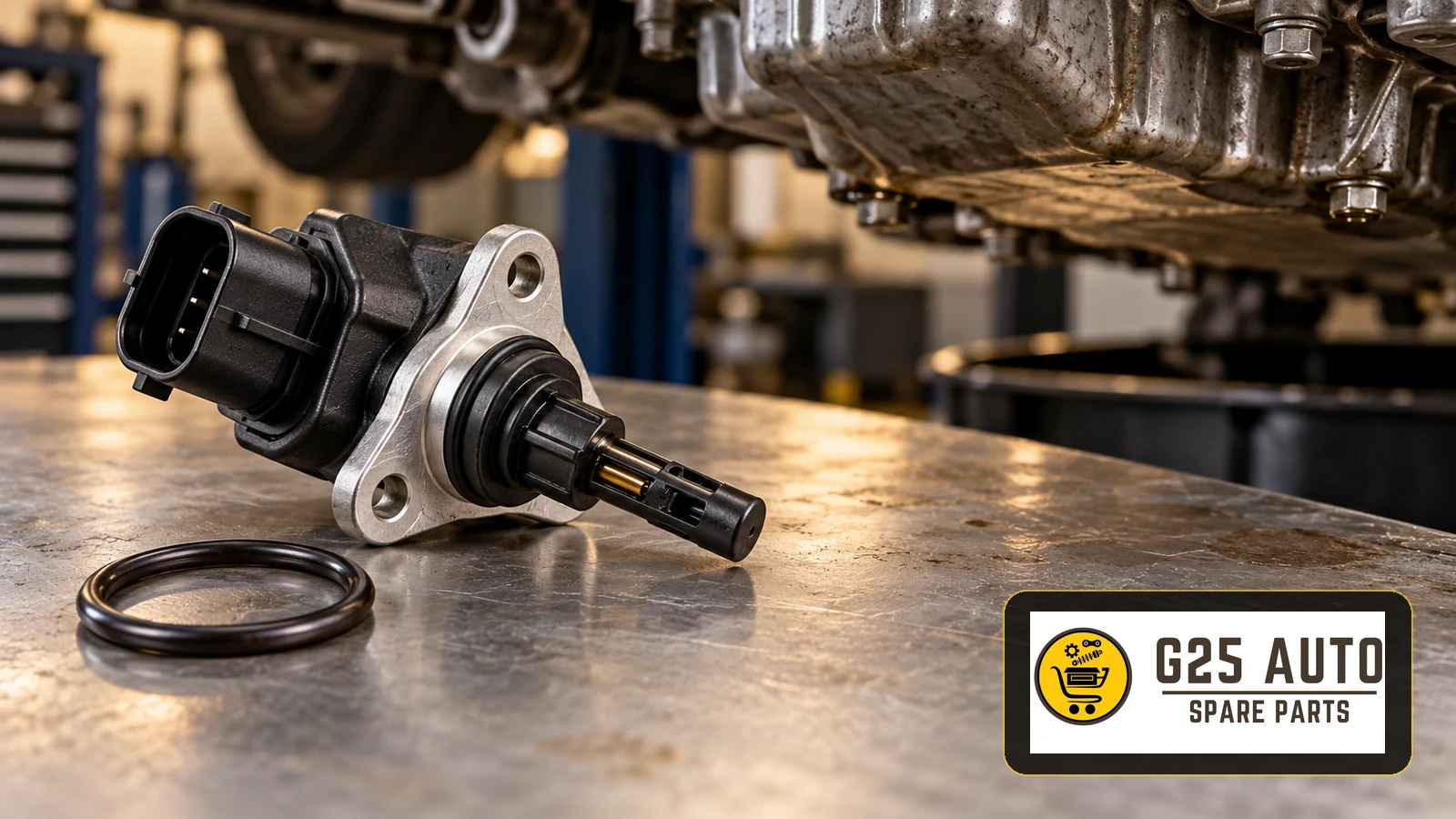
The engine oil level sensor monitors the engine oil level and warns the driver of abnormal conditions. A faulty sensor may be associated with a persistent or intermittent oil level warning, incorrect level readings and, in some cases, diagnostic fault codes. A systematic check is needed to distinguish a sensor fault from a genuine oil level problem.
What Is an Engine Oil Level Sensor and How Does It Work?
An engine oil level sensor is a device fitted to the oil sump that measures the oil level electronically. Designs include capacitive sensors and float sensors: capacitive designs use changes in electrical capacitance to detect the level, while float designs use a mechanical float arrangement. The design fitted depends on the vehicle.
The sensor sends its measured values to the vehicle’s electronic control system, which operates the oil level display and warning functions. Some systems can monitor the level while the engine is running, subject to their operating conditions.
Common Symptoms of Engine Oil Level Sensor Problems
A problem with the oil level sensing system may produce various symptoms. Careful assessment is necessary to establish whether the sensor itself is responsible:
Dashboard Displays and Warning Systems
- An oil level warning that stays on or flickers with vibration
- A message such as ‘Check Oil Level’ appearing on the display
- Oil level sensor fault codes recorded by the diagnostic system
- Different warnings with the engine cold and hot
- Different readings on straight roads and during cornering
Electronic and Communication Problems
- The oil level indication disappearing from the information display
- Implausible or inconsistent oil level values
- An unsuccessful sensor self-test at ignition-on, where provided
- A recorded communication fault involving the engine control unit
Physical and Mechanical Signs
- Oil leakage around the sensor
- Corrosion or looseness at the sensor wiring connection
- A cracked or broken sensor housing
- Oxidation on the sensor contact pins
The Difference Between Symptoms and a Confirmed Diagnosis
A common mistake is to treat symptoms as a confirmed diagnosis. An oil warning or dashboard message does not necessarily mean that the level sensor is faulty. A genuinely low oil level, an oil pump problem, an oil pressure sensor fault or another system problem may also trigger an oil-related warning. The meaning of the particular warning must be established.
Steps Towards an Accurate Diagnosis
The following checks help identify the actual fault:
- First check the physical oil level with the dipstick, where fitted, using the vehicle’s specified checking conditions
- Read the fault codes with suitable professional diagnostic equipment
- Test the sensor electrical circuit using a multimeter and the applicable diagnostic procedure
- Visually inspect the sensor wiring and connector
- If necessary, remove the sensor to inspect its physical condition
- Plan replacement parts procurement after identifying the actual cause
Why OEM References and Vehicle Compatibility Checks Matter
The key requirement when replacing an oil level sensor is obtaining the correct part for the vehicle. Even within the same make and model, sensor applications may differ with engine type, chassis identification and production year.
Checklist for Selecting the Correct Part
- Vehicle Identification Number (VIN): Use the vehicle identification number as a key reference for application checks
- OEM Part Reference: Check the original part number marked on the existing sensor against the applicable catalogue
- Engine Code: Different engines in the same model may require different sensors
- Production Date: Part revisions may apply before or after a production change
- Equipment Level: Some equipment packages may require different sensor types
- Electrical Connection: The connector and pin configuration must match the application
Purchasing without checking these details may waste time and money on an incompatible part. Use the vehicle information when searching a parts catalogue and have the application confirmed before ordering.
Choosing Original and Aftermarket Sensors
The choice between an original part and an aftermarket alternative depends on budget, quality requirements and how the vehicle is used.
Original Sensor Characteristics
Original parts are supplied for the vehicle manufacturer’s specified applications. Check the exact application and the manufacturer’s documentation. Warranty terms, quality evidence and price should be assessed for the particular product rather than assumed from the original-part designation.
Aftermarket Sensor Characteristics
Aftermarket parts are alternatives offered by independent manufacturers. Their specifications and application coverage must be checked against the vehicle requirements. Product quality can vary, making reliable suppliers and documented compatibility important; equivalence and savings should not be assumed.
Original and Aftermarket Comparison
| Feature | Original Part | Aftermarket Alternative |
|---|---|---|
| Compatibility | Verify the manufacturer application and part reference | Verify the cross-reference and exact vehicle application |
| Quality Standard | Check the product’s manufacturer documentation | Assess the brand and relevant product evidence |
| Warranty Period | Confirm the stated product terms | Confirm the brand and supplier terms |
| Price | Obtain a current quotation for the exact part | Compare current quotations for verified alternatives |
| Availability | Confirm stock and any ordering requirement | Confirm current stock with the supplier |
| Vehicle Warranty | Check the applicable vehicle warranty conditions | Check the applicable vehicle warranty conditions before installation |
A Step-by-Step Guide to Oil Level Sensor Checks
Initial Checklist
- Physical Oil Level: Check the actual level on level ground with the dipstick, where fitted, following the vehicle’s temperature and waiting requirements
- Visual Inspection: Inspect beneath the engine for leaks around the sensor, using safe access
- Electrical Connection: Inspect the connector pins and socket using the specified safe disconnection procedure
- Fault Code Reading: Use suitable diagnostic equipment to read the stored system codes
- Wiring Check: Inspect the sensor wiring route for damage and crushing
Situations Requiring Professional Diagnosis
- Multiple fault codes have been recorded
- Electrical circuit tests give abnormal results
- The problem continues after sensor replacement
- There is an actual reduction in engine oil pressure
- Abnormal noises are coming from inside the engine
Points to Consider When Sourcing a Replacement
Consider the following when buying an engine oil level sensor:
Supplier Selection
A reliable supplier can help identify the correct product and clarify ordering conditions. Look for documented application checks and accessible customer support rather than relying on a broad catalogue alone.
Product Information and Documentation
- OEM reference numbers should be listed
- A detailed vehicle application list should be provided
- Technical specifications and installation information should be available
- Warranty conditions should be clearly stated
- Return and exchange policies should be clear
Assessing Price
Consider the balance between quality and cost rather than price alone. A low price does not establish quality, and the most expensive option is not necessarily the best for the application. Compare documented products together with their actual warranty and return conditions.
Important Points During Installation and Replacement
Replacing an oil level sensor requires suitable mechanical knowledge. Its location and accessibility vary with the vehicle model.
Preparation Before Installation
- Allow the engine to cool and position the vehicle on level ground with safe access
- Have the required tools and specified new gasket or O-ring ready
- Place a suitable absorbent material or container underneath to collect oil
- Compare the new sensor with the original and verify its application, rather than relying on appearance alone
Checks After Installation
- Tighten the sensor fasteners to the manufacturer’s specified torque
- Ensure the electrical connector is fully and securely engaged
- Clear fault codes as appropriate and retest the system
- When safe to run the engine, check for leaks
- After an appropriate test drive, confirm that the relevant warnings have cleared
Frequently Asked Questions
Does an oil level sensor fault affect vehicle operation?
A level sensor fault may compromise the warning function even if it does not directly cause a running problem. It may fail to warn of a real oil level issue, so checking the actual level remains important. An oil warning must first be assessed for its actual cause.
How often should the sensor be replaced?
Oil level sensors are generally replaced when a fault is confirmed rather than at a universal periodic interval. Electrical contacts and housing materials may deteriorate with age.
I have an oil level warning, but the oil is full. What should I do?
First verify the physical level under the specified checking conditions. If it is correct and the warning continues, a sensor or circuit problem is possible. Read the fault codes with suitable diagnostic equipment.
Will an aftermarket sensor affect the vehicle warranty?
The effect depends on the applicable warranty conditions and the particular part and installation. For a vehicle under warranty, check with the authorised service provider before installation rather than assuming an aftermarket part has no effect.
How long does sensor replacement take?
The time depends on the vehicle and access to the sensor. Some applications require removal of an undertray or other components. Obtain an application-specific estimate rather than relying on a universal labour time.
Can I replace it myself?
The work requires suitable mechanical knowledge and tools. Professional equipment may also be needed for fault-code clearing and any required calibration. Assess these requirements for the actual vehicle before starting.
Oil Level Sensor Maintenance Tips
To support reliable operation:
- Follow the specified oil change schedule and use the correct oil
- Inspect electrical connections for moisture and dirt
- Keep the engine’s specified underbody protection in place
- Have the sensor area checked during oil and filter changes
- Take dashboard warnings seriously and arrange prompt checks
Conclusions and Recommendations
Although it may appear simple, the oil level sensor plays an important role in engine monitoring. Investigate symptoms promptly, but do not treat them as a confirmed diagnosis. Systematic checks and professional help where necessary are needed to identify the actual fault.
The main purchasing priority is the correct part for the vehicle. Use the VIN, OEM reference, engine code and production date. When comparing original and aftermarket options, consider documented quality, actual warranty terms and supplier reliability alongside cost.
Check the available replacement parts against the vehicle information before purchasing. Correct selection and timely attention help avoid the costs of an unsuitable replacement or an unresolved fault.
Do not neglect oil level and pressure checks. The sensor is a warning device; proper maintenance and careful operation remain essential to engine protection.