
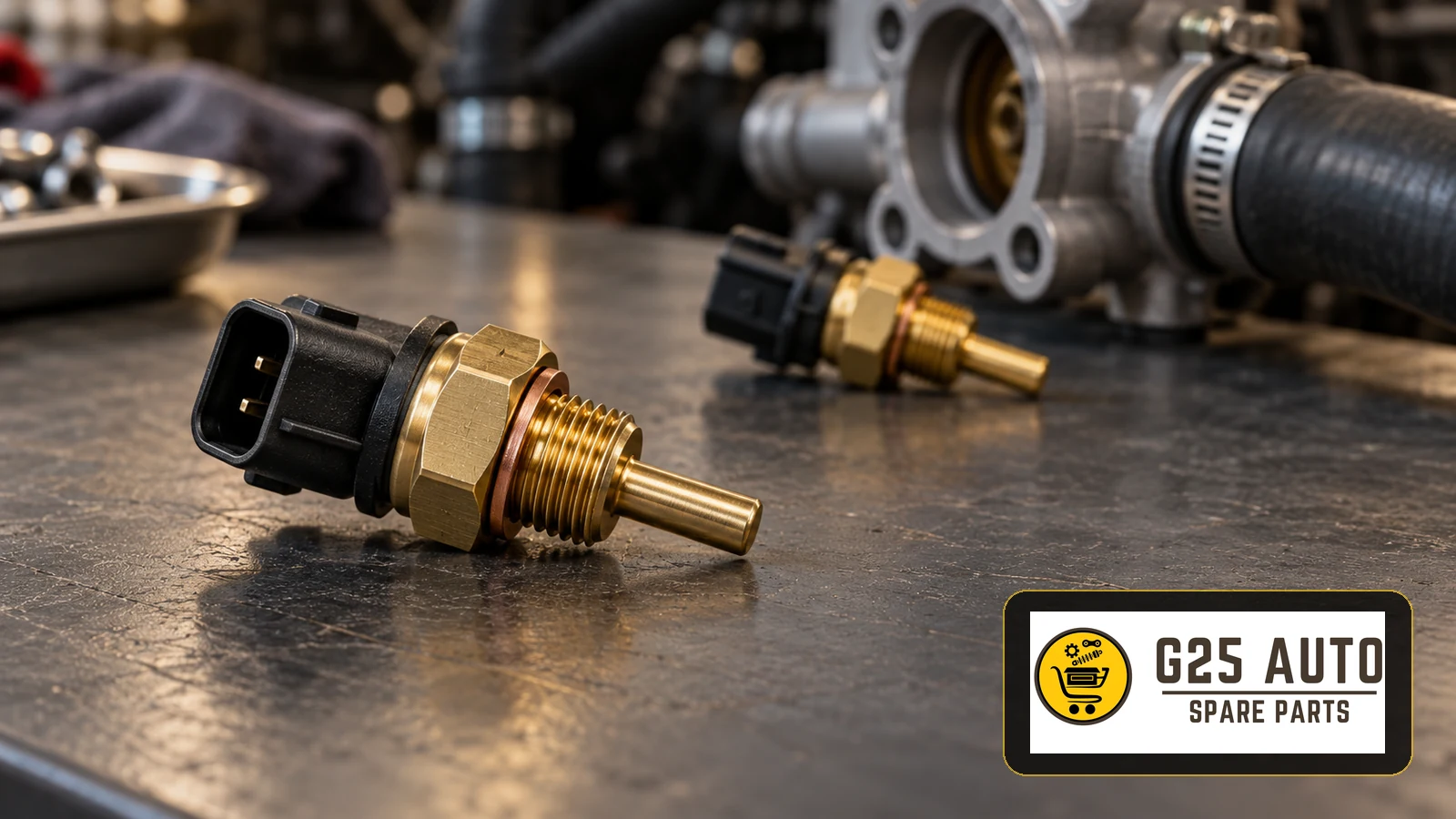
The engine coolant temperature sensor measures engine temperature and sends information to the engine control unit (ECU). A fault can contribute to increased fuel consumption, uneven running or a cooling fan that runs continuously or fails to operate. It may also cause incorrect dashboard temperature readings and illuminate the check engine light.
What Is an Engine Coolant Temperature Sensor and How Does It Work?
The engine coolant temperature sensor is an electronic component usually located on the engine block or in the thermostat housing, in direct contact with the coolant. It commonly uses a thermistor, a temperature-sensitive resistor whose electrical resistance changes with temperature.
In this type of sensor circuit, resistance is high when the engine is cold, producing a higher voltage signal to the ECU. As the engine warms up, resistance and signal voltage decrease. The ECU uses this information to control fuel injection duration, ignition timing, idle speed and cooling fan operation.
Coolant Temperature Sensor Fault Symptoms
Common symptoms that may indicate a coolant temperature sensor problem include:
Dashboard Readings and Warning Signs
- The check engine light illuminates or flashes.
- The temperature gauge reads abnormally high or low.
- The temperature needle remains fixed or does not move.
- The temperature gauge changes suddenly or implausibly.
Engine Performance Problems
- Difficulty starting a cold engine, with prolonged cranking.
- Uneven idle when the engine is warm.
- Hesitation or sudden interruptions in response.
- Higher than normal fuel consumption.
- Increased exhaust emissions.
- Reduced engine power.
Cooling System Abnormalities
- The cooling fan runs continuously, even with a cold engine.
- The cooling fan does not switch on.
- The engine overheats.
- The cabin heater provides insufficient heat.
Checks Needed for a Reliable Diagnosis
These symptoms can point to a coolant temperature sensor fault, but professional checks are needed to establish the cause. Other faults can produce similar symptoms.
Professional Diagnostic Steps
- Read OBD fault codes: Diagnostic equipment reads stored system codes. Codes such as P0115, P0116, P0117 and P0118 relate to the coolant temperature sensor circuit.
- Analyse live data: Check the real-time temperature values reported by the sensor.
- Measure resistance: Use a multimeter to check sensor resistance at different temperatures against the applicable specifications.
- Inspect wiring and connectors: Test wiring continuity and assess connector condition.
- Check the cooling system: Inspect coolant level, thermostat operation and possible air in the system.
Abnormal temperature readings can also result from an instrument cluster fault, wiring problem or ECU issue. A comprehensive inspection is therefore necessary before replacing the sensor.
Comparing Original and Aftermarket Parts
| Feature | Original equipment part | Aftermarket part |
|---|---|---|
| Compatibility | Verify the vehicle manufacturer’s specified application. | Verify the application and evidence of compliance with the required specification. |
| Price | Check the current quotation. | Compare the actual offer. |
| Availability | A special order may be necessary. | Confirm stock and lead time with the supplier. |
| Quality control | Review the product requirements and supporting evidence. | Assess the particular brand and product evidence. |
| Warranty period | Check the applicable terms. | Check the brand and supplier terms. |
What to Check When Selecting a Coolant Temperature Sensor
Verify the OEM Reference and Part Number
Correct part identification is essential. Different engine variants, production years and equipment levels within the same make and model can use different sensors. For this reason:
- Check the OEM part reference: Record the original equipment manufacturer reference on the existing sensor, where available.
- Check the vehicle identification number (VIN): Use the VIN to verify the correct part reference.
- Identify the engine code: Establish the engine code when selecting the sensor.
- Check the production date: Mid-model-year changes can make the build date important.
An incorrect sensor may not fit physically, may be electrically incompatible or may report the wrong temperature. This can waste both workshop time and money.
Points to Consider When Choosing an Aftermarket Part
When considering an aftermarket sensor, check the following:
- Choose an established, reliable brand.
- Verify the cross-reference to the original part number.
- Confirm that technical characteristics, including resistance behaviour and operating temperature range, meet the required specification.
- Read the product warranty terms carefully.
- Check the seller’s return and exchange policy.
Coolant Temperature Sensor Replacement Checklist
The following points should be considered when replacing the sensor, using the vehicle manufacturer’s procedure:
- Allow the engine to cool completely to reduce the risk of burns.
- Park on level ground and apply the parking brake.
- Follow the specified battery isolation procedure where required.
- Identify the sensor location.
- Position a suitable container to collect escaping coolant.
- Disconnect the electrical connector carefully.
- Remove the old sensor using the appropriate tool and procedure.
- Clean the mounting location and inspect the seal.
- Ensure the new sensor has the specified seal in sound condition; renew it where required.
- Tighten the sensor according to the manufacturer’s instructions, avoiding overtightening.
- Reconnect the electrical plug and ensure its locking mechanism engages.
- Check the coolant level and replenish as required.
- Bleed the system according to the applicable procedure.
- Restore the battery connection if it was disconnected.
- Run the engine and check for leakage.
- Clear fault codes as appropriate and carry out the required post-repair test.
Tips for Supporting Coolant Temperature Sensor Service Life
Several maintenance measures can help support dependable sensor operation.
Regular Cooling System Maintenance
Coolant condition and cleanliness matter. Replace coolant at the manufacturer’s recommended intervals and address deposits or corrosion in the system to help maintain reliable operation.
Use the Correct Coolant
Use coolant that meets the vehicle manufacturer’s specification. Unsuitable coolant or an incorrect dilution can contribute to corrosion and shorten component life.
Prevent Engine Overheating
Overheating can damage the sensor. Address cooling system problems, including thermostat, fan or water pump faults, promptly to prevent overheating.
Frequently Asked Questions
Can you continue driving with a faulty coolant temperature sensor?
The vehicle may still run, but incorrect temperature information can contribute to performance problems, higher fuel consumption and increased emissions. There may also be an overheating risk. Arrange prompt diagnosis and replacement if the sensor is confirmed faulty.
At what mileage should a coolant temperature sensor be replaced?
There is no universal mileage interval. Replacement is normally based on a confirmed fault. Service life varies with coolant condition and engine operating conditions.
How can a sensor fault be distinguished from a thermostat fault?
Both can produce similar symptoms. A thermostat fault may prevent the engine from reaching normal operating temperature or may cause overheating. With a sensor fault, actual engine temperature may be normal while the reported reading is wrong. Professional testing is needed to distinguish them.
Can a coolant temperature sensor be cleaned?
Cleaning does not repair a failed internal sensing element. A confirmed faulty sensor normally requires replacement. External deposits may be removed carefully, but this should not be assumed to restore sensor function.
Can a vehicle have more than one coolant temperature sensor?
Yes. Some vehicles use separate sensors for the engine control unit and the dashboard display. Their functions and specifications may differ.
Does using an aftermarket sensor affect warranty coverage?
Check the vehicle manufacturer’s policy and the applicable warranty conditions. Requirements depend on the specific warranty and repair circumstances.
Conclusion
The engine coolant temperature sensor plays an important role in modern engine operation. A fault can contribute to a check engine warning, abnormal temperature readings, increased fuel consumption and performance problems. Seek professional assessment promptly if these symptoms appear.
Reliable diagnosis requires fault-code reading, live-data analysis and comprehensive checks. Because several faults can produce similar symptoms, expert assessment helps avoid unnecessary replacement and wasted time.
When replacement is necessary, check compatibility carefully whether choosing an original or aftermarket sensor. Verify the OEM reference, VIN, engine code and production date to reduce the risk of ordering an incorrect part. Assess the particular aftermarket product’s specification and quotation rather than assuming equivalent quality or a price advantage.
Regular cooling system maintenance, correctly specified coolant and prevention of overheating can help support sensor life. An overlooked sensor fault can contribute to more serious engine problems and repair costs.
Use reliable suppliers and obtain compatibility advice. Parts that do not meet the required technical specification, or counterfeit products, can lead to premature failures and additional expense.