
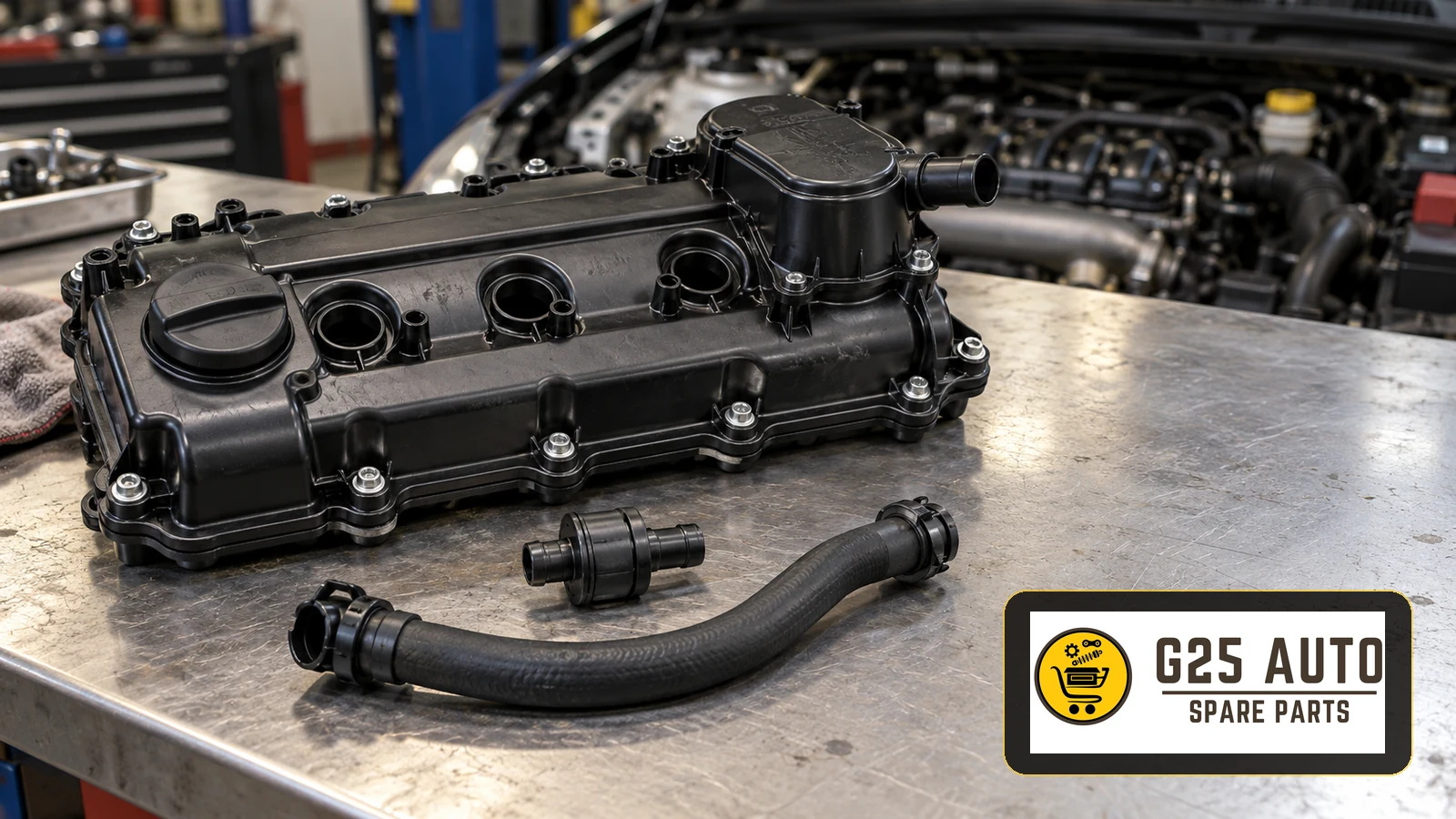
The valve cover breather valve and PCV (Positive Crankcase Ventilation) system are important components in engine operation. The system returns gases that escape from the combustion chamber into the crankcase to the intake, helping control emissions. A faulty PCV valve or ventilation system can contribute to oil leaks, uneven idling, increased fuel consumption and higher emissions.
What Is the PCV System and How Does It Work?
The PCV system is an emissions control system that manages combustion gases passing the pistons into the crankcase, together with water vapour and fuel vapour. It has been used in vehicles for decades and is part of many modern engine designs.
Depending on the engine, the system includes the following components:
- A PCV valve as a flow control element.
- A valve cover breather valve.
- Connecting hoses.
- An oil separator, integrated in some applications.
- Air inlet passages.
During engine operation, intake vacuum can draw crankcase gases through the ventilation system and back into the intake for combustion. The valves regulate this flow according to the system design. The valve cover ventilation arrangement also participates in air circulation; its exact role and routing must be checked for the engine concerned.
The Role of the Valve Cover Breather Valve
The breather arrangement on the valve cover works within the crankcase ventilation system. It helps manage crankcase pressure and, where oil separation is incorporated, limits the amount of oil carried out with the gases.
Some designs include a pressure-regulating diaphragm and an oil separator within the cover assembly. Their functions and construction vary; a diaphragm should not automatically be treated as the oil-separating element itself. Contamination, blockage or deterioration of these components can reduce system effectiveness.
Symptoms of PCV System Faults
A problem with the PCV system or valve cover breather can produce several symptoms. Professional checks are needed before treating any of the following signs as a diagnosis:
Commonly Observed Signs
- Oil leaks or oily deposits beneath the bonnet.
- Oil accumulation in the air filter housing.
- Uneven idle or engine vibration.
- Higher than usual oil consumption.
- Reduced engine performance.
- Oily deposits around the oil filler cap.
- Increased exhaust smoke, sometimes with a bluish appearance.
- Increased fuel consumption.
- An illuminated engine warning light in some cases.
- Whistling or hissing noises.
Situations Requiring Professional Diagnosis
These symptoms can also indicate other engine problems. A workshop should establish the cause using procedures appropriate to the application. Depending on the findings, diagnosis may include:
- A functional check of the PCV valve; a shake test is relevant only where the design and service instructions permit it, and noise alone does not prove correct operation.
- System pressure or vacuum checks using suitable equipment.
- Visual inspection of hoses and assessment of their flexibility.
- Measurement of emissions where relevant.
- Crankcase pressure measurement with appropriate equipment.
- Internal engine inspection with an endoscope where further investigation requires it.
Comparing the PCV Valve and Valve Cover Breather
| Feature | PCV Valve | Valve Cover Breather Arrangement |
|---|---|---|
| Location | Often at the valve cover or in the connection to the intake | At or within the valve cover, depending on design |
| Main function | Regulates crankcase gas flow towards the intake | Supports ventilation and, where incorporated, oil separation |
| Operating principle | Pressure-responsive flow control, depending on the system | May include a diaphragm, passages or a labyrinth separator |
| Replacement interval | Follow application-specific service instructions | Depends on the design, condition and maintenance requirements |
| Fault effects | Can affect engine running and pressure control | Can contribute to leakage, contamination and running problems |
| Testing | Use the specified functional and pressure checks | Inspection and flow or pressure checks as specified |
Maintenance and Inspection Checklist
Appropriate maintenance helps keep the PCV system functioning. Use this checklist alongside the vehicle manufacturer’s service requirements:
Routine Checks at the Specified Service Interval
- Check PCV valve operation using the prescribed procedure; do not assume every valve should rattle.
- Inspect all hoses for cracks and loss of flexibility.
- Verify that hose connections are secure.
- Visually inspect for oil leakage around the valve cover.
- Check the air filter housing for oil accumulation where access is part of the inspection procedure.
- Monitor engine oil level and consumption.
Periodic Replacement According to the Vehicle Instructions
- Replace the PCV valve at the interval specified for that application, if one is given.
- Renew breather hoses showing deterioration.
- Renew the valve cover gasket when its condition or the repair procedure requires it.
- Service or replace the oil separator, where fitted, according to the relevant instructions.
Special Operating Conditions
- Consider the applicable severe-use guidance for frequent short journeys in winter conditions.
- Have system pressure assessed professionally on turbocharged engines when the diagnostic procedure calls for it.
- Include the system in condition assessments of higher-mileage vehicles, following service requirements rather than a universal mileage threshold.
Choosing Original or Aftermarket Parts
Whether to use an original or aftermarket PCV valve or valve cover breather depends on several factors. Evaluate the actual product and application rather than relying on the category alone.
Characteristics of Original Parts
An original part should be identified through the vehicle manufacturer’s correct reference. Check that the supplied component matches the required production version and specification. Warranty terms and application requirements may influence selection, but an original label alone does not replace fitment verification.
Characteristics of Aftermarket Parts
Aftermarket parts are supplied by independent manufacturers. A suitable replacement needs documented application coverage and the required specification. Compare current quotations and product information rather than assuming equal performance or a lower price. Traceable supply is an important part of the decision.
Recommendations for Selecting the Correct Part
Whichever option you choose, make the following checks:
- Check the Original Part Reference: Establish the vehicle’s original part number and verify the replacement’s documented cross-reference and application.
- Verify Using the VIN: Vehicles sharing a model name can use different parts according to production version and equipment.
- Identify the Engine Code: PCV system arrangements can vary by engine type.
- Check the Production Date: Part revisions may occur around model-year or production changes.
Points to Consider During Installation and Replacement
The work required to replace a PCV or breather valve varies by vehicle. Some parts are readily accessible, while other applications require removal of engine covers or further components. Use the relevant repair instructions and assess the skills and equipment needed before beginning.
General Installation Principles
- Allow the engine to cool and prepare it according to the service procedure before changing parts.
- Inspect existing hoses and renew those whose condition requires replacement.
- Clean and inspect the connection points as instructed.
- Fit the PCV valve in the specified orientation, using any provided direction markings and the service information.
- Use the specified hose clamp procedure; excessive force can damage plastic components.
- After replacement, perform the prescribed checks for abnormal noise, vibration and system operation.
Frequently Asked Questions
How Often Should the PCV Valve Be Replaced?
The interval depends on the vehicle and operating conditions. Follow the manufacturer’s instructions rather than applying a general mileage range. Frequent short journeys may require closer attention under the relevant maintenance guidance.
Can a PCV Valve Fault Damage the Engine?
A ventilation fault can affect pressure control, oil leakage and engine running. Its consequences depend on the fault and engine design; do not assume that it cannot contribute to damage. Investigate symptoms promptly rather than leaving a suspected fault unresolved.
Can I Replace the PCV Valve Myself?
Accessibility and the specified procedure determine how demanding the task is. Some applications are straightforward, while others require more extensive work. Incorrect installation can create problems. Seek professional help if you cannot establish the correct method or complete it reliably.
Should All the Hoses Be Replaced at the Same Time?
Inspect the hoses for ageing, hardening and cracking. Renew damaged or unsuitable hoses and follow any replacement requirements in the repair instructions. Replacing sound hoses as a complete set is not automatically necessary, and neither cost nor future reliability should be assumed.
Are the Valve Cover Breather Valve and PCV Valve the Same Thing?
The names can describe different functions or assemblies within the same ventilation system. A PCV valve regulates gas flow, while the valve cover arrangement can incorporate pressure regulation, ventilation passages and oil separation. Some designs integrate these functions, so identify the actual assembly before ordering.
Does the System Also Have an Oil Separator?
Many systems include oil separation. It may be integrated into the valve cover or provided as a separate unit. It limits oil carryover into the intake, but the layout and serviceability need to be checked for the particular engine.
Is the PCV System Different on Turbocharged Engines?
Turbocharged applications can require different flow paths and valve arrangements to manage their operating pressure conditions. The exact design varies. Follow the correct system information rather than assuming all turbo engines have a particular number of valves or an electronically controlled assembly.
Conclusion and Recommendations
The valve cover ventilation arrangement and PCV system contribute to emissions control and engine operation. Their size or apparent simplicity should not lead to neglect. A malfunction can cause running problems and require further repairs, depending on its nature and duration.
Follow the maintenance intervals specified for the vehicle, pay attention to early symptoms and obtain professional support when needed. Inspection and appropriate maintenance support reliable operation without guaranteeing a particular component lifespan.
For either original or aftermarket replacements, establish documented suitability. Use the original part reference, VIN, engine code and production details to verify the application. A traceable supplier and relevant technical documentation help support a sound parts decision.
Regular maintenance and careful operation matter for engine condition. Include the PCV system in that maintenance and investigate suspected faults rather than overlooking them.