
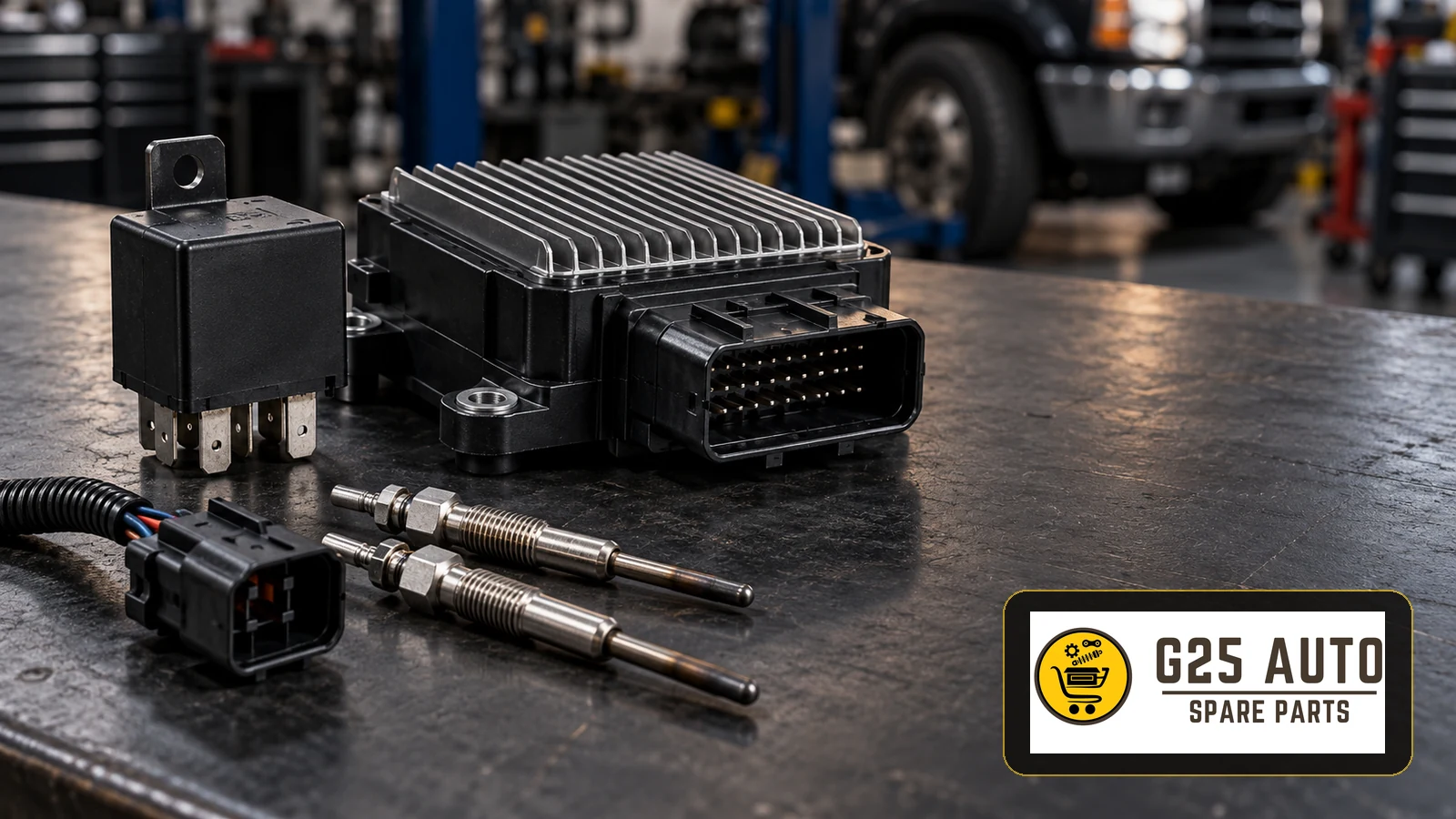
The glow plug relay and control module are important components in helping a diesel vehicle start in cold weather. Faults in this system can show up as a failure to start in the cold, a flashing glow plug warning light on the dashboard or difficult starting. Accurate diagnosis and appropriate replacement parts help maintain vehicle performance and avoid unnecessary expense.
What Is the Glow Plug System and How Does It Work?
Unlike petrol engines, diesel engines use compression ignition rather than a spark plug to initiate combustion. In cold weather, insufficient heat inside the cylinders can make starting difficult. This is where glow plugs assist.
The glow plug system can be understood in terms of three main components, although their arrangement varies by vehicle:
- Glow plugs: Electrical heaters that provide heat inside the combustion chamber.
- Glow plug relay: A switch controlling the electrical supply to the plugs.
- Control module: The electronics managing glow plug operation, working with the engine control system.
Depending on the design, the control system uses engine temperature, ambient temperature and other sensor data to determine how long the glow plugs should operate. The relay or electronic power stage then supplies current in response to these commands.
Recognising Fault Symptoms
Recognising a possible glow plug relay or control module fault early can help limit further problems. The following symptoms warrant investigation, although none identifies the faulty component on its own:
Dashboard Warnings
- A glow plug warning light that stays on.
- A rapidly flashing glow plug light.
- An illuminated engine management or check engine light.
- A preheating period that appears unusually long or short.
Engine Performance Problems
- Failure to start in cold weather.
- Difficult or delayed starting.
- White smoke during initial starting.
- Uneven idle while the engine is running.
- Loss of power and vibration.
Electrical Symptoms
- An unusual noise from a relay during operation.
- Fuses that blow repeatedly.
- Signs of burning or melting on wiring.
Checks Needed for a Reliable Diagnosis
Identifying symptoms is useful, but a reliable diagnosis requires a professional approach. The following checks should be carried out by a qualified technician:
Professional Diagnostic Steps
Reading diagnostic fault codes: Codes stored by the vehicle control system should be read with suitable diagnostic equipment. They help narrow down the area requiring investigation.
Electrical measurements: Check relay and module supply and output voltages, current and resistance as appropriate to the circuit, using suitable equipment and the vehicle manufacturer’s test procedure.
Testing the glow plugs: Checking each plug individually helps distinguish plug faults from relay or module problems.
Wiring and connector inspection: Look for corrosion, loose connections, broken wiring and other physical damage.
Comparing Relays and Control Modules
| Feature | Glow plug relay | Control module |
|---|---|---|
| Function | Switches the electrical supply. | Manages and controls system operation. |
| Complexity | May use an electromechanical design. | Uses electronic circuitry; functions vary by application. |
| Fault patterns | Mechanical contacts can wear where fitted; failure frequency varies. | Electronic faults can occur; failure frequency varies. |
| Replacement | Accessibility and procedure depend on the vehicle. | May require specialist procedures. |
| Diagnosis | Electrical checks may help identify faults. | Diagnostic equipment and electrical checks may be required. |
OEM Part References and the Importance of Verification
Selecting the correct replacement is essential when changing a glow plug relay or control module. An unsuitable part can prevent the system from working, damage other components or create an overheating risk.
Why Do OEM References Matter?
Electrical compatibility: Different engines can require relays with different current ratings. An unsuitable relay may fail to supply the required current or overheat in service.
Software compatibility: Control modules work with the vehicle’s control software. An incompatible module may be unable to communicate correctly with the engine management system.
Mechanical compatibility: Mounting points, connector types and dimensions vary between vehicles.
Information Needed for Verification
- Vehicle identification number (VIN): The vehicle’s individual identifier, used alongside application data.
- Engine code: Check the vehicle’s identification information or engine marking, as applicable.
- Production date: Specifications can change during a model’s production life.
- OEM part number: Record the reference on the existing component where available and verify it against the application.
- Equipment specification: Some features are fitted only to particular versions.
Ordering without this information increases the risk of receiving an unsuitable part. Professional suppliers use these details to help verify the required application.
Choosing Original and Aftermarket Parts
Replacement options generally include original equipment and aftermarket parts. Both have potential advantages and points that require attention.
Original Parts
Potential advantages:
- Vehicle manufacturer warranty terms may apply.
- Application-specific selection through the manufacturer’s parts information.
- Quality control to the manufacturer’s stated requirements.
- Warranty coverage subject to the relevant terms.
Points to consider:
- Costs may be higher.
- Lead times must be confirmed for the specific order.
- Availability may depend on the manufacturer’s distribution network.
Aftermarket Parts
Potential advantages:
- A choice of supply channels.
- Potentially lower purchasing costs.
- Products intended to meet the relevant application requirements, subject to verification.
- Alternative sourcing options, with availability confirmed per order.
Points to consider:
- Assess the manufacturer’s product quality.
- Check warranty terms.
- Buy from a reliable supplier.
- Verify compatibility in detail.
Whichever option is selected, a reliable supplier is important. For G25Auto B2B sourcing across Europe and the Balkans, verify the required part reference, original or aftermarket specification and application details before ordering.
Pre-Replacement Checklist
Before deciding to replace a component, follow these steps:
- ☐ Record the symptoms in detail: when they occur, under what conditions and how often.
- ☐ Have fault codes read by a professional workshop.
- ☐ Identify the vehicle’s VIN and engine code.
- ☐ Record the OEM reference on the existing part.
- ☐ Check the production date in the vehicle’s documentation or identification information.
- ☐ Have the condition of the glow plugs checked too.
- ☐ Have the wiring and fuses inspected.
- ☐ Give the supplier accurate vehicle and component details.
- ☐ Check the part’s warranty and return conditions.
- ☐ Have a qualified technician carry out installation.
- ☐ Carry out the appropriate post-replacement checks and a road test where required.
- ☐ Confirm that relevant fault codes have been addressed and do not return after clearing.
System Maintenance and Preventive Measures
Regular maintenance helps support the service life of the glow plug system:
Periodic Checks
Glow plug inspection: Inspect the plugs according to the manufacturer’s recommendations and replace them where necessary. Inspection and replacement requirements vary by application.
Electrical connections: Inspect connections for corrosion and clean them as required by the service procedure, rather than applying a universal interval.
Battery condition: A weak battery can affect starting and glow plug system operation. Check its condition when investigating starting problems.
Operating Recommendations
- Follow the vehicle’s preheating instructions and warning light indications before starting.
- In extreme cold, follow the manufacturer’s starting procedure; repeat preheating only if the instructions permit it.
- Use diesel fuel that meets the vehicle manufacturer’s requirements.
- Change engine oil at the specified intervals.
- Keep fuel filter maintenance up to date.
Frequently Asked Questions
How many kilometres does a glow plug relay last?
Service life depends on the design and operating conditions, so a universal mileage cannot be assumed. Investigate fault symptoms regardless of mileage and replace the relay if a fault is confirmed.
Can a relay fault damage the glow plugs?
A faulty relay can supply current incorrectly and may contribute to premature glow plug damage. The plugs should therefore also be checked when a relay fault is identified.
Will a control module fault prevent the vehicle from starting?
The effect depends partly on temperature and system design. Some diesel engines may start without effective preheating in warm conditions, while cold starting may become difficult or impossible.
Can I replace the relay myself?
The procedure varies by vehicle. Professional support is recommended for diagnosis, part selection and work on the electrical system, even where the relay is readily accessible.
Is an aftermarket warranty as reliable as an original part warranty?
Warranty terms vary by manufacturer, supplier and product. Compare the actual coverage and conditions rather than assuming that original and aftermarket warranties are equivalent.
Does an illuminated warning light always mean a component has failed?
No. Temporary electrical problems or sensor faults can also trigger a warning. Read the fault codes and carry out the relevant checks before deciding which component needs attention.
Conclusion
The glow plug relay and control module support reliable cold starting in diesel vehicles. Faults can produce noticeable symptoms, but a reliable diagnosis requires professional testing.
Correct part selection is central to a successful replacement. Verify the VIN, engine code, production date and OEM reference against the relevant application information. An unsuitable replacement can leave the original problem unresolved and may cause further damage.
When choosing between original and aftermarket parts, consider the advantages and limitations of each. A suitable aftermarket product may offer a cost advantage, while original parts are supplied under the manufacturer’s applicable terms. In either case, dependable sourcing and professional installation help support performance and safety.
Regular maintenance and appropriate operating practices can help prolong system life and reduce unexpected starting problems. Recognising symptoms early and arranging timely diagnosis helps protect the vehicle and control repair costs.