
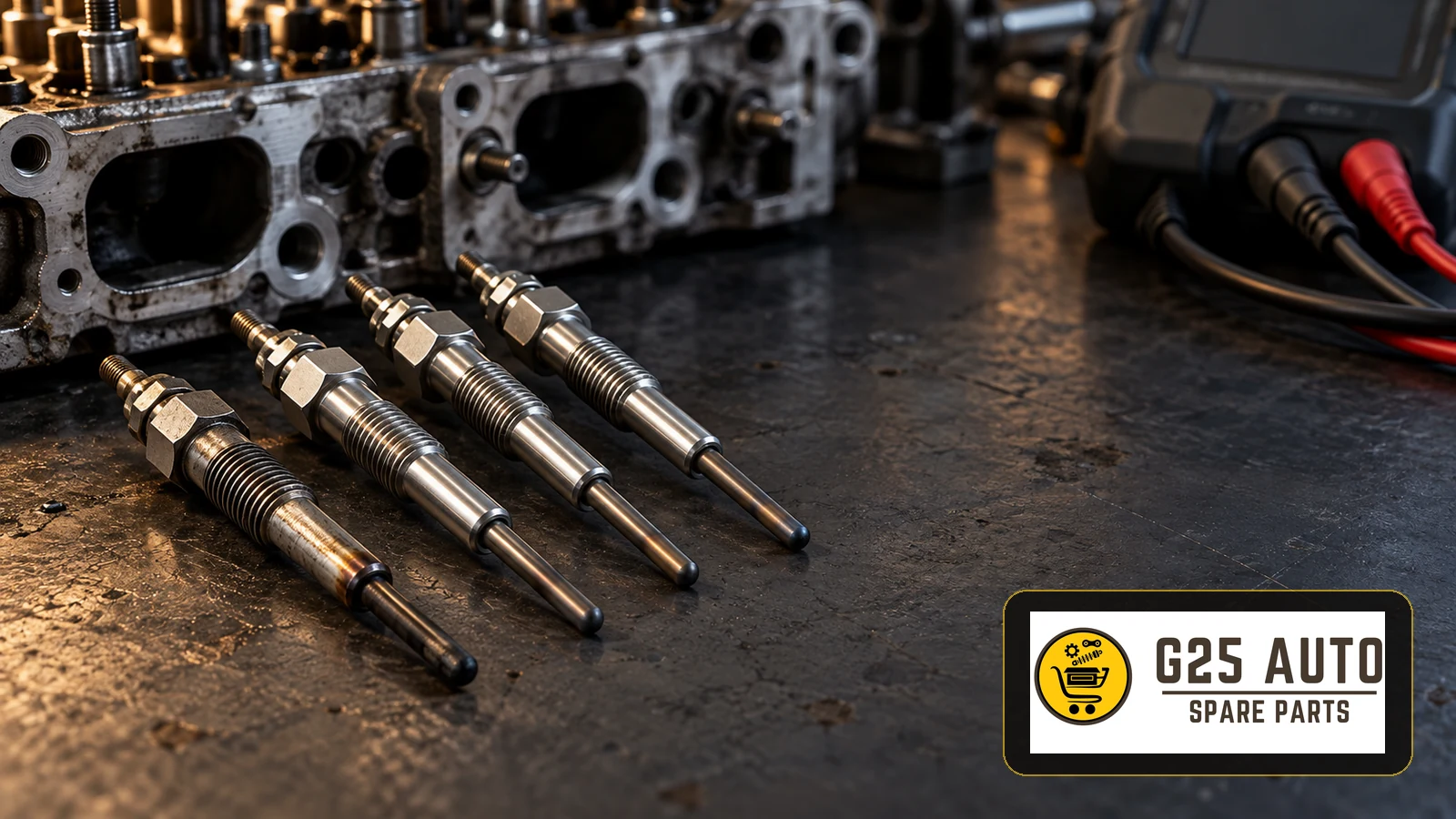
A glow plug is an electrical heating element that helps a diesel engine start by heating the combustion chamber, particularly in cold weather and during initial starting. It supports the temperature conditions needed for fuel to ignite when the engine is cold and is especially important during winter operation.
What Is a Glow Plug and How Does It Work?
A glow plug is a heating element used in diesel engines to help fuel ignite in the combustion chamber. Unlike the spark plug in a petrol engine, it does not produce a spark. Instead, electrical current heats the element and raises the temperature locally within the combustion chamber.
Diesel engines operate by compression ignition. When the engine is cold, particularly at low ambient temperatures, the compressed air may not become hot enough for reliable starting. Glow plugs provide additional heat to help the engine start.
Glow Plug Construction
A glow plug can be described in terms of three main parts:
- Heating element: The heated tip, whose construction depends on the glow plug design.
- Body: The metal section that secures the plug in the cylinder head.
- Electrical terminal: The upper connection through which electrical current is supplied.
When Do Glow Plugs Operate?
In modern vehicles, glow plug operation is managed electronically. The control system assesses engine temperature, ambient temperature and other parameters to determine how long the plugs should operate.
The coil-shaped dashboard indicator generally relates to the preheating system. Follow the vehicle’s starting procedure and indicator instructions. In some vehicles, the plugs continue operating for a period after the engine starts, known as post-heating, to support combustion and emissions control.
Symptoms of Glow Plug Faults
Failed or poorly functioning glow plugs may cause several symptoms. However, the same symptoms can indicate other problems, so a professional inspection is needed to establish the cause.
Common Symptoms
- Difficult starting or failure to start when the engine is cold
- Extended cranking, particularly in winter
- White or grey exhaust smoke, especially during initial starting
- A glow system warning lamp illuminating or flashing, depending on the vehicle
- Uneven idling
- Engine vibration and rough running
- Increased fuel consumption
- Reduced engine power
Important: These symptoms do not necessarily mean that a glow plug has failed. Diagnosis requires suitable diagnostic equipment, electrical measurements and visual inspection by a qualified workshop.
Genuine and Aftermarket Glow Plugs Compared
| Feature | Genuine Part | Aftermarket Part |
|---|---|---|
| Price | Often a higher-cost option | May offer a lower-cost alternative |
| Warranty | Check the applicable manufacturer and supplier terms | Check the applicable manufacturer and supplier terms |
| Quality standards | Vehicle manufacturer’s specification for the selected reference | Check documented specifications and any claimed equivalence |
| Lead time | Confirm when enquiring | Confirm when enquiring |
| Brand assurance | Verify the reference for the vehicle application | Assess the manufacturer and product documentation |
| Choice | Vehicle manufacturer’s genuine parts range | Different manufacturers and price levels may be available |
What to Check When Selecting Glow Plugs
The Importance of OEM References and Part Numbers
The most important step is selecting the correct part. Different engine versions within the same make and model can use glow plugs with different specifications. Check the following:
- OEM part reference: Identify the original part reference, using markings on the existing plug where legible and confirming it against the relevant parts catalogue.
- Vehicle identification number: Use the VIN for a catalogue-based vehicle application check; the VIN alone does not establish every part specification.
- Engine code: Check the code on the vehicle’s identification label or in its documentation to distinguish the engine version.
- Production date: Parts can differ by production date, even within the same model range.
Ordering without these details increases the risk of receiving an incorrect product and losing time. Supplying them helps a professional parts supplier identify the required reference and verify its application.
Checking Technical Specifications
Seek qualified support when confirming glow plug specifications. Voltage, power, resistance and connection type must meet the requirements of the particular vehicle. Using an unsuitable specification can cause component or engine damage.
Aftermarket or Genuine: A Balanced View
The choice between genuine and aftermarket glow plugs depends on the purchasing budget, vehicle condition and operating requirements.
When Might Genuine Parts Be Preferred?
- For vehicles still under warranty, after checking the relevant terms
- For newer or low-mileage vehicles
- Where the owner places particular importance on maintaining the vehicle’s value
- Where purchasing policy specifies vehicle-brand-approved parts
When Might Aftermarket Parts Be Considered?
- When a cost-effective repair option is needed
- For higher-mileage vehicles
- Where the buyer has confidence in an established aftermarket manufacturer
- Where the budget is limited but the required quality must still be met
When selecting an aftermarket product, assess the manufacturer’s reputation, documented specifications and any relevant certification claims. Bosch, NGK, Beru and Denso are examples of manufacturers named in this category; suitability and claimed OEM equivalence must be verified for the particular product.
Glow Plug Replacement Checklist
The following checklist can support glow plug inspection or replacement:
- Check whether starting is difficult when the engine is cold
- Observe the dashboard glow system indicator
- Record the VIN, engine code and production date
- Identify the OEM reference of the existing glow plugs
- Arrange a diagnostic inspection at a qualified workshop
- Ensure the electrical system, including the relay, fuse and wiring, has been checked
- Obtain the correctly referenced product from a reliable supplier
- Discuss whether to replace the full set, considering the test results and vehicle manufacturer’s guidance
- After replacement, carry out the appropriate running checks and observe engine behaviour during a test drive
- Keep the repair records and invoice
Selecting the Right Part with G25Auto
Correct selection of critical engine components such as glow plugs matters for vehicle performance and reliable operation. For European and Balkan B2B purchasing through G25Auto, identify whether a genuine or aftermarket option is required.
Provide the VIN, engine code and OEM part reference when discussing the requirement. Compare the documented application and specifications of the proposed products against the vehicle’s needs and purchasing budget.
Apply the same reference and specification checks when considering other automotive replacement parts through G25Auto. Confirm product suitability and commercial terms with the supplier before ordering.
Frequently Asked Questions
How Long Do Glow Plugs Last?
Service life depends on operating conditions, product quality and vehicle maintenance. There is no universal replacement mileage: some plugs fail earlier, while others remain serviceable for longer. Follow the vehicle manufacturer’s guidance and assess their condition through diagnosis.
Can a Glow Plug Fault Damage the Engine?
Continuing to operate with a glow system fault may contribute to difficult cold starting, incomplete combustion and carbon deposits. The consequences depend on the fault and engine design. Have the problem diagnosed promptly and replace faulty components as required.
Must All Glow Plugs Be Replaced Together?
Replacing the full set may be appropriate, depending on their age, condition, test results and the vehicle manufacturer’s instructions. Differences in performance and the labour involved are relevant considerations, but replacing every plug is not a universal requirement.
Do Glow Plugs Operate in Summer?
They can operate in modern diesel engines during summer as well. The control system adjusts operation according to temperature and other conditions. In warm weather, preheating may be brief or may not be required.
Can a Diesel Engine Start Without Glow Plug Assistance?
A warm engine or one in warm weather may start without glow plug assistance. Starting can become much more difficult, or may be unsuccessful, with a cold engine in low temperatures. A glow system fault can also affect combustion and emissions, so it should be investigated.
Conclusion
Glow plugs play an important role in reliable diesel starting, particularly in cold weather, and support combustion and emissions control. Recognising possible fault symptoms and arranging appropriate checks helps identify problems before they become more serious.
There is no single choice between genuine and aftermarket parts that suits every replacement. Both can have advantages. Select a suitable, quality product by checking the VIN, engine code and production date, and arrange professional installation.
Take time to confirm specifications and assess suppliers. An apparently economical part can prove costly if it is unsuitable for the vehicle.
For glow plugs and other replacement parts, comparing documented options and making an informed purchasing decision supports vehicle reliability and responsible repair costs.