
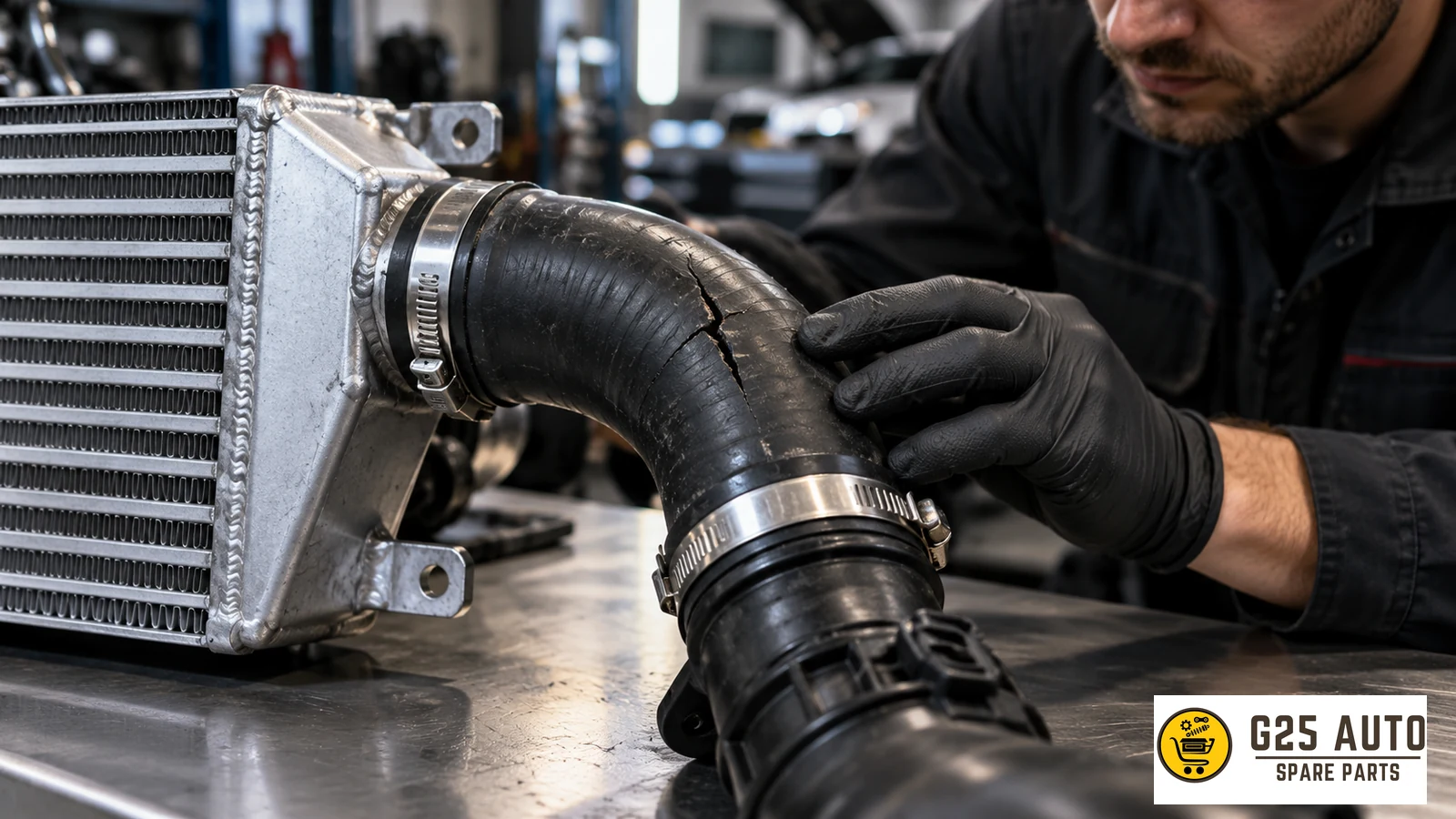
Intercooler hose faults and turbo boost leaks can cause loss of power, hesitation while driving and increased fuel consumption in turbocharged vehicles. These problems can develop when charge-air hoses wear or crack, or when clamps at their connections become loose, affecting engine performance.
The Intercooler System and the Importance of Turbo Boost
In a turbocharged engine, the intercooler cools the hot, compressed air from the turbocharger before it reaches the engine. This system contributes to engine performance and fuel efficiency. Intercooler hoses form an essential part of the charge-air circuit and operate under elevated pressure and temperature.
Boost pressure affects the power an engine can produce. A leak in the system can reduce this pressure and impair performance. Hose condition and the integrity of the system therefore need regular inspection.
Symptoms of Intercooler Hose Faults and Boost Leaks
Drivers may notice several symptoms, but these can also be associated with other faults:
Performance Symptoms
- A noticeable reduction in engine power and delayed response
- Slower acceleration than usual
- Loss of power, particularly when climbing hills
- Lower than expected readings on a boost gauge, where fitted
- Sudden hesitation or interruptions in power delivery while driving
Changes in Engine Behaviour
- An illuminated engine warning light in some cases
- Uneven idling
- A change in engine sound or a whistling noise
- An unusual air-leak noise near the turbocharger
Fuel Consumption and Emissions Symptoms
- Higher fuel consumption than usual
- Darker exhaust smoke or a change in exhaust smell
- Higher than expected emissions test readings
The Difference Between Symptoms and a Confirmed Diagnosis
These symptoms may indicate an intercooler hose fault or a boost leak, but a professional inspection is needed to establish the cause. Other faults can produce similar symptoms:
- A mass airflow sensor (MAF) fault can cause a similar loss of power
- Fuel system problems can also reduce performance
- A wastegate fault can cause boost control problems
- EGR valve problems can affect engine performance
Checks to help establish the diagnosis:
- Electronic diagnosis using appropriate diagnostic equipment at a qualified workshop
- Visual inspection of the turbocharger and intercooler system
- A pressure test to help locate the leak
- Inspection of all hose connections and clamps
- Inspection of the intercooler body for cracks or damage
Intercooler Hose Inspection Checklist
The following points can be included in routine inspections:
- ☐ Check hose surfaces for cracks, splits and abrasion
- ☐ Check for oil traces or accumulated dirt at hose connections, which may indicate a leak
- ☐ Check clamp security and condition, including rust or breakage
- ☐ Check hose flexibility; hardening can be a sign of ageing
- ☐ Inspect the intercooler body for impact damage
- ☐ Listen for unusual air-leak noises in the engine compartment
- ☐ Check for oil leaks around the turbocharger
Choosing Original or Aftermarket Parts
When an intercooler hose needs replacing, buyers may need to compare original and aftermarket options. Both require careful selection, with the following considerations:
Original (OEM) Parts
Original parts are supplied to the vehicle manufacturer’s specifications for the relevant application. The correct part reference and any warranty terms still need checking. Purchase costs may be higher, depending on the application and supplier.
Aftermarket Parts
Aftermarket parts can offer an alternative where their specifications meet the requirements of the application. Choose a reliable manufacturer and check the available product documentation. Suitability and performance must be assessed for the individual part rather than assumed from its category.
Comparison Table
| Feature | Original Part | Aftermarket Part |
|---|---|---|
| Fitment verification | Check the manufacturer reference and application | Check the application and specification before ordering |
| Quality requirements | Specified for the relevant original application | Check the manufacturer’s specifications and supporting documentation |
| Cost | May involve a higher purchase cost | May offer a lower purchase cost |
| Availability | Confirm availability with the supplier | Confirm availability with the supplier |
| Warranty terms | Check the applicable part and vehicle warranty terms | Check the supplier’s terms and any vehicle warranty requirements |
| Range | Application-specific references | Options vary by manufacturer and application |
Why Verification Matters When Selecting Parts
When buying an intercooler hose or another replacement part, selecting the correct part for the vehicle is essential. An incorrect part can waste money and may cause damage.
Verification Using OEM References and Part Numbers
OEM references and part numbers help identify a component and its intended applications, but a reference alone does not establish every fitment detail. Before ordering, check the vehicle’s:
- Make and model
- Body type and vehicle identification number
- Engine code and displacement
- Production year and build period
- Equipment specification, where relevant
Verify the part reference against this information. Different engine versions of the same vehicle model may use different intercooler hoses.
Checking the Vehicle Identification Number
The vehicle identification number (VIN) helps identify a vehicle and retrieve relevant build information. A reliable parts supplier can use it alongside application data to help identify the correct part. This is particularly useful when specifications change during a model year.
Engine Code and Production Date
The engine code helps identify the engine variant. A single vehicle model may have engines with different power and torque outputs, and their turbocharger systems can differ. Production date also matters because manufacturers may revise designs over time.
For G25Auto B2B enquiries across Europe and the Balkans, provide the vehicle identification details and existing part reference so that the intended application can be checked before ordering.
Replacing an Intercooler Hose: Points to Check
Replacement should be carried out at a qualified workshop, paying attention to the following:
- Inspect all hoses and clamps together
- Assess and clean oil accumulation inside the intercooler where required by the service procedure
- Renew clamps where required by their condition or the manufacturer’s instructions
- Clean the connection points
- Carry out the specified pressure test after installation
- Address fault codes, clear them where appropriate after repair and perform a test drive
Preventive Maintenance and Recommendations
The following maintenance steps can help reduce intercooler system problems:
- Keep to the scheduled service programme
- Maintain cleanliness in the engine compartment
- Inspect the intercooler grille after off-road use
- Avoid overloading the turbocharger system
- Change engine oil and filters at the specified intervals
- Seek professional advice before performance modifications
Frequently Asked Questions
How long does an intercooler hose last?
Service life depends on operating conditions. Heavy use and adverse environmental conditions can accelerate deterioration, so a fixed lifespan should not be assumed. Regular inspection is important.
What happens if a vehicle continues to be driven with a boost leak?
Depending on its severity and cause, an unresolved leak can contribute to further turbocharger or engine problems. Increased fuel consumption and reduced performance can also raise operating costs. Have the fault assessed and repaired promptly.
Should only the damaged hose be replaced?
Inspect the other hoses for similar ageing when one fails. Replace any additional hoses that show deterioration or meet the manufacturer’s replacement criteria. This can reduce the risk of another failure soon afterwards.
Does using an aftermarket hose affect the vehicle warranty?
Do not assume that any replacement automatically preserves warranty coverage. For vehicles under warranty, check the relevant terms and service requirements, and keep the part and repair documentation.
How is a boost leak test carried out?
A workshop uses suitable pressure-testing equipment to pressurise the intercooler circuit according to the service procedure and check for leaks. The results are considered alongside other diagnostic findings to establish the fault.
Conclusion
Intercooler hose faults and turbo boost leaks can significantly reduce the performance of turbocharged engines. Loss of power, increased fuel consumption and hesitation deserve prompt attention. These symptoms can also have other causes, so professional diagnosis is important before parts are replaced.
When choosing an original or aftermarket replacement, select a part whose specifications match the vehicle’s requirements. Cross-checking the part reference, VIN, engine code and production date helps avoid incorrect orders and supports a reliable repair.
Use reliable suppliers, review the available product documentation and have installation carried out by an experienced workshop. Regular servicing and preventive inspections can help reduce the risk of similar faults.