
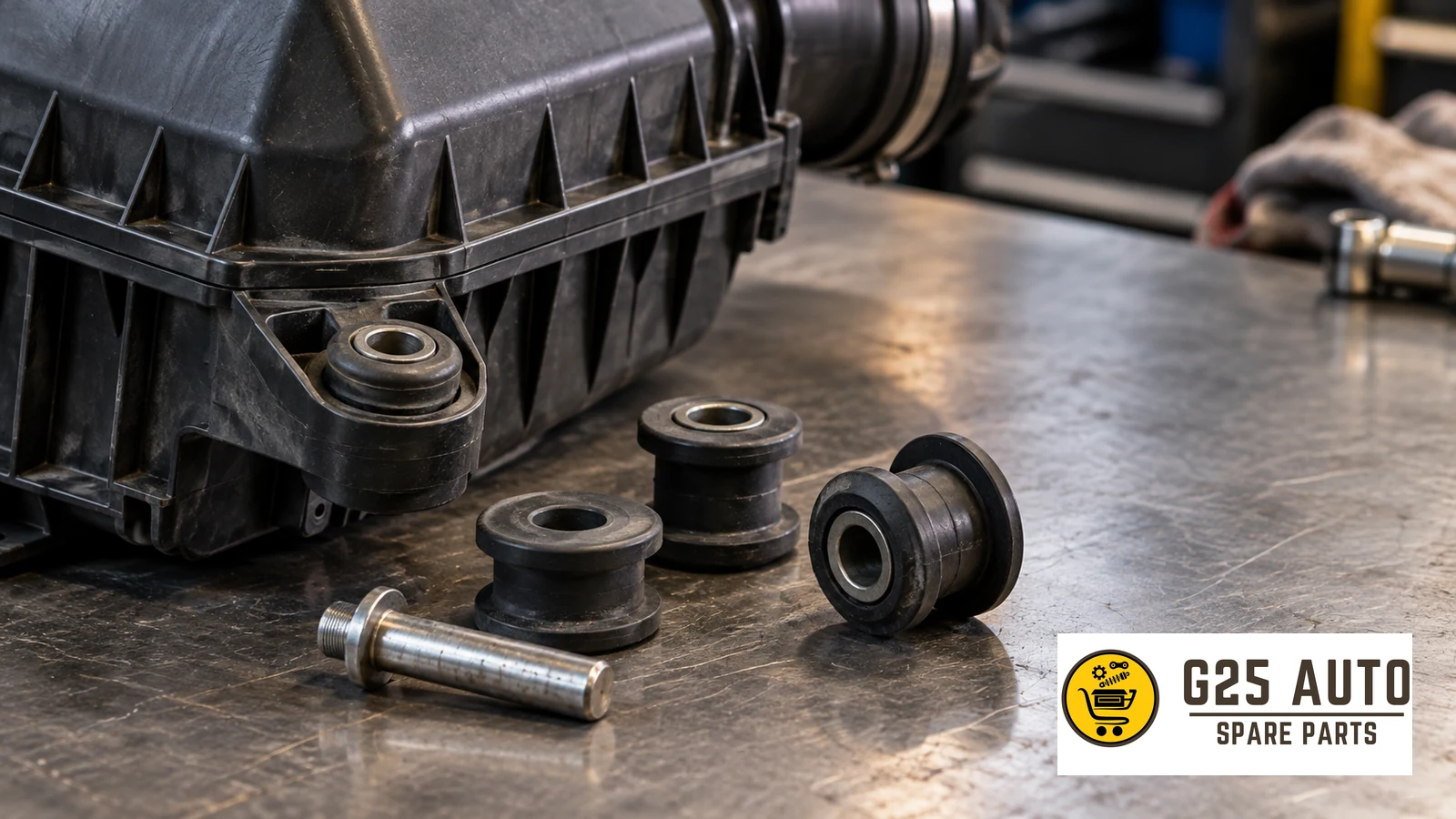
Air filter housing rubber mounting bushes and mounts isolate the engine air intake from vibration and jolts, helping protect components and reduce noise. These rubber parts provide a secure but flexible connection between the housing and its mounting points on the vehicle body or engine assembly. Incorrect selection or wear can lead to several problems.
What Are Air Filter Housing Mounting Components?
The air filter housing is an important part of the engine’s clean air supply. The rubber bushes and mounts used to attach it to the vehicle provide both mechanical support and vibration damping.
Rubber compounds such as EPDM or NBR may be used, depending on the application. Relevant material properties include:
- Resistance to the temperatures specified for the application
- Resistance to oil, fuel and chemicals, depending on the compound
- Resistance to UV exposure, where required
- Flexibility and vibration absorption
- Structural integrity throughout service
Functions of Mounting Bushes and Mounts
Vibration Isolation
They reduce the transmission of engine vibration to the air filter housing and its attachment points. This helps reduce the risk of plastic or metal housing components cracking or breaking.
Noise Reduction
The flexibility of the rubber helps prevent direct contact between hard mounting surfaces, reducing rattling and buzzing during operation.
Maintaining Position
They help keep the air filter housing correctly positioned, limiting movement of intake pipes, sensors and other connections.
Absorbing Jolts
They cushion sudden loads during cornering, acceleration, deceleration and travel over uneven roads, helping protect components.
Symptoms of Failure
Worn or damaged rubber mounting bushes and mounts may produce the following symptoms:
- Increased rattling or buzzing from the engine compartment
- Visible vibration of the air filter housing
- Cracked or loose intake hoses
- Unusual plastic rubbing noises under the bonnet
- An air filter housing that appears tilted or uneven
- Cracked, torn or deformed rubber components
- Play or looseness at mounting points
- Increased noise or a change in sound when cornering
Important: These symptoms can overlap with other faults. Professional inspection is needed to confirm the cause.
Steps for Confirming the Diagnosis
The symptoms above may indicate a mounting problem, but diagnosis should include the following checks:
- Open the bonnet and visually inspect the air filter housing
- Check rubber bushes and mounts for hardening and loss of integrity, with the engine stopped
- Check mounting points for looseness
- Look closely for cracks, tears and wear marks
- Have vibration assessed during engine operation without approaching moving or hot parts
- Arrange inspection by a qualified workshop or specialist technician
Replacing components before confirming the diagnosis can create unnecessary costs.
Choosing Original and Aftermarket Parts
Original (OEM) Parts
These are parts specified by the vehicle manufacturer for the original vehicle assembly.
Advantages:
- Specified for the relevant vehicle application
- A reference for fitment, subject to correct part identification
- Warranty terms that can be checked with the supplier
- Quality requirements defined for the original application
Points to consider:
- Purchase cost may be higher
- Availability and lead time need to be confirmed
- Often preferred in authorised service networks
Aftermarket Parts
These alternatives are produced by independent manufacturers to perform the function of the original components.
Advantages:
- A wider range of suppliers
- A choice of price levels
- Alternative sourcing options, subject to confirmed availability
- Suitable products may offer comparable function when specifications and fitment are verified
Points to consider:
- Quality standards can differ between manufacturers
- Fitment verification is essential
- Choosing a reliable supplier is critical
Comparison Table
| Feature | Original (OEM) | Aftermarket |
|---|---|---|
| Fitment | Verify the correct original reference | Verify the application and cross-reference |
| Lead time | Confirm with the supplier | Confirm with the supplier |
| Quality control | Original application requirements | Depends on the manufacturer |
| Warranty | Check applicable terms | Check applicable terms |
| Supplier choice | Generally more restricted | Generally broader |
Fitment Verification: The Critical Step
The main priority when choosing air filter housing mounts is identifying the correct component. An incorrect part can cause installation problems, disturb intake connections or fail prematurely.
Information Needed to Check Fitment
- OEM/Original Part Reference: This may appear in vehicle documentation or on the existing component. Use it as a reference when checking the replacement.
- Vehicle Identification Number (VIN): Use the VIN with the appropriate parts catalogue to identify the vehicle application.
- Engine Code: Different engines in the same vehicle model may use different mounting components.
- Production Date: Changes can occur within a model year, so the production month may matter.
- Vehicle Model and Year: These are useful starting points but may not be sufficient alone.
- Body Style: Saloon, hatchback and estate variants may require different components.
Why Is This Detail Necessary?
Although the component looks like a simple piece of rubber, air filter housing designs can differ significantly by model, year and engine. An incorrect bush or mount may:
- Fail to fit the mounting point
- Allow movement that compromises intake connections
- Provide insufficient vibration damping
- Wear or break prematurely
- Place stress on nearby components
Pre-installation Checklist
Review this checklist before replacing the components:
- ☐ Has fitment been checked using the original part reference or VIN-based catalogue information?
- ☐ Have the replacement parts been visually compared with the originals?
- ☐ Have the mounting points been cleaned and inspected?
- ☐ Are all necessary bushes and mounts available?
- ☐ Has the air filter housing been checked for cracks or damage?
- ☐ Have connecting hoses and clamps been checked?
- ☐ Are the installation instructions or workshop manual available?
- ☐ Are the necessary tools and equipment ready?
- ☐ Is the engine cool and the working environment safe?
Installation Tips
Keep the following points in mind when fitting rubber mounting components:
- Do not force the rubber parts; check alignment and part selection if they resist installation
- Use a soap-and-water fitting aid only if permitted by the component instructions; avoid unapproved oil-based substances
- Follow the specified installation sequence, as some components must be fitted in a particular order
- Make sure mounting points are clean and dry
- Check housing movement after all bushes and mounts are seated
- Secure hose connections and clamps according to the service instructions
- After installation, check for vibration and noise during a safe engine-running assessment
Maintenance and Inspection Advice
To help maintain rubber mounting components:
- Include a visual inspection in periodic servicing
- Avoid aggressive chemicals when cleaning the engine compartment
- Replace components showing cracks or significant hardening
- Pay extra attention under extreme hot or cold operating conditions
- Arrange inspection if engine vibration increases
Finding the Right Part for G25Auto B2B Enquiries
A reliable supplier matters when sourcing air filter housing mounts and other spare parts. For European and Balkan B2B enquiries, confirm the application and supporting information before ordering.
Useful points to review with a supplier include:
- Vehicle and part application information
- Detailed product descriptions and technical data
- Support for identifying the required component
- Original and aftermarket options where available
- Clear ordering arrangements
When enquiring about air filter housing rubber bushes or mounts through G25Auto, provide the vehicle details and existing part reference so the proposed replacement can be checked.
Frequently Asked Questions
How often should air filter housing mounts be replaced?
There is no universal replacement interval. Replace rubber components when wear, cracking or hardening compromises their function. Service life depends on the material, application and operating conditions.
Only one bush is damaged. Must they all be replaced?
Inspect all mounts because they may have experienced similar ageing. Replacing the set may be appropriate if several are deteriorating; replacing only the damaged component may be sufficient if the others remain serviceable.
Can polyurethane (PU) mounts replace rubber ones?
Polyurethane mounts can be harder and may transmit more vibration, depending on their formulation. Keeping to the specified material is generally the appropriate approach. Seek specialist advice before changing it.
Can the air filter be changed with the mounts in place?
Usually, the mounting components do not need to be removed for an air filter change; access is through the housing cover. Follow the procedure for the particular vehicle.
Can mount failure affect engine performance?
The mounts do not directly control engine performance. However, displacement of the housing can disturb hose connections and allow intake leaks, which may affect engine operation.
Does the brand matter when buying a replacement?
Fitment and quality are the main priorities. Assess the manufacturer’s product information and choose a component whose application has been checked using VIN-based catalogue data and the original part reference.
Conclusion
Air filter housing rubber mounting bushes and mounts are small but useful components. By isolating engine vibration, they help protect the intake system and surrounding parts. Replacing deteriorated mounts in good time can prevent further problems.
Fitment verification is the key part of selection. Checking the original reference, VIN-based application data, engine code and production date reduces the risk of choosing the wrong part. Original and suitable aftermarket components can both be options when quality and application requirements are met.
Installation requires care. Follow the correct sequence, avoid excessive force and carry out post-installation checks. Use professional assistance if the procedure is beyond your experience.
Regular inspection and careful maintenance help preserve these rubber components. Avoid aggressive cleaning chemicals and inspect them during routine servicing.
Supplier choice also matters. Product information, technical details and identification support help buyers find the correct component. For G25Auto B2B enquiries, confirm fitment and product specifications before placing an order.
Even a small rubber component can affect vehicle refinement and component protection. Suitable parts and correct installation help reduce avoidable costs and maintain driving comfort.