
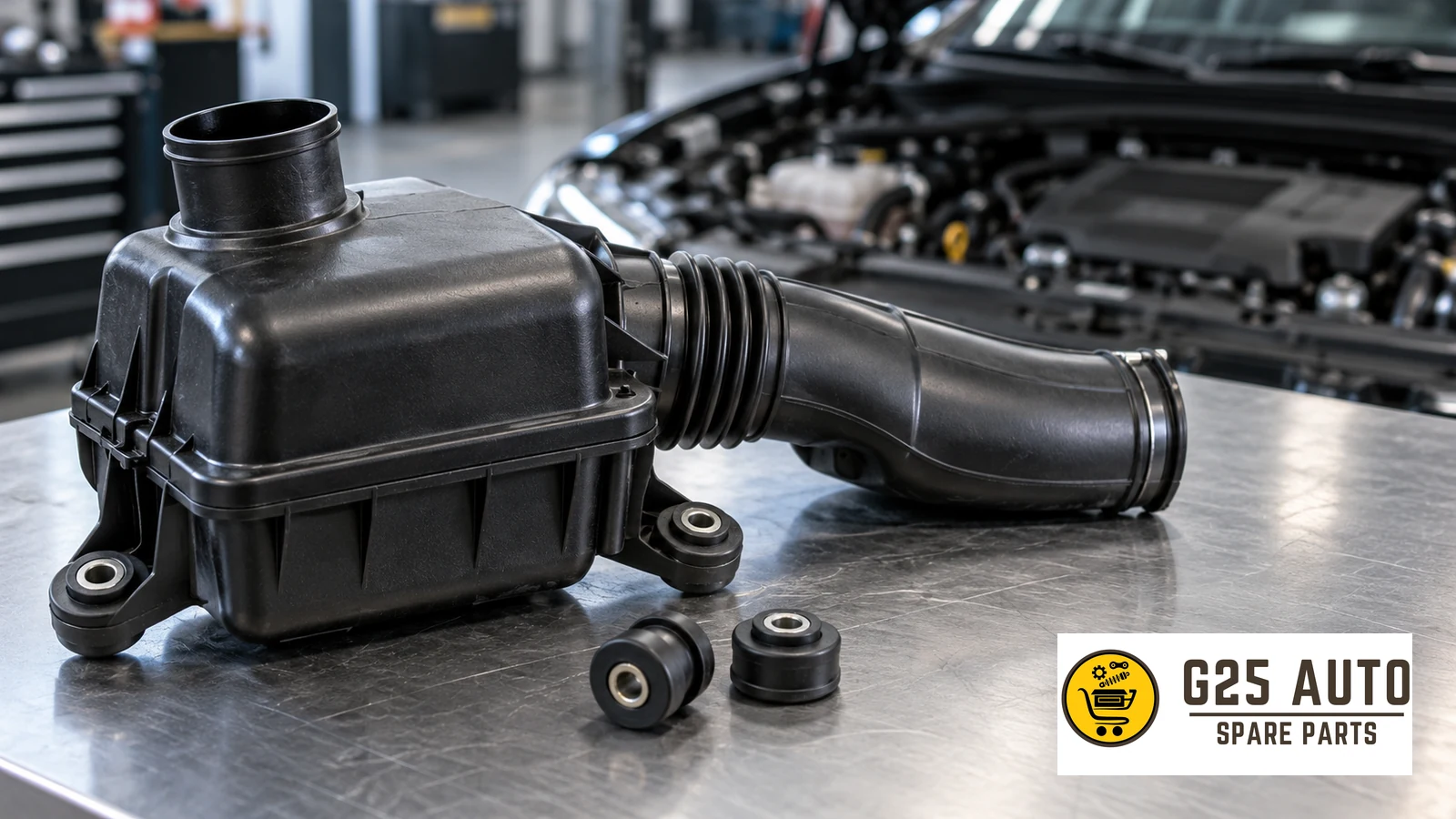
An intake air resonator reduces noise in the engine air intake system and, depending on its design, helps manage airflow. Plastic or rubber mounts secure the resonator and other intake components to the engine, chassis or each other. This guide explains their functions, fault symptoms and part selection.
What Is an Intake Air Resonator and What Does It Do?
Comfort matters alongside engine performance. As the engine draws in air, resonance and noise develop at particular frequencies in the intake system. The resonator attenuates these sounds, helping reduce cabin noise.
Resonators may sit downstream of the air filter housing or near the intake manifold. Designs based on the Helmholtz principle attenuate particular frequency ranges. Some designs also help regulate airflow and support engine operation.
Why Intake Mounts Matter
Mounts maintain the mechanical integrity of the intake system. These small plastic or rubber components keep intake pipes, the resonator and other components correctly positioned.
Rubber mounts also absorb vibration. They help protect intake components from engine vibration and provide flexibility at mounting points, reducing stress on plastic parts.
Where Mounts Are Used
- Attaching the air filter housing to the chassis
- Connecting the resonator to the intake pipe
- Securing attachments on the intake manifold
- Fixing intake pipes to the engine block
- Supporting accessories such as MAF sensors and vacuum pipes
Intake Air Resonator Fault Symptoms
Problems with resonators and mounts may develop gradually. Drivers may notice the following changes:
Noise and Vibration
An unusual whistle or high-pitched engine noise can indicate an air leak through a cracked or damaged resonator. It may become more noticeable during acceleration or under engine load.
Rattling or knocking from the engine bay may indicate broken or displaced mounts. The resonator or intake pipes can then move and strike surrounding components.
Performance Symptoms
Depending on its location, an intake leak can affect air/fuel control. Possible symptoms include reduced performance, uneven idling or an illuminated engine warning light.
Loss of intake system integrity may affect the airflow or pressure information used by engine management and can contribute to increased fuel consumption.
How Are Faults Diagnosed?
A qualified workshop can provide a professional diagnosis. Preliminary checks can help locate a suspected problem:
Visual Inspection
Inspect the intake system for cracks, breaks or separated joints in the resonator housing. Plastic can become brittle over time, particularly where exposed to engine heat.
Check mounts for hardened, cracked or torn rubber and broken or loose plastic clips. With the engine stopped, gently check each mounting point for excessive movement.
Listening for Leaks
A leak may produce a whistle that becomes clearer as engine speed changes. Observe from a safe position, keeping clear of moving and hot components.
Professional Diagnostic Methods
Workshops can use a smoke test to locate leaks by observing where test smoke escapes. OBD-II fault codes also help assess intake system problems.
Choosing Original or Aftermarket Parts
When replacing a resonator or mounts, compare the available options carefully. Both original and aftermarket parts have factors to consider.
Original Equipment Parts
Original equipment parts are specified for the vehicle manufacturer’s applications. They may cost more, and the correct application and part reference still need checking before installation.
Aftermarket Parts
A well-made aftermarket component can provide the required function at a different cost. Quality varies between manufacturers, so select a reliable supplier and confirm the specifications.
Part Selection Factors
| Factor | Original Equipment Part | Quality Aftermarket Part |
|---|---|---|
| Compatibility | Check the vehicle application | Check the cross-reference and application |
| Quality | Vehicle manufacturer specification | Assess manufacturer and product documentation |
| Cost | May be higher | May offer a cost advantage |
| Availability | Confirm with the supplier | Confirm with the supplier |
| Warranty | Check the applicable terms | Terms vary by supplier |
Checklist for Selecting the Correct Part
Use the following information and checks when sourcing an intake air resonator or its mounts:
Essential Information
- Vehicle identification number (VIN): Use it for a vehicle-specific catalogue check.
- Engine code: Confirm it from the vehicle identification information or records.
- Production date: Parts may change during a model’s production.
- OE/part number: Record the reference on the existing component and check its application.
- Make and model: Include the exact model and equipment version.
Additional Checks
- Compare product images with the existing component.
- Check the number and position of mounting points.
- Assess materials and workmanship.
- Confirm warranty and return terms.
- Identify additional fitting parts such as seals and clamps.
Installation and Replacement
Replacement requires mechanical knowledge. Restricted access on some vehicles may make professional assistance necessary.
General Installation Steps
Switch off the ignition and allow the engine to cool before working in the engine bay.
Photograph the connections before removal to help reproduce their routing, particularly where several vacuum hoses are present.
Release clamps carefully to avoid damaging plastic components. Suitable clamp tools make removal easier and help reduce damage.
Clean the mating surfaces before installing the replacement. Dirt and oil residue can compromise the connection and contribute to leaks.
Checks After Installation
Confirm that every connection is secure. Run the engine and check for intake leaks, unusual noises and vibration. If no problems appear, assess operation during a short test drive.
Why Is the Correct Part Reference So Important?
Vehicles have many engine, equipment and production variations. Parts can differ even within the same make and model.
Petrol and diesel versions may have different intake systems. Production changes can also affect vehicles sharing an engine code.
A VIN-based catalogue check helps identify the vehicle’s original configuration and narrow down the application. Confirm the resulting reference before ordering.
The OE number on the existing part is another valuable reference for finding the replacement or a suitable aftermarket equivalent.
How to Assess an Aftermarket Part
Quality checks support a sound sourcing decision. Consider the following points:
Manufacturer Documentation
Review available quality-management documentation and its scope. Manufacturer certification alone does not establish the quality or compatibility of an individual part.
Material Quality
Inspect plastic for consistent colour, a clean surface, even moulding and properly finished edges. Check rubber mounts for flexibility, uniform texture and visible defects. Appearance alone cannot establish material performance.
Packaging and Identification
Look for clear manufacturer identification, part references, production information and vehicle application details on the packaging.
Parts Sourcing for European and Balkan B2B Buyers
For G25Auto’s European and Balkan B2B readers, reliable sourcing starts with documented part identification and supplier information.
When requesting intake system parts or other vehicle components, provide the VIN and existing part reference for an application check.
If selection remains uncertain, seek technical assistance before ordering. Correct identification supports vehicle performance and safe operation.
Frequently Asked Questions
Can a vehicle run without its intake air resonator?
The engine may run, but intake noise can increase and some designs may experience altered airflow or performance. The consequences depend on the intake layout; a damaged or missing resonator should be assessed and replaced appropriately.
Can a failed mount cause engine problems?
A failed mount can allow intake components to move and develop leaks. These may contribute to uneven running or engine management faults.
Should other parts be replaced with the resonator?
Inspect clamps, hose connections and mounts during replacement. Replacing worn or damaged fittings at the same time can avoid repeating the removal work.
Can aftermarket parts affect a vehicle warranty?
Check the applicable warranty terms and ask the manufacturer or authorised repairer about the proposed part. Avoid assuming that every aftermarket component has the same warranty implications.
At what mileage should the resonator be replaced?
There is no universal replacement interval. Heat, chemicals and environmental exposure can degrade plastic over time. Inspect regularly and replace according to condition and vehicle guidance.
Conclusions and Recommendations
Intake air resonators and their mounts support comfort, performance and the integrity of the intake system, despite their relatively simple appearance.
Use the VIN, engine code and existing OE reference when selecting replacements. Visual similarity or a broad model listing alone is insufficient to establish compatibility.
Original and aftermarket options both require careful selection. Choose a reliable manufacturer and supplier, and verify the intended application.
Seek professional fitting assistance when uncertain. Incorrect installation can lead to air leaks and engine management problems.
Regular inspection helps identify deterioration early. Investigate unusual engine bay noises, vibration or changes in performance.
Provide accurate part references and confirm compatibility before ordering. These checks help avoid wasted time, unnecessary expense and repeat repairs.