
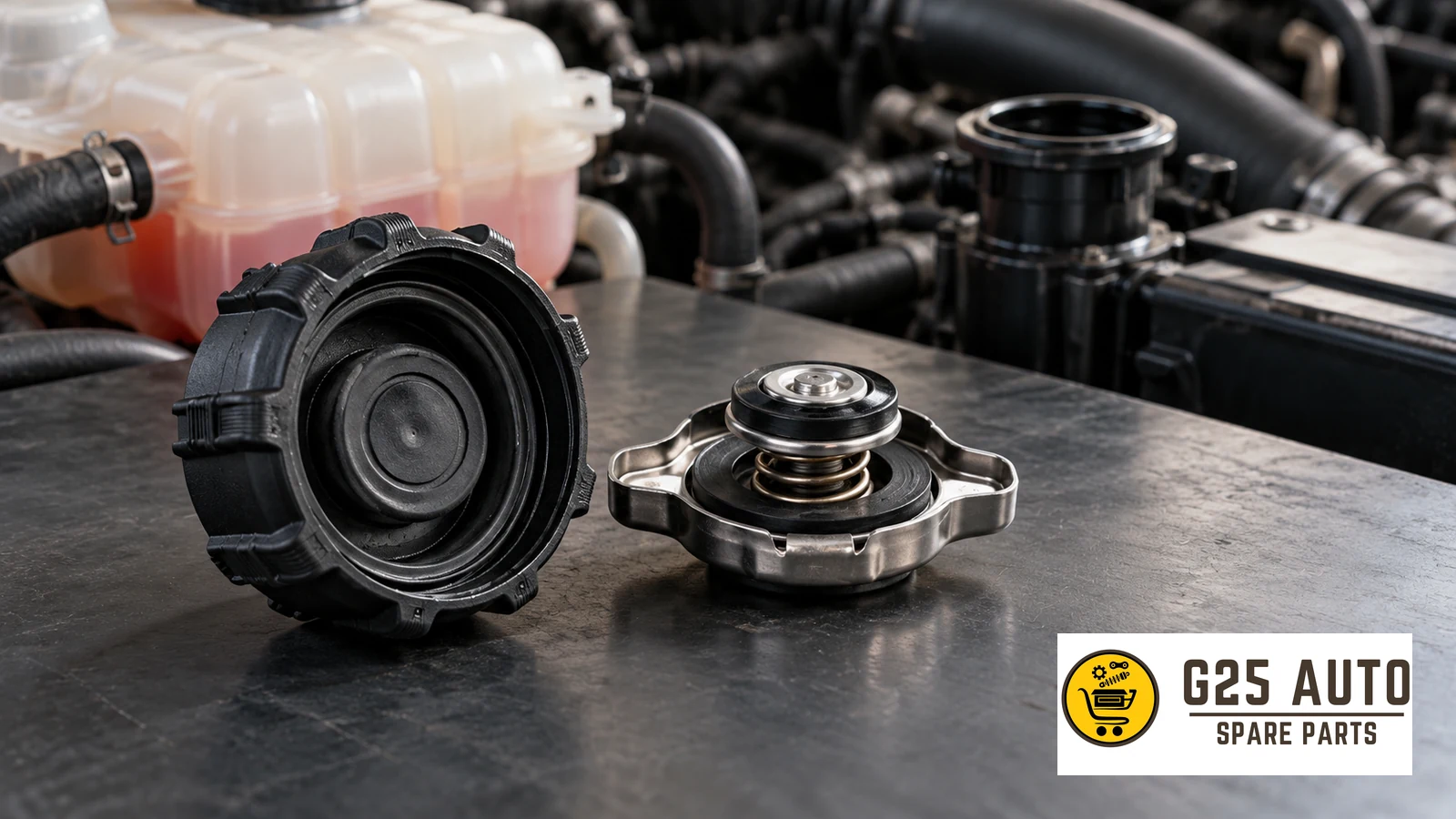
Expansion tank caps and radiator pressure caps are often confused. A radiator pressure cap regulates cooling system pressure and releases excess pressure at its specified setting. An expansion tank cap may simply close a vented reservoir or regulate pressure in a sealed system. Many modern vehicles use a pressurised expansion tank cap instead of a radiator pressure cap.
Cooling System Cap Types and Functions
Cap designs depend on the cooling system. Each type has a distinct function and operating principle.
What Is a Radiator Pressure Cap?
Mounted on the radiator in conventional systems, this cap controls pressure. Coolant expands as the engine warms; increased pressure raises its boiling point, supporting operation at higher temperatures.
Typically, a pressure valve releases coolant towards the recovery reservoir at the specified pressure. A vacuum valve permits return flow during cooling. Together, these functions manage excess pressure and vacuum; the required rating depends on the vehicle.
What Is an Expansion Tank Cap?
Its function depends on system design. On a vented recovery reservoir, an unpressurised cap mainly limits contamination and evaporation.
On a sealed expansion tank, a pressure cap regulates system pressure, performing the role otherwise handled at the radiator. A separate radiator pressure cap may be absent; identify the actual arrangement.
Expansion Tank and Radiator Cap Comparison
| Feature | Radiator pressure cap | Pressurised expansion tank cap | Unpressurised reservoir cap |
|---|---|---|---|
| Pressure regulation | At the vehicle-specified rating | At the system-specified rating | No; vented reservoir |
| Vacuum valve | Typically fitted | Design-dependent vacuum relief | No pressure-control valve |
| Location | Radiator | Expansion tank | Recovery reservoir |
| System type | Radiator-controlled systems | Sealed expansion-tank systems | Vented recovery reservoirs |
| Function | Pressure and overflow control | Pressure control and system balance | Contamination protection |
| Replacement | Inspect periodically | Inspect periodically | Inspect; replace if damaged |
Fault Signs and Symptoms
Cap problems can produce similar symptoms. Recognising them helps identify cooling system faults early.
Common Symptoms
- Overheating: Higher temperatures may indicate inadequate pressure retention.
- Coolant loss: Falling levels without visible leaks may involve cap discharge.
- Swollen hoses: Unusually hard, swollen hoses may indicate excess pressure.
- Reservoir overflow: Repeated overflow when warm warrants pressure-control checks.
- Collapsed hoses: Collapse after cooling may indicate faulty vacuum relief.
- Air accumulation: Recurrent air entry warrants valve and wider system checks.
Checks for a Reliable Diagnosis
Symptoms alone do not identify the cause. Professional checks include:
- Testing cap opening pressure against its specified rating
- Checking vacuum valve operation where fitted
- Inspecting seals and sealing surfaces
- Pressure-testing the cooling system
- Checking coolant condition and level
- Inspecting radiator and tank necks for cracks or distortion
Correct Part Selection Checklist
Use this checklist when selecting a replacement expansion tank or radiator pressure cap.
Part Selection Checklist
- Collect vehicle details:
- Make, model and year
- Engine type and code
- Vehicle identification number (VIN)
- Production date
- Identify the original reference:
- Check the existing cap’s OEM reference
- Consult vehicle documentation where available
- Confirm through an authorised parts source
- Verify pressure rating:
- Note the cap marking
- Check the vehicle-specified rating
- Do not substitute a different rating
- Identify system design:
- Is the reservoir pressurised or vented?
- Where is pressure regulated?
- Is the expansion tank part of the sealed circuit?
- Check fitment:
- Make and model alone are insufficient
- Engine and production variations can matter
- Request a VIN-based catalogue check
Why OEM References and Verification Matter
Incorrect parts are a common purchasing problem. Cooling system mismatches can contribute to serious engine damage.
Why Does the Part Reference Matter?
An original equipment manufacturer (OEM) reference identifies a part application. Caps can vary by model year, engine or equipment. Petrol and diesel versions may require different pressure ratings.
Suppliers can use the VIN to consult vehicle records and parts catalogues. Confirm the resulting application against engine, production and equipment details where required.
Why Does Production Date Matter?
Manufacturers revise components during production, sometimes within one model year. Earlier and later builds may use different caps, making production date relevant alongside model year.
Original or Aftermarket? A Balanced View
Both original and aftermarket parts have advantages and points to consider.
Original Parts
Original parts carry the vehicle manufacturer’s brand and are supplied through authorised channels or original-parts distributors to the relevant specification.
A correctly identified original part supports specification matching. Cost and availability vary; the brand alone does not establish fitment.
Aftermarket Parts
Aftermarket caps are alternatives supplied under other brands. Assess documented specifications and manufacturing quality rather than assuming shared production or equivalence.
Choose a reliable supplier. A suitable aftermarket part may offer a cost advantage, but poor-quality alternatives can cause problems.
Which Option Suits the Application?
Consider budget, vehicle age, use and component importance. Warranty requirements may also influence the choice.
For G25Auto B2B sourcing across Europe and the Balkans, confirm specifications, provenance and application before ordering either option.
Installation and Maintenance
Correct installation and regular inspection matter alongside part selection.
Installation Checks
- Clean the radiator or tank neck with the system cold
- Check sealing surfaces for cracks, distortion or corrosion
- Check seal condition and flexibility
- Seat and secure the cap correctly
- Follow the specified closure procedure; avoid overtightening
Periodic Inspection
- Inspect the cap during scheduled servicing
- Check for hardened seals
- Look for corrosion or damage
- Keep the cap clean during coolant changes
- Pressure-test according to service guidance and symptoms
Frequently Asked Questions
Are expansion tank and radiator caps the same?
No. Radiator pressure caps regulate pressure; reservoir caps may be pressurised or unpressurised. Many modern systems regulate pressure at the expansion tank.
Can I use a different pressure rating?
Use the specified rating. Incorrect pressure control can contribute to overheating, hose damage or engine damage.
How long does a cap last?
Life varies with conditions. Heat and chemical exposure make regular inspection important; avoid assuming a universal replacement interval.
Can I replace it myself?
Confirm the correct part first. Work only on a cold system and follow the vehicle’s replacement and bleeding procedure. Seek professional help if unsure.
Is an aftermarket cap suitable?
A reputable cap meeting the correct pressure, fitment and material specifications may be suitable. Verify the application rather than relying on branding.
Which symptoms require replacement?
Persistent loss, overheating, swollen or collapsed hoses and overflow warrant diagnosis. Replace the cap if testing confirms malfunction.
Conclusions and Recommendations
Cooling system caps have different roles. Identify the system before selecting a replacement.
Check OEM reference, VIN, engine code and production date. Make and model alone may miss application differences.
Original and aftermarket choices both require appropriate quality, specifications and reliable sourcing.
Early diagnosis and periodic checks can help prevent damage. A small cap fault can have serious consequences if ignored.
Collect the necessary vehicle information and confirm fitment before ordering.