
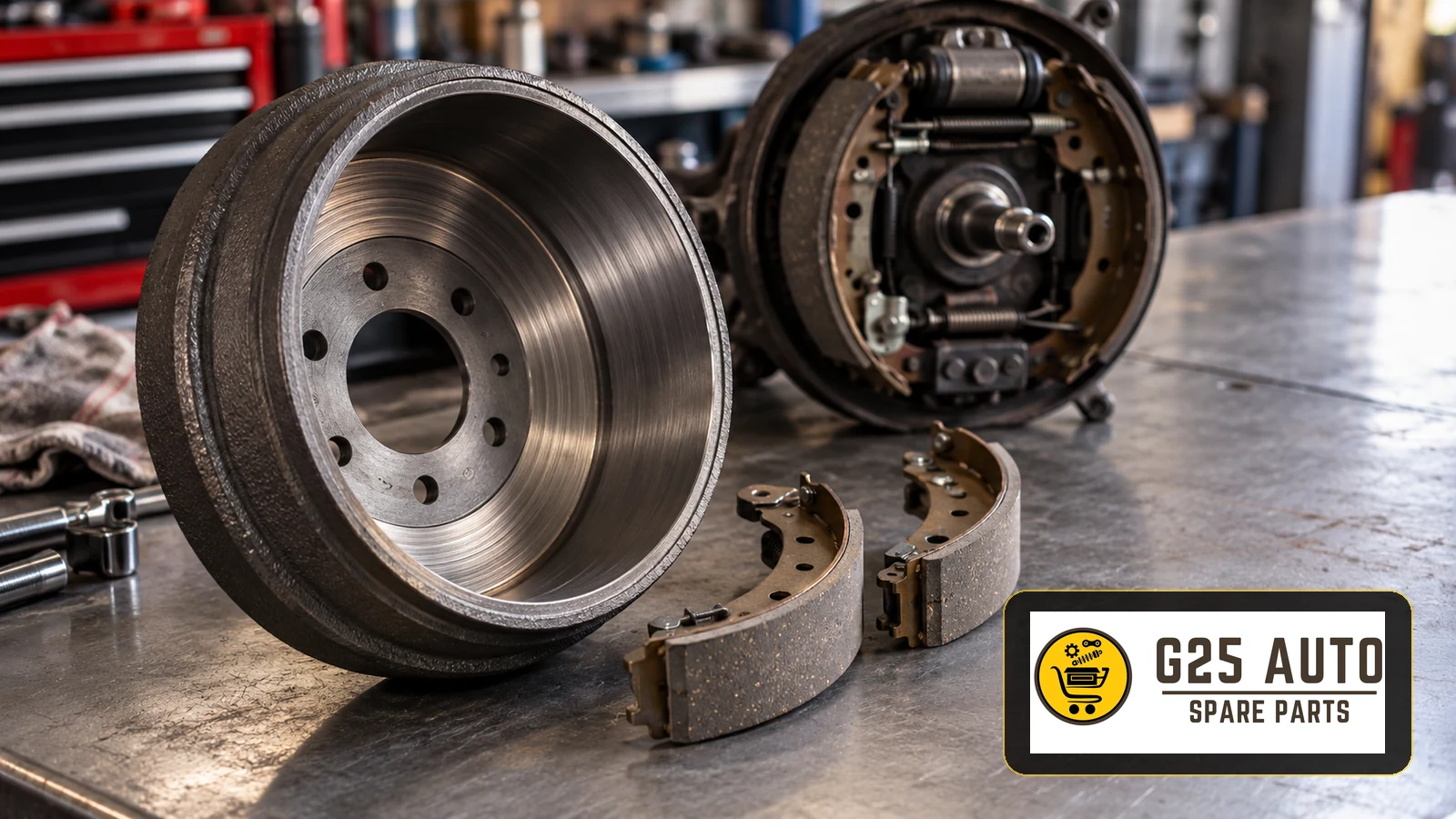
What Is a Brake Drum and How Does It Work?
A brake drum is a wheel brake component. Friction at its braking surface helps slow or stop the vehicle when the brakes are applied.
The drum must withstand the heat generated during braking. Its friction surface should be free from cracks, excessive wear and damaging irregularities. Material and construction depend on the particular application.
Brake Drum Construction and Characteristics
The mounting area and braking surface are key parts of the component. Dimensions and construction must suit the vehicle and its braking requirements; check the specified design for the application.
The Function and Importance of a Brake Drum
The drum helps convert kinetic energy into heat through friction, allowing the vehicle to slow down or stop. The condition of its working surface therefore matters to braking performance.
A Critical Safety Role
A damaged or distorted drum can impair braking and increase stopping distances. Regular inspection is essential to identify wear and damage before they become more serious.
Frequent braking in heavy traffic, long downhill stretches and demanding driving put additional load on the brakes. These conditions can accelerate wear and affect replacement needs.
Symptoms of Brake Drum Problems
Brake problems can produce several warning signs. Recognising them early helps arrange timely inspection and may limit further repair costs.
Noise and Vibration
- Squealing when braking: Possible friction-surface or lining wear issues.
- Metallic scraping: Possible severe lining wear and metal-to-metal contact.
- Steering vibration: Requires inspection of the braking system; the drum alone should not be assumed responsible.
- Brake pedal pulsation: May indicate irregularities requiring professional inspection.
Performance Problems
Longer stopping distances, reduced braking effectiveness or excessive pedal travel can indicate serious brake faults. Pulling to one side also requires investigation rather than assuming a single component is responsible.
Visual Inspection Tips
Visible scoring, cracks, discolouration or excessive wear require specialist assessment. Visual checks alone cannot establish the condition of the full working surface.
When Should a Brake Drum Be Replaced?
Replacement depends on several factors. A component outside its manufacturer’s permitted wear limits must be replaced in accordance with the relevant service instructions.
Mileage and Replacement
Service life varies with driving style, vehicle type and operating conditions. Heavy urban traffic can increase wear, so a universal mileage interval is unsuitable.
Technical Criteria
Use the manufacturer’s application-specific dimensional and condition limits. Excessive wear, distortion or cracks require assessment and replacement as specified; generic measurements should not be used.
Replacement Alongside Friction Linings
Friction linings may need replacement more often than the drum. Inspect the drum whenever the linings are renewed and decide on replacement from its condition and service limits rather than a fixed number of lining changes.
Aftermarket and Original Brake Drums: Key Differences
Choosing between original and aftermarket parts involves cost, quality and application suitability.
Advantages of Original Parts
Original parts are specified for particular vehicle applications. Confirm the correct reference and any applicable warranty conditions rather than assuming universal compatibility.
Purchase costs and supply arrangements may differ from aftermarket alternatives. Compare current supplier terms rather than assuming a fixed price ratio or availability.
Advantages of Aftermarket Brake Drums
Suitable aftermarket options may offer a cost-effective alternative. Assess their documented specification and availability for the required application.
For G25Auto B2B sourcing across Europe and the Balkans, evaluate the required brake drum against supplier documentation. Confirm quality information and warranty terms for the specific product.
Choosing the Right Option
Consider vehicle age, intended use and budget. Compare original and suitable aftermarket options while prioritising the required specification and documented application.
Conclusions and Recommendations
Brake drum condition is important to safe braking. Arrange regular inspections, investigate warning signs and select suitable parts from dependable suppliers.
Professional installation and appropriate parts support safe operation and can help limit further maintenance costs. Any abnormal braking behaviour should receive prompt specialist attention.