
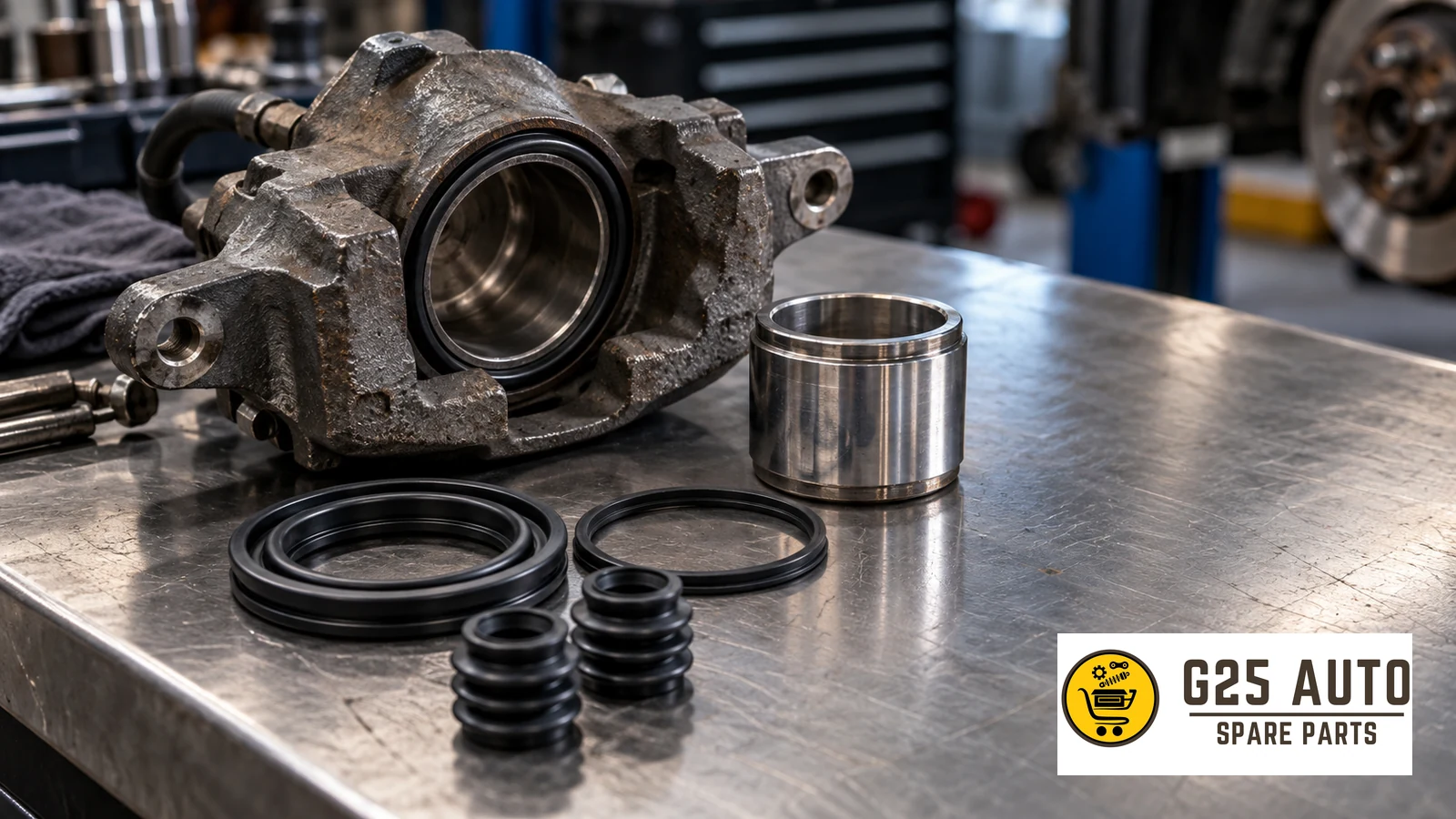
What Are Brake Calipers and Caliper Piston Repair Kits?
Repair kits contain parts for renewing a brake caliper. The caliper uses hydraulic pressure to press the pads against the disc, slowing and stopping the vehicle. Piston kits include seals, dust boots and related components. Where repair is appropriate, replacing worn components can avoid a complete caliper replacement.
Early diagnosis and correct parts selection matter: caliper faults can compromise safety and cause further damage. This guide covers symptoms, diagnosis and selection.
Brake Caliper Fault Symptoms
Recognising problems early supports safe operation and cost control. Watch for:
Visual and Audible Signs
- Fluid leaks: Wetness around the caliper or inside the wheel.
- Corrosion: Visible rust on the caliper.
- Squealing or noise: Unusual sounds during braking.
- Vibration: Irregular feedback through the pedal or steering wheel.
- Burning smell: An acrid smell near a wheel.
Performance Symptoms
- Pulling: The vehicle veers during braking.
- Pedal feel: Unusually hard or soft operation.
- Longer stopping distance: Reduced braking effectiveness.
- Dragging: A sticking piston prevents proper brake release.
- Higher fuel consumption: Brake drag can reduce economy.
Diagnosing Caliper Faults
Symptoms require professional investigation. Inspection includes:
Professional Inspection Steps
- Safely lifting the vehicle and removing wheels.
- Inspecting calipers and piston mechanisms.
- Checking brake fluid level and condition.
- Assessing piston movement.
- Inspecting hoses for deterioration and leaks.
- Measuring pad and disc wear.
- Comparing both sides.
A technician must decide whether repair is suitable. Seal wear may be repairable; cracks or severe body corrosion may require replacement.
Key Points When Selecting Calipers and Repair Kits
Incorrect parts can impair braking and create serious safety risks.
Checking the OEM Reference
Calipers and kits vary by brake system. The original equipment manufacturer reference helps identify the correct part. Check:
- Identification markings on the existing caliper.
- Relevant vehicle documentation, where available.
- Authorised service records.
- Manufacturer parts databases.
Checking Compatibility Using the VIN
Identical model years can use different calipers. Use the VIN with catalogue and existing component checks. Relevant build information includes:
- Production year and month.
- Factory and production series.
- Engine and equipment specification.
- Original equipment details.
Engine Type and Production Date
Brake specifications can vary with engine version and production date. Midyear revisions may change the required parts.
Original and Aftermarket Parts Compared
Both options require attention to specification, quality and supplier terms.
| Factor | Original Part | Aftermarket Part |
|---|---|---|
| Fitment | Verify application | Verify application and cross-reference |
| Quality | Vehicle manufacturer specification | Check documented specification |
| Warranty | Check applicable terms | Varies by brand and supplier |
| Availability | Check authorised supply channels | Check distributor availability |
| Lead time | Confirm before ordering | Confirm before ordering |
| Cost | Depends on application | Compare suitable alternatives |
| Range | Application-specific options | Specifications may differ |
What to Check in Aftermarket Parts
- Documentation: Verify relevant manufacturer quality evidence.
- Brand reliability: Assess established brake component suppliers.
- Materials: Check body and seal suitability.
- Warranty: Obtain written terms.
- Installation: Confirm kit completeness.
- Technical support: Check supplier assistance.
Caliper Piston Repair Kit Contents
Contents depend on the caliper and kit specification:
Typical Kit Components
- Piston seals: Application-specific sizes and profiles.
- Dust boots: Rubber protection against contamination.
- Slide seals or boots: Protection for guide mechanisms, where included.
- Washers and clips: Retaining hardware where specified.
- Bleeder components: Check the specified sealing arrangement and contents.
- Assembly lubricant: Sometimes supplied; use only the specified compatible product.
Additional Components in More Comprehensive Kits
- Replacement guide pins.
- Caliper screws and bolts.
- Special installation tools.
- Detailed installation instructions.
Caliper Maintenance and Repair Checklists
Before Purchasing
- ☐ Record VIN.
- ☐ Identify OEM reference.
- ☐ Confirm engine and production date.
- ☐ Check existing caliper make and model.
- ☐ Select front or rear axle kit.
- ☐ Confirm left/right quantities.
- ☐ Assess supplier reliability.
- ☐ Read warranty terms.
- ☐ Check returns policy.
Before and During Installation
- ☐ Check all required components.
- ☐ Prepare suitable tools.
- ☐ Have sufficient specified brake fluid.
- ☐ Maintain a clean workspace.
- ☐ Clean piston and bore surfaces as instructed.
- ☐ Inspect corrosion and damage.
- ☐ Lubricate seals only as specified.
- ☐ Position components correctly.
- ☐ Apply specified tightening torques.
- ☐ Bleed following manufacturer procedures.
- ☐ Check for leaks.
- ☐ Complete professional functional checks and any prescribed road test.
Reliable Aftermarket Parts Sourcing
Safety-critical brake parts require dependable suppliers, documented quality and suitable support.
For G25Auto B2B sourcing across Europe and the Balkans, provide vehicle and caliper details, compare documented applications and confirm fitment before ordering.
Factors Affecting Caliper Repair and Replacement Costs
Budgeting depends on the work required rather than a universal price:
Main Cost Factors
- Vehicle segment: Specialist applications may cost more.
- Part type: Repair kit, remanufactured or new caliper.
- Original or aftermarket: Brand and specification.
- Labour: Workshop and region.
- Additional parts: Hoses, pads or discs.
- Caliper design: Fixed/floating and piston configuration.
Frequently Asked Questions
How long does a repair kit last?
Life depends on use, climate, component condition and maintenance. Follow specified fluid changes and inspections; no universal mileage applies.
Is repairing one side sufficient?
Inspect both sides. A technician should determine the necessary work and check braking balance.
Can I install a piston repair kit myself?
Professional installation is recommended. Incorrect assembly can cause brake failure; appropriate tools, procedures and final checks are essential.
How do original and aftermarket kits differ?
Branding, specification and supply terms differ. Assess documented suitability; shared manufacturing origins or equivalent performance should not be assumed.
Does a caliper leak need urgent attention?
Yes. Fluid loss can compromise braking. Stop using the vehicle and arrange professional assistance.
Which documents should I request?
Request warranty terms, application information, relevant quality documentation, invoice, returns terms and installation instructions in a language the workshop understands.
How can a seized caliper be recognised?
Signs include pulling, overheating, uneven pad wear, dragging and higher fuel consumption. Arrange inspection; do not touch hot wheels or brakes.
Conclusions and Recommendations
Check VIN, OEM reference, production date and existing brake equipment. Visual similarity alone cannot establish compatibility.
Compare original and aftermarket options for the application. Prioritise documented suitability, reliable supply and professional installation over price alone.
Investigate abnormal braking promptly. Early diagnosis and appropriate maintenance can limit further damage and support safe operation.
Use dependable parts sources and confirm the correct specification for every brake repair.