
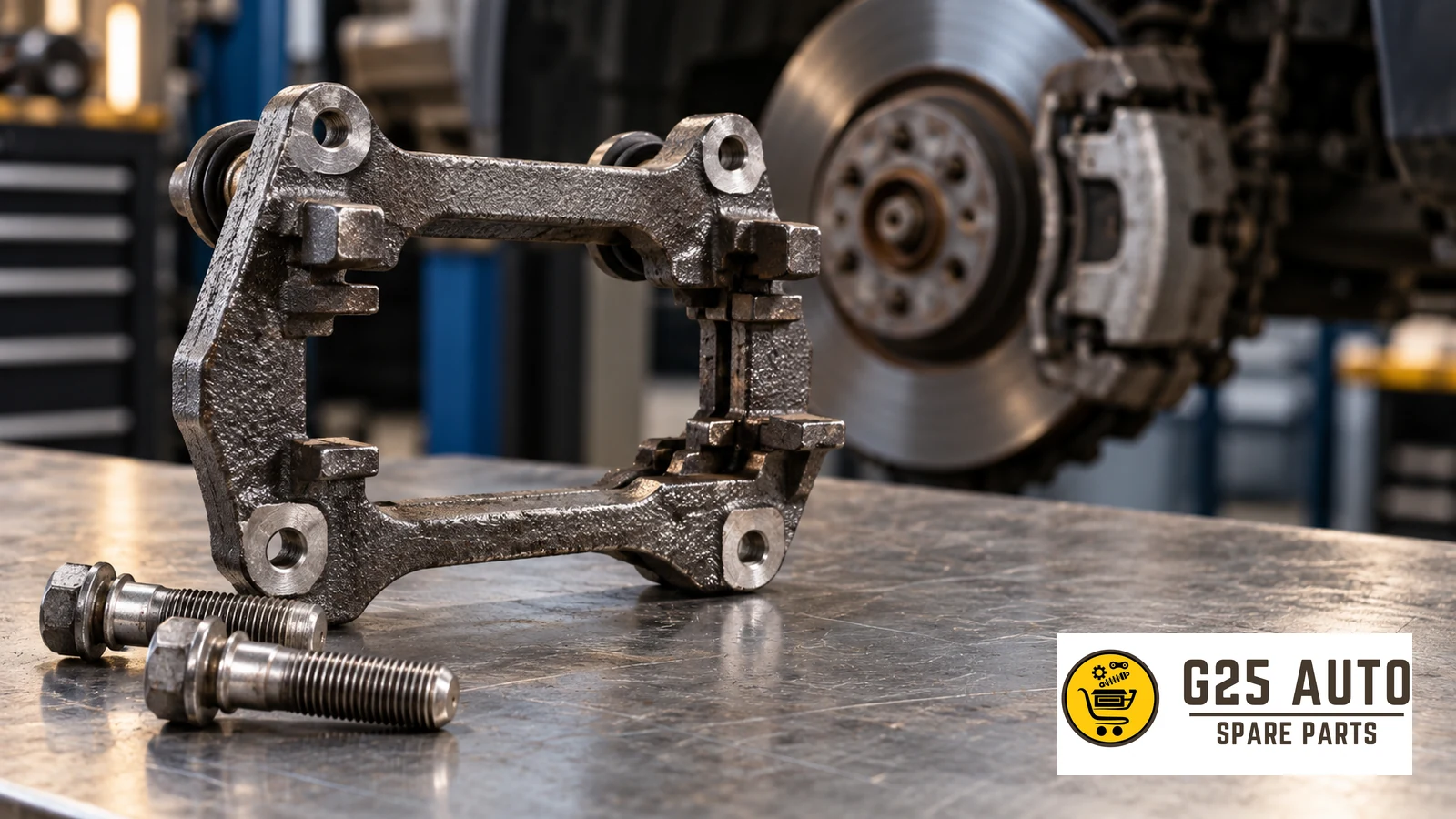
Caliper carrier brackets and mounting bolts secure the brake assembly. Damage or looseness can impair braking and pedal feel. Check vehicle details and OEM references before ordering.
What Does a Caliper Carrier Bracket Do?
The carrier supports the caliper assembly and pad positioning around the disc, accommodating braking forces and the relevant guides or fasteners.
Its mounting bolts require the specified strength and tightening procedure. Incorrect torque creates safety risks.
Fault Symptoms: When to Investigate
Symptoms require professional diagnosis; they cannot identify this fault alone.
Common Warning Signs
- Pulling: deformation or looseness can disturb caliper alignment.
- Unusual noises: rattling, squealing or metallic sounds may indicate wear.
- Longer stopping distances: caliper malfunction reduces braking effectiveness.
- Heat or odour: sticking or misalignment can cause dragging.
- Pedal vibration: loose mountings may contribute.
- Corroded or damaged bolts: salt and moisture encourage deterioration.
- Cracks, wear or play: visible damage needs attention.
Professional Diagnosis
Pads, discs and hydraulics can produce similar symptoms. Inspection includes:
- Workshop lifting and wheel removal.
- Visual bracket and bolt inspection.
- Fastener checks against specified torque procedures.
- Checking cracks, deformation and wear.
- Inspecting sliding mechanisms and pin bores.
A qualified technician should perform these checks.
Causes of Bracket and Bolt Failure
Several factors can contribute:
Mechanical Causes
- Incorrect torque: insufficient or excessive tightening.
- Wrong bolts: unsuitable strength specification.
- Thermal cycling: repeated heating and cooling can contribute to fatigue.
- Impact: collisions can distort brackets.
- Overloading: excessive loads or harsh braking.
Environmental Causes
- Corrosion: salt, moisture and chemicals.
- Road debris: stones and mud encourage deterioration.
- Ageing: accumulated material fatigue.
Maintenance Neglect
- Missed inspections: looseness and damage go undetected.
- Inadequate lubrication: specified sliding surfaces wear.
- Unchecked carriers during pad replacement: a missed inspection opportunity.
Original and Aftermarket Options
Both require suitable specifications, quality and verified fitment.
Original Parts
Advantages:
- Vehicle manufacturer specifications.
- Application identification, subject to verification.
- Manufacturer warranty terms where applicable.
- Traceability and documentation.
Limitations:
- Potentially higher cost.
- Variable lead times.
- Fewer supplier options.
Aftermarket Parts
Advantages:
- Broader price and product choices.
- Quality options with documented specifications.
- Alternative supply routes; confirm availability.
- Potential purchasing savings.
Limitations:
- Quality varies between products.
- Fitment requires verification.
- Poor quality can cause premature failure.
Selection Considerations
For safety-critical brake components:
- Choose reputable suppliers.
- Check relevant product documentation.
- Consult the installing workshop.
- Consider urban, heavy-load or sporting use.
- Review warranty terms.
Correct Selection: Verification Steps
Incorrect fitment can cause serious accidents.
Required Information
| Information | Possible location | Purpose |
|---|---|---|
| VIN | Documents, windscreen, door frame | Vehicle configuration lookup |
| Engine code | Engine label, service records | Identify brake-system variants |
| Production date | Documents, identification label | Check production revisions |
| OEM reference | Existing part, service documentation | Cross-reference application |
| Brake type | Technical documentation, workshop | Identify carrier arrangement |
Verification Checklist
Before ordering:
- Record the complete VIN.
- Identify engine and production year.
- Read existing OEM markings where available.
- Confirm axle and side.
- Check vehicle modifications.
- Request documented supplier fitment checks.
- Confirm bolt specification and torque procedure.
- Clarify returns and exchange terms.
- Check associated seals, pins and hardware.
- Confirm workshop acceptance.
Why This Detail Matters
Identical model years can contain different brake systems:
- Sport variants may use different discs and calipers.
- Engine variants may require different brakes.
- Production revisions can change references.
- Market specifications may differ.
Approximate matching is insufficient.
Why OEM References Matter
Manufacturer references help:
- Identify applications alongside vehicle data.
- Track production revisions.
- Cross-reference aftermarket alternatives.
- Avoid supplier misunderstandings.
Read existing markings or consult the manufacturer’s catalogue using vehicle data. Suppliers can cross-reference these details.
Professional Replacement Process
The general workshop sequence requires specialist equipment and knowledge:
Preparation
- Lift safely; remove the wheel.
- Follow specified hydraulic precautions.
- Photograph the existing installation.
- Account for all fasteners.
Removal
- Disconnect hydraulics only where required; control fluid loss.
- Remove the caliper from its carrier.
- Release carrier bolts; address corrosion appropriately.
- Remove old components.
Inspection and Cleaning
- Clean and inspect mounting surfaces.
- Inspect replacement components.
- Remove contamination from mating surfaces.
Installation
- Physically confirm matching components.
- Use thread-locking products only as specified.
- Position the carrier correctly.
- Follow specified tightening sequence and torque.
- Clean and lubricate guides as specified.
- Install the caliper.
- Reconnect hydraulics if disconnected.
- Bleed where required by the procedure.
Final Checks
- Verify fastener tightening.
- Check brake fluid level.
- Check pedal feel.
- Inspect for leaks.
- Conduct workshop braking verification.
Important: This requires professional lifting, torque and fluid-handling equipment. Incorrect installation risks serious accidents.
Maintenance and Service Life
Protect the assembly through:
- Inspection: include carriers during scheduled servicing and pad changes.
- Cleaning: remove dirt, mud and salt appropriately.
- Corrosion protection: follow manufacturer instructions.
- Torque: follow specifications after removal.
- Quality: use suitable replacements.
- Driving: avoid unnecessarily harsh braking.
- Loads: respect vehicle limits.
Reliable Brake Parts Sourcing
Reliable sourcing matters for carriers, bolts and associated brakes.
For G25Auto B2B enquiries across Europe and the Balkans, provide vehicle details and OEM references for fitment checks before ordering.
Comparison: Bracket and Bolt Faults
| Fault | Possible causes | Symptoms | Action |
|---|---|---|---|
| Loose bolts | Incorrect tightening, bolts, vibration | Rattle, pedal vibration | Immediate attention |
| Cracked bracket | Fatigue, impact, overload | Braking loss, noise | Do not drive |
| Bolt corrosion | Salt, moisture, ageing | Rust, difficult removal | Professional assessment |
| Distortion | Impact, incorrect installation | Pulling, uneven wear | Prompt attention |
| Surface wear | Dirt, inadequate lubrication, friction | Squeal, reduced effectiveness | Inspection required |
| Broken bolt | Overtightening, defects, fatigue | Sudden looseness, braking loss | Immediate attention |
Frequently Asked Questions
How Long Does Replacement Take?
Corrosion, hydraulic work and associated repairs determine workshop time.
Must Bolts Also Be Replaced?
Follow manufacturer instructions. Replace damaged bolts and any specified single-use fasteners.
Can Only One Side Be Replaced?
Possibly; inspect both sides for similar deterioration. The workshop should decide.
Are Aftermarket Components Safe?
Assess documented specifications, quality and fitment. Avoid uncertain origins; price alone establishes neither safety nor suitability.
What Else Needs Checking?
Inspect pads, discs, guides, hose cracking or swelling, and fluid condition and level.
Why Is Torque Important?
Undertightening permits loosening; overtightening can break bolts or damage carriers, compromising caliper positioning and braking.
Is Bedding-In Required?
Follow the applicable post-installation checks and any associated brake-component bedding procedure. Report abnormalities immediately; rechecks depend on manufacturer instructions.
Conclusion
Carrier and mounting-bolt integrity is essential for safe braking.
Remember:
- Symptoms: investigate noise, vibration and braking changes promptly.
- Selection: verify VIN, engine and OEM references.
- Quality: require appropriate documentation.
- Installation: use qualified professionals.
- Maintenance: include carriers in brake inspections.
- Follow-up: return for assessment if abnormalities occur.
Even small brake fasteners are critical. Seek professional help and avoid delaying necessary repairs.
Drive safely.