
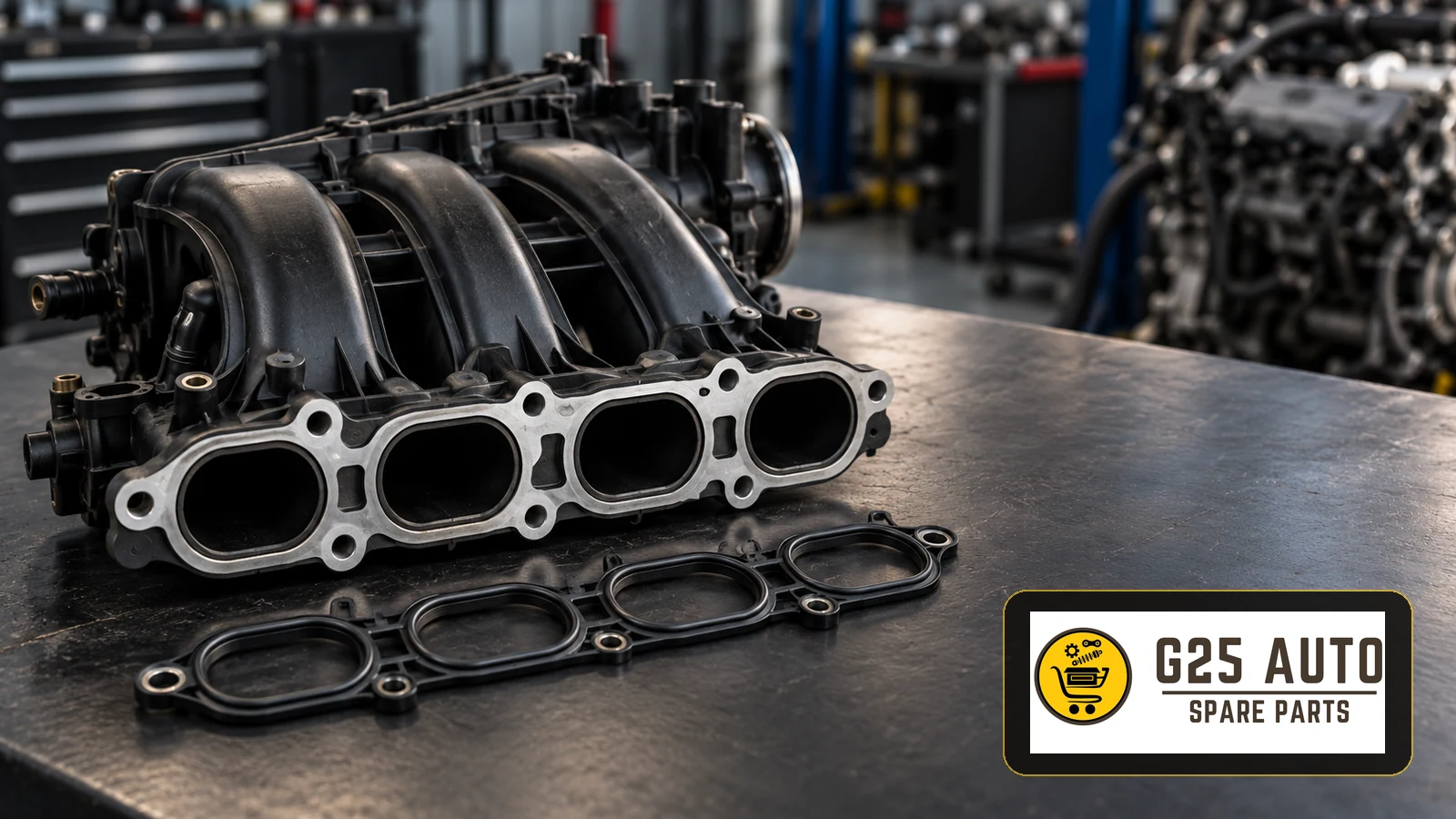
The intake manifold gasket seals the manifold connection to the engine. Leakage can disturb the air–fuel mixture, reduce performance and increase fuel consumption. Timely diagnosis and replacement support reliable operation.
What Does an Intake Manifold Gasket Do?
The gasket seals the intake manifold mounting joint, helping maintain controlled airflow into the engine. Unwanted air entering through a leak can upset engine operation and cause noticeable performance problems.
Gaskets may use rubber, reinforced materials or composite constructions, depending on the application. Materials and construction vary with engine design, operating temperature and manufacturer specifications. Select the specified gasket rather than assuming a particular material suits every application.
Intake Manifold Gasket Fault Symptoms
Recognising possible gasket symptoms early can help prevent further engine problems. Watch for the following signs:
Performance and Running Problems
- Uneven idle: Fluctuating speed or shaking.
- Power loss: Reduced acceleration or uphill performance.
- Misfiring: Difficult starting or irregular combustion.
- Hesitation: Poor response to accelerator input.
Engine Noise and Physical Signs
- Whistling or hissing: Unusual intake-area noise.
- Vacuum leak noise: Air suction, particularly at idle.
- Overheating: Requires diagnosis; it does not establish gasket failure.
- Vibration: Increased engine shaking.
Fuel and Emissions Problems
- Higher fuel consumption: Increased consumption in normal use.
- Changed exhaust smoke: Requires investigation of possible causes.
- Emissions failure: Excessive measured emissions.
- Check engine light: An engine fault warning.
How Is the Fault Diagnosed?
These signs are not conclusive. Professional diagnosis may include:
Workshop Diagnostic Methods
- OBD-II scan: Read fault codes and interpret them for the vehicle.
- Smoke test: Locate intake leaks using an appropriate procedure.
- Vacuum assessment: Evaluate intake pressure readings against specifications.
- Visual inspection: Check for cracking, crushing or other damage.
A qualified workshop should confirm the cause before replacing parts. Interpreting symptoms without appropriate tests can lead to an incorrect diagnosis and unnecessary replacement.
When Should the Gasket Be Replaced?
There is no universal mileage interval. Consider replacement:
- When diagnosis confirms a gasket fault.
- During manifold removal, as specified.
- When cracking, crushing or hardening is found.
- During overhaul or major maintenance, where required.
- At a manufacturer-specified interval, if applicable.
Original and Aftermarket Gaskets Compared
Compare the actual products and supply terms:
| Factor | Original Part | Aftermarket Part |
|---|---|---|
| Quality | Check manufacturer documentation. | Assess the specific manufacturer and product. |
| Fitment | Verify the exact application. | Verify the exact application and cross-reference. |
| Price | Request a current quotation. | Compare quotations and specifications. |
| Supply | Confirm with the supplier. | Confirm with the supplier. |
| Warranty | Review applicable written terms. | Review manufacturer and supplier terms. |
| Choice | Application-specific original references. | Application-specific products from different manufacturers. |
Which Option Suits the Application?
The choice depends on the vehicle requirements and purchasing priorities. Neither an original label nor an aftermarket label alone establishes the suitability of a particular gasket.
Reasons to consider an original part:
- Applicable vehicle warranty requirements.
- Original-part preference for a newer or premium vehicle.
- Documented reliability requirements.
- Manufacturer-specified procurement requirements.
Reasons to consider an aftermarket part:
- Budget considerations.
- A supplier with documented product quality.
- Maintenance planning for an older vehicle.
- Confirmed availability matching workshop needs.
Correct Part Selection Checklist
For European and Balkan B2B orders, prepare application details:
Before Ordering
- Have the vehicle identification number (VIN) available.
- Identify the engine code.
- Establish production year and month.
- Check the existing gasket reference where available.
- Verify engine type and cylinder configuration.
- Record any previous replacement brand.
- Request documented application confirmation.
- Review warranty and return terms.
- List required installation materials, following manufacturer instructions.
- Arrange installation with a qualified workshop.
Why Check the OEM or Part Reference?
Gaskets can differ within one vehicle model because of engine, production or equipment variations. Verify the following details before finalising an order.
VIN Checks
The VIN identifies the vehicle. Use it with appropriate manufacturer or catalogue records to check the available information:
- Production date.
- Engine and transmission specification.
- Relevant factory equipment.
- Production revisions.
Engine Code Verification
The engine code identifies the engine type and version. Equal displacement does not establish equal gasket requirements. Depending on the vehicle, check:
- Engine identification markings.
- Registration documentation, where recorded.
- Service documentation.
- Vehicle information labels.
Production Date
Manufacturers may revise designs during production, including within a model year. Check the relevant production date rather than relying solely on the model year.
OEM Reference Matching
Cross-check the existing gasket or catalogue reference against the proposed replacement and its application details. A matching reference alone does not guarantee fitment. Reference information may appear:
- On the gasket, where marked.
- On original packaging.
- In manufacturer parts catalogues.
- In suitable online parts catalogues.
Finding the Right Part for B2B Supply
Work with a reliable supplier able to document the proposed part and answer application questions. Review the available product information before placing an order.
When selecting it:
- Check the application listing.
- Cross-check VIN and engine details.
- Compare images with the existing part.
- Raise technical questions with the supplier.
- Read warranty and return conditions.
Installation Considerations
A qualified workshop should follow the vehicle-specific procedure.
Preparation
- Remove old gasket residue appropriately.
- Inspect mating surfaces for distortion or damage.
- Inspect fasteners and replace as specified.
- Use sealant only where specified.
Installation
- Position and align the gasket correctly.
- Apply specified tightening torques.
- Follow the specified tightening sequence.
- Avoid overtightening and gasket damage.
After Installation
- Check for leaks using the specified procedure.
- Recheck fasteners only if instructed.
- Assess idle and engine operation.
- Record, clear and recheck fault codes as appropriate.
Frequently Asked Questions
How long does the gasket last?
Life varies with engine design, operating conditions and materials. Overheating, incorrect installation or unsuitable materials can shorten it; a universal mileage promise is inappropriate.
Can the vehicle still be driven?
A leak can affect performance and fuel consumption; serious running problems may also affect safe operation. Do not assume continued driving is safe. Have symptoms assessed promptly, particularly poor running or overheating.
Must other parts be replaced?
Follow the specified parts requirements. Replace single-use bolts where required; inspect vacuum hoses and sensor seals during removal.
How does an aftermarket gasket differ?
Construction, materials and quality vary between manufacturers. Compare documented specifications rather than assuming equivalence from branding or price. Unsuitable materials can contribute to premature failure.
What warranty applies?
Check written manufacturer, supplier and installer terms, including installation requirements and exclusions.
Are intake and exhaust manifold gaskets interchangeable?
No. They serve different joints and operating conditions. Exhaust gaskets face higher temperatures; use the specified part.
Conclusion
Investigate uneven idle, reduced performance, unusual noise or increased fuel consumption before selecting replacement parts.
Assess original and aftermarket options against the vehicle requirements, supported by professional installation.
Cross-check VIN, engine code and part references with application documentation to reduce ordering errors.
Consider documented quality alongside cost. Follow the required post-installation checks and maintenance instructions.