
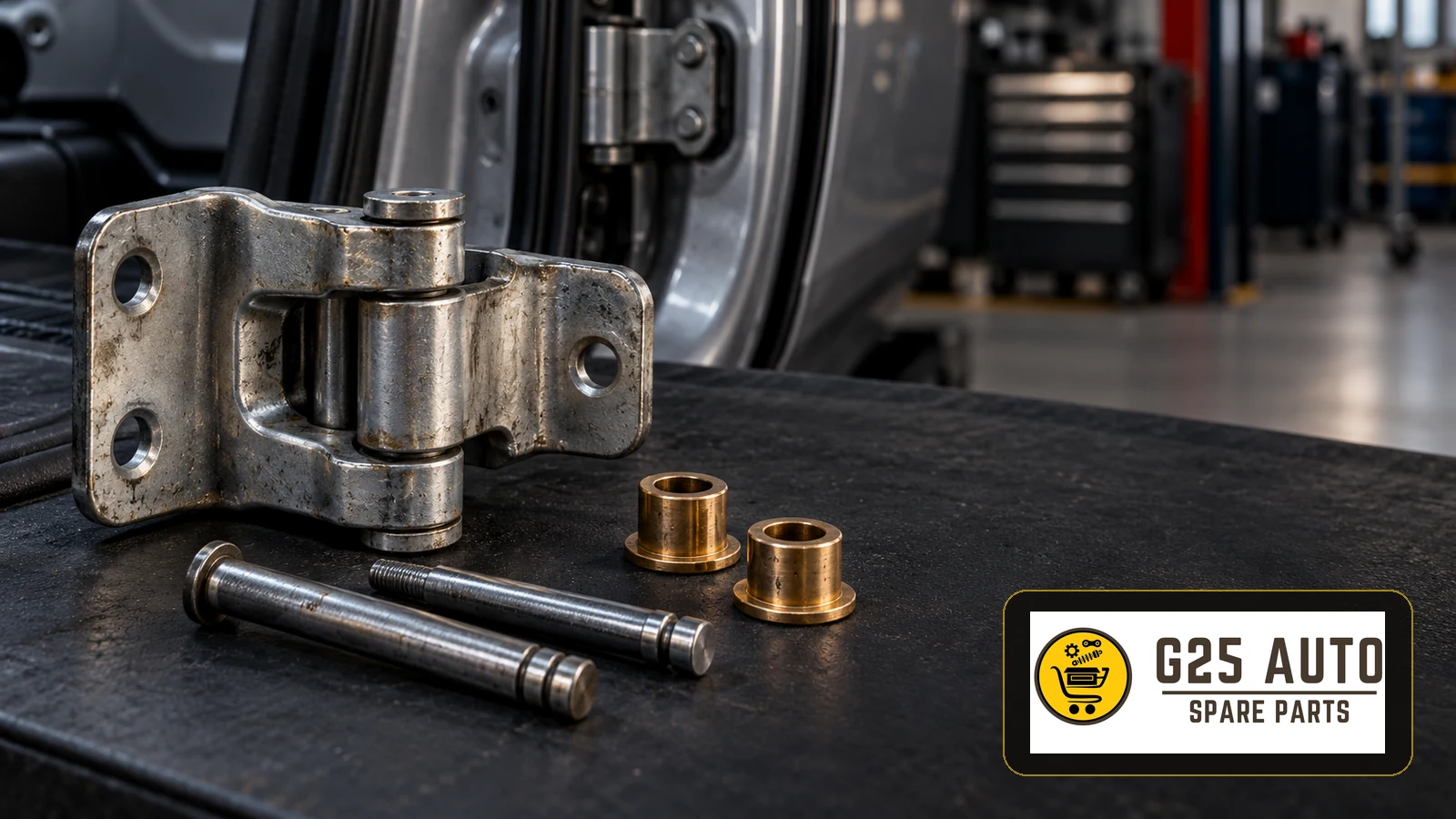
A sagging or noisy vehicle door needs a hinge and alignment inspection before a pin-and-bush kit is ordered. Worn hinge pins or bushes can cause unwanted movement, but similar complaints can come from the latch, door check, loose mountings or body damage. For European and Balkan workshops, body shops and fleet buyers, the right repair starts with locating the fault and confirming whether the fitted hinge can be serviced.
What the hinge pin and bush do
The hinge connects the door to the body and provides its pivot. In a serviceable pin-and-bush arrangement, the pin forms the pivot axis and the bush supports movement between the mating components. Wear can create clearance that affects the door’s position as it opens and closes.
Hinge designs differ. A catalogue may offer individual pins, a repair kit or a complete hinge assembly. Do not assume that a kit exists for every door, or that a visually similar bush is suitable. Material, retention method and repairability must be checked against the actual application.
Separate symptoms from a confirmed hinge fault
Sagging, rubbing and difficult closing
Record uneven panel gaps, contact marks, a door that needs lifting to close, or an apparent change in latch engagement. These observations help direct the inspection, but none proves that only the bush is worn. Check the hinge mounting areas and any history of collision or previous alignment work.
With the door properly supported, a technician can assess movement at the hinge and establish where it occurs. Movement at a mounting point needs a different assessment from movement between the pin and bush. Follow the vehicle repair information for the inspection method and acceptance criteria.
Squeaking and opening resistance
Locate the noise rather than immediately replacing the hinge. The door check, seals and other contact points can also produce noise or resistance. Lubrication may address a service need on the relevant design; it cannot rebuild worn components. A quieter door after lubrication is not proof that the original alignment concern has been resolved.
If the door cannot latch securely, arrange repair before returning the vehicle to service. Avoid repeated slamming as a substitute for diagnosis. The repair decision should distinguish a pivot problem from a latch or body alignment problem.
Choose a repair kit or complete hinge on evidence
Confirm that the manufacturer or kit supplier supports the proposed repair for the fitted hinge. Inspect the pin, bushes, hinge bores, mounting faces and surrounding structure as appropriate. A kit intended to renew pivot components does not establish that a damaged hinge body or mounting area is reusable.
Dorman’s hinge-kit catalogue example identifies specific vehicle applications and lists the supplied components. It illustrates why buyers must verify application and package contents separately. It does not establish compatibility with another vehicle or promise that every kit repairs an entire door.
Replacing only a bush is a decision for the applicable repair instructions and the condition of its mating pin. Likewise, do not replace every hinge on the vehicle simply because one has a confirmed fault. Assess the affected assembly and inspect other doors when symptoms or the service brief justify it.
Identify the exact door and hinge before purchasing
Provide the vehicle identification number and catalogue-relevant build information, body style and door position. State left or right and front or rear explicitly; a description such as driver’s door can cause ambiguity across markets. Identify the upper or lower hinge where the catalogue distinguishes them.
Use a verified original reference and any supersession information as cross-checks. A reference number or photograph alone is not sufficient application evidence. Ask the supplier to confirm the catalogue match, repair scope, bush arrangement and retaining hardware. Use measurements only where the relevant documentation requires them, rather than selecting a convenient near match.
For distributors serving mixed fleets, retain the confirmed application with the purchase record. Compare documented suitability, traceability and the actual commercial quotation. General claims about original or aftermarket quality, price, availability or service life cannot replace a product-specific assessment.
Plan installation and lubrication for the design
Door support, access, pin retention and any adjustment work need to follow the applicable workshop procedure. Establish the required tools and replacement fasteners before starting. Do not transfer a pin-removal direction, tightening value or bush orientation from a different hinge design.
Dorman’s installation sheet warns that the bushes covered by that instruction differ in size and must be matched to their correct bores. It also cautions that excessive tightening during installation can crack a bush. Apply those instructions only to the relevant kit; obtain the correct procedure for other products.
Lubricant choice and service frequency are also application-dependent. Mopar’s body-lubrication guidance for the listed Ram vehicles calls for cleaning pivot points before lubrication and removing excess afterwards. Consult the actual vehicle’s guidance instead of applying that lubricant recommendation across every fleet.
After repair, verify door movement, panel clearances, latch operation and the checks required by the repair procedure. Record any remaining noise or resistance and investigate it before closing the job.
Workshop and purchasing checklist
- Record the complaint, contact marks and relevant repair history.
- Locate movement or noise at the hinge, mounting, check or latch.
- Confirm vehicle identity, body style and precise door position.
- Check whether a supported pivot repair or complete hinge is required.
- Verify catalogue application, references and any supersessions.
- Confirm bush locations, kit coverage and retaining hardware.
- Obtain installation, adjustment and lubrication instructions.
- Document the final functional checks and installed parts.
Frequently asked questions
Does a squeaking door always need new hinge bushes?
No. Locate the noise and inspect the assembly before choosing lubrication or replacement.
Is there a universal replacement mileage?
No universal mileage is appropriate. Use the vehicle’s maintenance guidance and confirmed condition.
Does one repair kit cover both hinges?
Check the supplier’s stated coverage and contents. Package quantity alone does not establish coverage for a door.
Can adjustment compensate for worn pivot parts?
Confirm and address the wear first, then complete alignment checks under the applicable repair procedure.